Thinking about a career in healthcare but don’t have a lot of time? You might be surprised to learn that you can become a Certified Nursing Assistant (CNA) in just four weeks. This spring, you could start a whole new path. Many programs combine online learning with hands-on practice, and some even offer free training. Let’s look at how a 4 week cna program can get you started in a rewarding field quickly.
Key Takeaways
- A 4 week cna program offers a fast track into the healthcare field, often combining online theory with in-person skills training.
- Many programs are flexible, allowing for online coursework and scheduled clinical rotations at healthcare facilities.
- You can often get your CNA training paid for through employer sponsorship or get reimbursed after you’re hired, making it potentially free.
- Passing a state certification exam, which includes written and practical parts, is required to become a CNA.
- Becoming a CNA opens doors to various healthcare settings and can serve as a stepping stone for further nursing education.
Embark On Your Healthcare Journey This Spring
Thinking about a career change or starting fresh in a field that really matters? Spring is a fantastic time to kick off your journey into healthcare, and becoming a Certified Nursing Assistant (CNA) is a great way to get your foot in the door. It’s a role where you make a real difference in people’s lives every single day.
The Accelerated Path to Becoming a CNA
Forget spending years in school. A 4-week CNA program is designed to get you trained and ready for the workforce fast. This isn’t some watered-down version of training; it’s an intensive program that packs a lot of learning into a short time. You’ll cover all the important stuff you need to know to be a competent and caring nursing assistant. This quick turnaround means you can start earning and contributing to patient care much sooner. It’s perfect for those who are eager to get started and don’t want to wait around.
Why Choose a 4 Week CNA Program?
So, why the rush? Well, the healthcare field is always looking for dedicated CNAs. These programs are built for speed and efficiency. You’ll typically find them offering classes multiple times a week, sometimes even with weekend options, to fit different schedules. The curriculum is focused on the core skills and knowledge needed to pass your certification exam and perform your duties. It’s a smart choice if you’re looking for a direct route to a stable and rewarding career. Many programs are licensed by state boards, so you know you’re getting quality training. For example, in Minnesota, you can find a 4-week CNA program that requires about 22 class hours weekly.
Your Spring Career Launchpad
Spring is the season of new beginnings, and what better way to embrace that than by launching a new career? The demand for CNAs is high, and completing a program this spring means you could be working in a healthcare setting by summer. Think about the satisfaction of helping others, the job security, and the opportunities for growth within the healthcare industry. It’s a chance to build a solid foundation for your future, all starting with a focused, short-term training program.
Understanding The 4 Week CNA Program Structure
So, you’re looking at a four-week CNA program and wondering what it actually looks like? It’s not just sitting in a classroom for a month straight. These accelerated programs are designed to be efficient, packing a lot of learning into a short time. The key is a blend of learning from home and hands-on practice.
Hybrid Learning: Online Theory Meets In-Person Skills
Most of these fast-paced programs use a hybrid approach. This means you’ll spend time learning the "book smarts" online. Think of it as getting your foundational knowledge without having to commute every day. You’ll cover topics like patient rights, safety procedures, basic anatomy, and how to prevent infections. This part is flexible, letting you study when it works best for you. But, you can’t become a CNA just by reading. You absolutely need to practice the actual skills.
The theory part covers a lot of important information, like how to properly document patient care and understand different medical conditions. It sets the stage for what you’ll actually do with patients.
Essential Clinical Rotations
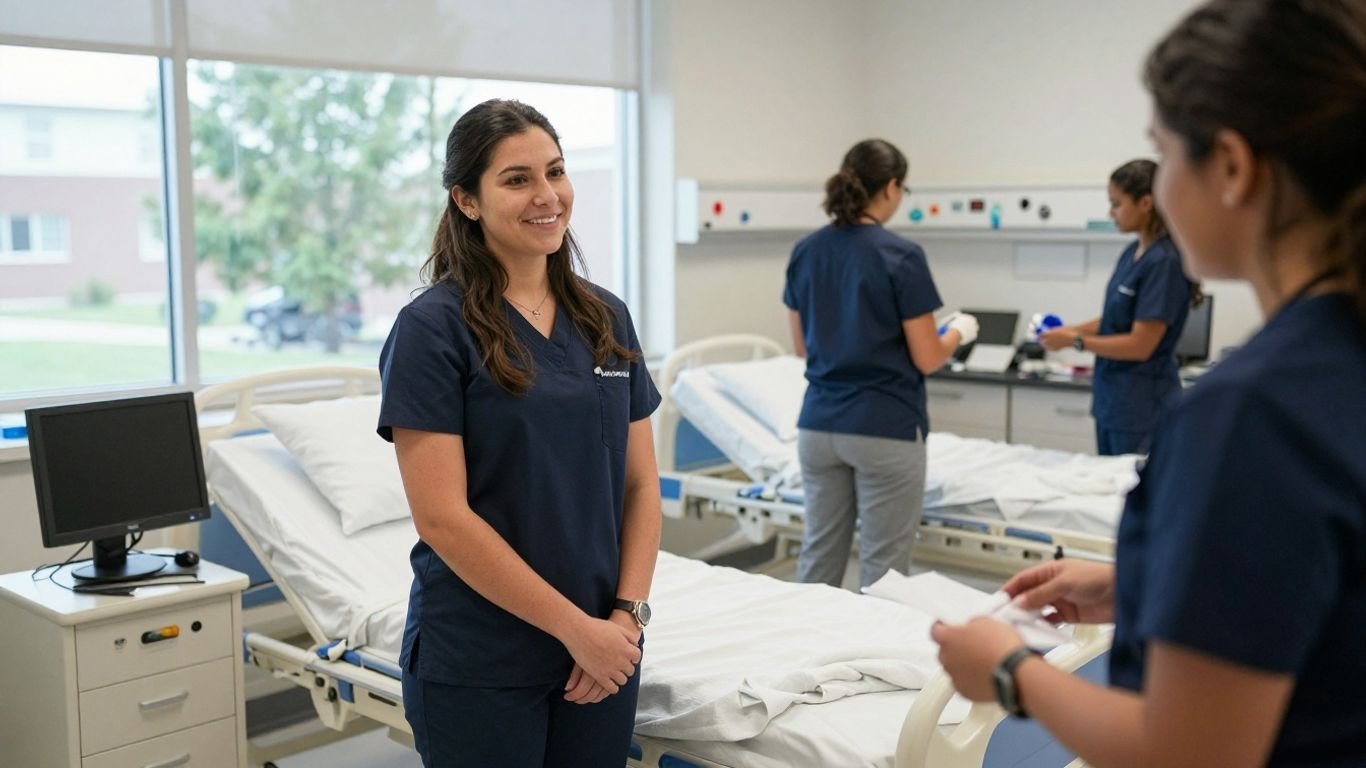
This is where the rubber meets the road. After you’ve got the basics down from your online modules, you’ll head to a healthcare facility for hands-on training. This is usually a supervised clinical experience. You’ll work directly with patients, practicing skills like taking vital signs, helping with personal care, and moving patients safely. Federal law requires a minimum of 16 hours of this in-person training, but many programs offer more to make sure you’re ready. It’s a chance to apply what you learned online in a real-world setting and get direct feedback. This practical experience is what truly prepares you for the job. You can find programs that offer training in essential nursing skills for providing safe, effective, and person-centered care.
Preparing For Your Certification Exam
By the end of the four weeks, you’ll be geared up for the CNA certification exam. This exam typically has two parts: a written test and a practical skills test. The written portion covers all the theory you studied, testing your knowledge on patient care, safety, and regulations. The practical part involves demonstrating a few specific CNA tasks in front of an evaluator. Your program’s instructors will guide you through practice scenarios, helping you feel confident in performing skills like handwashing, transferring patients, and taking vital signs. Passing this exam is your ticket to getting listed on the state’s Nurse Aide Registry, which is what employers look for. This whole process is designed to get you ready for a role as a Nursing Assistant (NA) and is a common pathway for those looking to enter the healthcare field.
Key Steps To Completing Your CNA Training

Getting your CNA certification is a straightforward process, but it does involve a few key stages. Think of it like building something – you need the right materials, a solid plan, and then you put it all together. It’s not overly complicated, and many people find they can complete it in just a few weeks, especially with an accelerated program.
Meeting Eligibility Requirements
Before you even start looking at programs, you’ll want to make sure you meet the basic requirements. These are usually pretty standard across states. Generally, you’ll need to be at least 18 years old and have a high school diploma or GED. Some programs might also require a background check, which is pretty common in healthcare settings. It’s always a good idea to check the specific rules for your state, as they can vary a bit.
Finding A State-Approved Program
This is a big one. You can’t just take a course from anywhere and expect it to count. Your training must be from a program that’s approved by your state’s board of nursing or health department. These programs are designed to cover all the necessary knowledge and skills you’ll need. Many of these are hybrid, meaning you’ll do some learning online and some hands-on practice. Federal law requires at least 16 hours of in-person clinical training, so you’ll definitely get practical experience. You can often find lists of approved programs on your state’s official government website.
Passing The CNA Certification Exam
Once you’ve finished your training program, the final hurdle is the certification exam. This is usually a two-part test. You’ll have a written portion, which is typically multiple-choice and covers the theory you learned, like patient rights and safety. Then, there’s a practical skills test where you’ll demonstrate a few hands-on tasks, like taking vital signs or helping a patient move. Your program will prepare you for both parts, so don’t stress too much about it. Passing this exam is what officially makes you a Certified Nursing Assistant and gets you listed on the state registry, which employers check. This is the final step to become a Certified Nursing Assistant.
The path to becoming a CNA is designed to be accessible. While there are requirements, most programs are structured to guide you through each step effectively. Focus on finding a state-approved program, as this is non-negotiable for certification.
Maximizing Your CNA Program Experience
The Value Of Hands-On Clinical Experience
Look, the online part of your CNA program is important for understanding the basics, like patient rights and how to avoid spreading germs. But let’s be real, you can’t learn how to safely help someone out of bed or give them a bath just by watching videos. That’s where the clinical rotations come in. This is your chance to actually do the stuff you’ve been reading about. It’s the most important part for building real skills and confidence. Think of it as your training wheels before you’re out there on your own. The more you practice, the better you’ll get, and the more comfortable you’ll feel when you’re working with actual patients.
Networking Opportunities During Training
While you’re in your program, don’t just focus on the coursework and skills. Pay attention to the people around you. You’ll be working with instructors who have likely been in the healthcare field for years. They know people and can offer advice. You’ll also meet other students who are on the same path. Some of them might end up working at facilities where you’d like to work later on. It’s a good idea to exchange contact information and stay in touch. You never know when a classmate might become a colleague or even a friend who can help you out down the line.
Here’s a quick look at who you’ll meet:
- Instructors: Experienced healthcare professionals who can share insights and guidance.
- Fellow Students: Future colleagues who are also learning and can offer support.
- Clinical Facility Staff: Nurses and other CNAs you’ll work with during rotations, who can provide real-world perspectives.
Leveraging Your Certification For Future Growth
Getting your CNA certificate is a big accomplishment, but it doesn’t have to be the end of your journey. Think of it as a solid starting point. Many people use their CNA experience as a stepping stone to other roles in healthcare. For example, you could go on to become a Licensed Practical Nurse (LPN) or even a Registered Nurse (RN) through what are called "bridge programs." These programs often recognize the hands-on experience you already have as a CNA, which can make the transition smoother. You can also look into getting extra certifications, like becoming a Certified Medication Aide (CMA), which allows you to administer certain medications. It’s all about building on what you’ve learned and opening up more doors for yourself in the long run.
Your CNA training is more than just a certificate; it’s a foundation. It provides practical skills and a real understanding of patient care that can lead to many different paths within the healthcare industry. Don’t be afraid to explore what comes next after you get certified.
Here are some ways your CNA certification can help you grow:
- Further Education: Use it as a stepping stone for LPN or RN programs.
- Specialization: Pursue additional certifications like CMA or focus on areas like geriatrics.
- Career Flexibility: Gain experience in various settings and potentially work PRN (as needed) shifts for more control over your schedule and income.
Financial Considerations For Your CNA Program

Thinking about the cost of a CNA program might seem a bit daunting at first, but there are actually quite a few ways to make it work without breaking the bank. It’s not always about paying a big chunk of money upfront. Many people find that their training costs are covered or reimbursed, especially if they’re serious about working in the field afterward.
Exploring Free Training Options
Did you know that some healthcare facilities actually offer free CNA training programs? They do this because they need CNAs and want to fill those spots. It’s a win-win: you get trained, and they get a new employee. Keep an eye out for places like:
- Employer-Sponsored Programs: Some hospitals or nursing homes will hire you as a "nursing assistant in training." They’ll pay for your program and exam, and you’ll work for them while you study. Once you’re certified, you transition into the CNA role.
- Government-Funded Initiatives: Check with your local workforce development office. Programs like the Workforce Innovation and Opportunity Act (WIOA) often provide grants that cover the full cost of training for in-demand jobs, and CNA training is almost always on that list.
- Non-Profit Organizations: Groups like the American Red Cross sometimes have programs, and they might partner with local facilities that sponsor students or accept grants.
Employer-Sponsored Programs
This is a really popular route for many aspiring CNAs. Instead of paying for school yourself, you get hired by a healthcare facility that needs CNAs. They’ll often put you through their own training program, or pay for you to attend an approved one. You might work in a different capacity for them while you’re training, and then move into a CNA role once you pass your certification exam. It’s a great way to get your foot in the door and have your education paid for.
Reimbursement Opportunities After Certification
Here’s a detail that often surprises people: if you pay for your CNA program yourself, federal law says that if you get a job at a Medicare-certified facility within a year of getting certified, that facility has to pay you back for your training and exam costs. It’s usually paid back gradually over time, but the idea is that your training should end up being free if you commit to working in the field. It’s a pretty good deal, honestly.
The cost of a CNA program can range from about $800 to $2,000 if you pay out of pocket. However, with employer sponsorships and reimbursement rules, many people end up paying nothing for their training in the long run.
It’s definitely worth looking into these options before you decide to pay for a program yourself. You might be surprised at how many ways there are to get your CNA training covered.
Career Opportunities After Your 4 Week Program
Diverse Healthcare Settings For CNAs
Completing a 4-week CNA program opens doors to a variety of places where you can put your new skills to work. It’s not just hospitals, though those are a big one. Think about assisted living facilities, where you’ll help older adults with daily tasks. Nursing homes, also called long-term care facilities, are another common spot. Here, you’ll provide ongoing care for residents. Home health agencies are also looking for CNAs to provide care directly in people’s homes, which can be really rewarding. Even doctor’s offices and clinics sometimes need CNAs to help with patient flow and basic care. It’s a pretty wide net!
Advancement Opportunities: Bridge Programs
Getting your CNA certificate is a fantastic starting point, but it doesn’t have to be the end of your education. Many nursing schools recognize the hands-on experience CNAs gain and offer special "bridge" programs. These programs are designed to help you move forward more quickly if you decide you want to become a Licensed Practical Nurse (LPN) or even a Registered Nurse (RN). It’s a smart way to build on what you already know and get further down the career path without starting completely from scratch. Some programs might even let you count your CNA training hours towards your LPN or RN studies.
The Growing Demand For Certified Nursing Assistants
There’s a real need for CNAs right now, and it’s only expected to grow. As the population ages, more people need care, and CNAs are on the front lines of that care. This means job security is pretty good. Facilities are often looking to hire CNAs as soon as they get certified. It’s a field where you can often find work quickly after finishing your program. Plus, with the demand being high, you might find more flexibility in choosing where and when you want to work.
The healthcare field is always changing, and the need for skilled caregivers is constant. Your CNA training equips you with the basic skills to step into this vital role and make a real difference in people’s lives from day one.
Ready to Start Your Healthcare Journey?
So, there you have it. Getting your CNA certificate this spring is totally doable, even with a busy schedule. You can learn a lot online and then get the hands-on practice you need. Plus, there are ways to make it cost next to nothing, which is pretty great. This is a solid way to jump into healthcare, gain real experience, and see if it’s the right fit for you. It might even be the first step toward a bigger nursing career down the road. Don’t wait too long to look into the programs starting soon!
Frequently Asked Questions
How fast can I become a CNA?
You can become a Certified Nursing Assistant (CNA) in as little as four weeks with special fast-track programs. Other programs might take a bit longer, usually around 10 to 12 weeks, especially if you’re studying part-time.
Can I really do a CNA program online?
You can do the learning part online, like reading about patient care and safety. But you absolutely must do hands-on training in person at a hospital or care center. Federal rules require at least 16 hours of real-life practice with a supervisor.
How much does a CNA program cost?
If you pay for it yourself, a CNA program can cost anywhere from $800 to $2,000. But here’s a cool secret: if you get a job at a nursing home or hospital within a year, they often have to pay you back for the training costs!
Are there free CNA programs?
Yes, there are! Some hospitals or care centers offer free training because they need CNAs so badly. They might hire you first and then pay for your training. Also, check with your local job center for government programs that might pay for your training.
What do CNAs actually do?
CNAs help patients with everyday tasks like bathing, eating, and getting dressed. They also take important signs like blood pressure and temperature, help patients move around, and make sure their rooms are clean. They are super important for making patients comfortable and safe.
What’s the difference between a CNA and a Medical Assistant?
A CNA works directly with patients, helping them with daily care in places like nursing homes or hospitals. A Medical Assistant (MA) does more office and lab tasks, like drawing blood or scheduling appointments, usually in a doctor’s office or clinic.