Key Takeaways
Choosing among CNA schools in Atlanta, Georgia, is easier when you compare approval, clinical practice, total cost, schedule, and post-graduation support together.
- Confirm that the program is approved for Georgia CNA preparation and ask how training hours are documented.
- Look for substantial hands-on practice, clinical experience, and instructors who explain skills clearly.
- Calculate tuition alongside uniforms, supplies, testing, transportation, and possible missed work.
- Choose a schedule and learning format you can realistically complete.
- Ask how the school supports exam preparation, retesting, and the transition into employment.
Understanding CNA training in Atlanta
Certified nursing assistant training is a short, focused entry point into patient care. A good program combines classroom instruction with repeated skills practice and supervised clinical experience. Because schedules, costs, and admission rules vary, prospective students should compare the whole program rather than choosing only by advertised tuition. This Georgia CNA school selection guide is a useful starting point for organizing that comparison.
What certified nursing assistants do
CNAs help patients with everyday care while working under the direction of nurses and other clinical staff. Typical duties can include bathing, dressing, feeding, repositioning, measuring vital signs, observing changes, and reporting concerns. The work is practical and people-centered, so patience, physical stamina, and respectful communication matter as much as memorizing procedures.
Where CNAs work in the Atlanta area
Atlanta-area CNAs may find opportunities in nursing homes, hospitals, rehabilitation centers, assisted-living communities, home-care services, and specialty care settings. Each workplace has a different pace and patient population. During school tours, ask which clinical sites students use and whether the setting resembles the kind of work you hope to pursue.
Georgia CNA certification requirements
Georgia candidates generally complete a state-approved nurse aide training program and then take the required certification examination. Training-hour requirements, application materials, background checks, and testing procedures should be confirmed with the school and the current state testing authority because details can change. A program should explain how it records attendance and prepares eligible graduates for the exam; this Georgia CNA training overview can help you form questions before enrolling.
How CNA training differs from nursing programs
CNA education concentrates on foundational bedside care and safe assistance with daily activities. Licensed practical nursing and registered nursing programs cover broader clinical judgment, medication-related responsibilities, assessment, and more advanced coursework. CNA training can be a direct employment route or a way to test whether patient care feels like the right field before committing to a longer nursing pathway.
Comparing CNA schools in Atlanta, Georgia
The best CNA schools in Atlanta, Georgia, are not necessarily the ones with the shortest advertisements or the lowest first price. Compare approval, curriculum, clinical access, instructor attention, location, and completion support. A campus visit or detailed admissions call often reveals more than a polished course page.
Program accreditation and state approval
Ask whether the program is approved to provide the training required for Georgia certification and whether graduates are eligible to sit for the state exam. Request the approval information in writing, along with the current curriculum and attendance policy. Accreditation may be useful, but state approval and exam eligibility are the immediate checks for a CNA applicant.
Classroom, laboratory, and clinical training
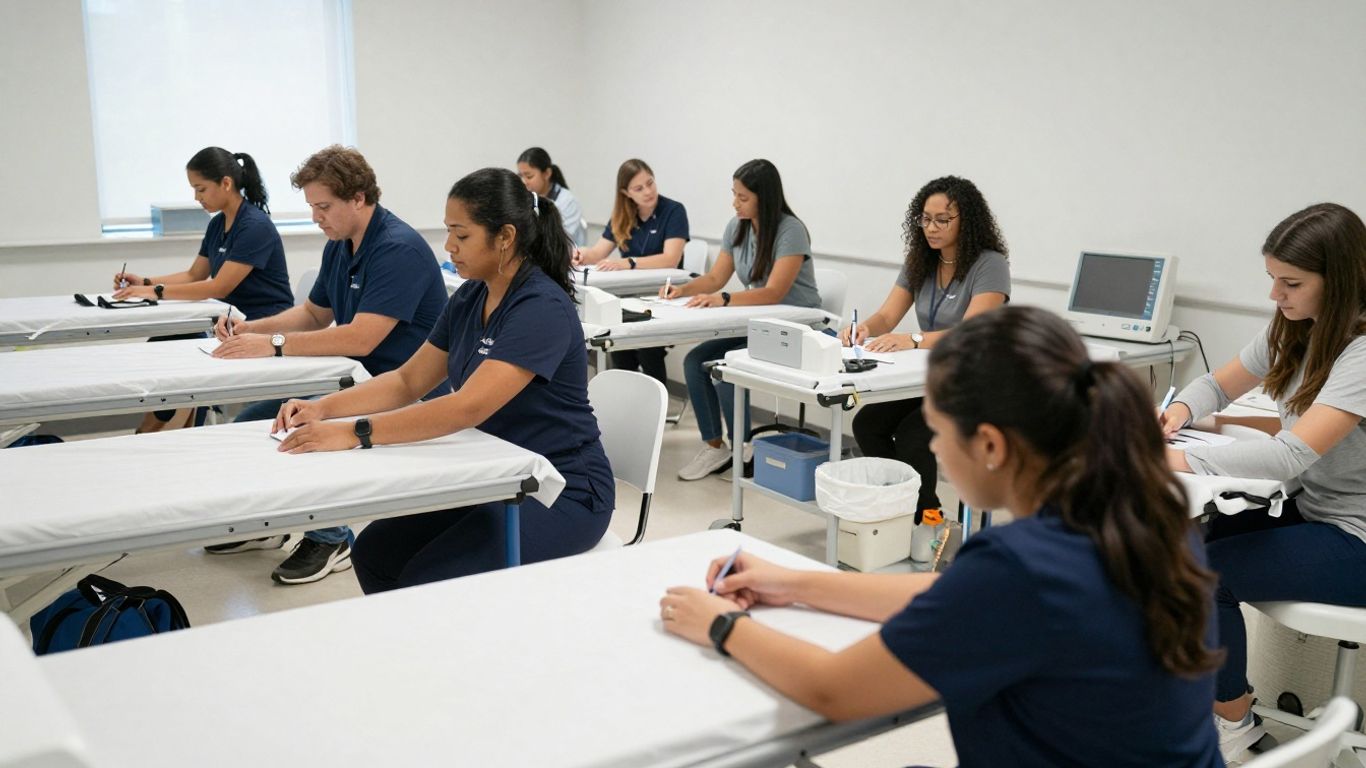
A balanced program should explain what happens in the classroom, what skills are practiced in a laboratory, and how clinical hours are supervised. Students should have opportunities to repeat core tasks until they can perform them safely and respectfully. Look for clear information about clinical sites, student-to-instructor ratios, make-up work, and what happens if a placement changes.
Instructor qualifications and student support
Instructors should be able to connect textbook concepts with real patient-care situations and give specific feedback during skills practice. Ask how students receive help when they struggle, how absences are handled, and whether tutoring or remediation is available. Support also includes practical communication: clear deadlines, responsive staff, and a realistic explanation of what is expected each week. For a broader perspective on constructive workplace communication, see this healthy leadership guidance, while remembering that a CNA classroom has its own needs.
School location, transportation, and campus access
A convenient campus can make the difference between steady attendance and repeated lateness. Check parking, public transit, clinical-site travel, accessibility, evening entry procedures, and whether the school requires students to arrange transportation to clinicals. It is also sensible to verify a campus address and contact information directly, much as you would when reviewing Atlanta roofing companies before making a local decision.
Admission requirements and enrollment steps
Admissions requirements differ across CNA programs, even within the same metro area. Some schools accept applicants with limited prior healthcare experience, while others require specific identification, health records, or CPR credentials before clinical participation. Start early because health screenings and background checks can take longer than expected.
Education, age, and background requirements
Many programs set a minimum age and may ask for a high school diploma, GED, or placement assessment. Schools can also require a background check, drug screening, or documentation of legal identity. Do not assume that one program’s rule applies everywhere; request the complete admissions checklist and ask which items are due with the application versus after acceptance.
Health screenings, immunizations, and CPR credentials
Clinical participation may require a physical examination, tuberculosis screening, immunization records, and current CPR or basic life-support training. Requirements can vary by school and clinical partner. Ask whether the school accepts outside credentials, which issuing organizations are recognized, how recent a screening must be, and whether costs are included in tuition.
Documents to prepare before applying
Gathering paperwork in advance makes enrollment less stressful. A practical folder may include:
- Government-issued identification and any requested Social Security documentation.
- High school, GED, or placement records, if required.
- Immunization, physical-examination, tuberculosis, and CPR records.
- Background-check, drug-screen, and emergency-contact information.
Having these documents ready helps an admissions office identify gaps before a class reaches its deadline. Keep copies for yourself, especially when clinical partners require separate submissions.
Questions to ask during an admissions call
Use the call to clarify the entire path from application to certification, not just the next start date. Ask about total program hours, clinical scheduling, attendance rules, exam eligibility, and the school’s recent completion and testing support. Also ask who pays for a required retest, what happens after an absence, and whether career services continue after graduation.
CNA program costs and financial planning
The posted tuition is only one part of the cost of becoming a CNA. Registration, supplies, health checks, uniforms, transportation, and exam fees can change the final amount. Build a simple budget before paying a deposit so that a seemingly affordable program does not become difficult to finish.
Tuition, registration fees, and supply costs
Request an itemized estimate that separates tuition from enrollment fees, lab supplies, equipment, and required credentials. Ask whether deposits are refundable and whether payment is due all at once. Programs that provide a single total should still explain what is included, because a low headline price may leave several required items outside the package.
Uniforms, textbooks, testing, and transportation expenses
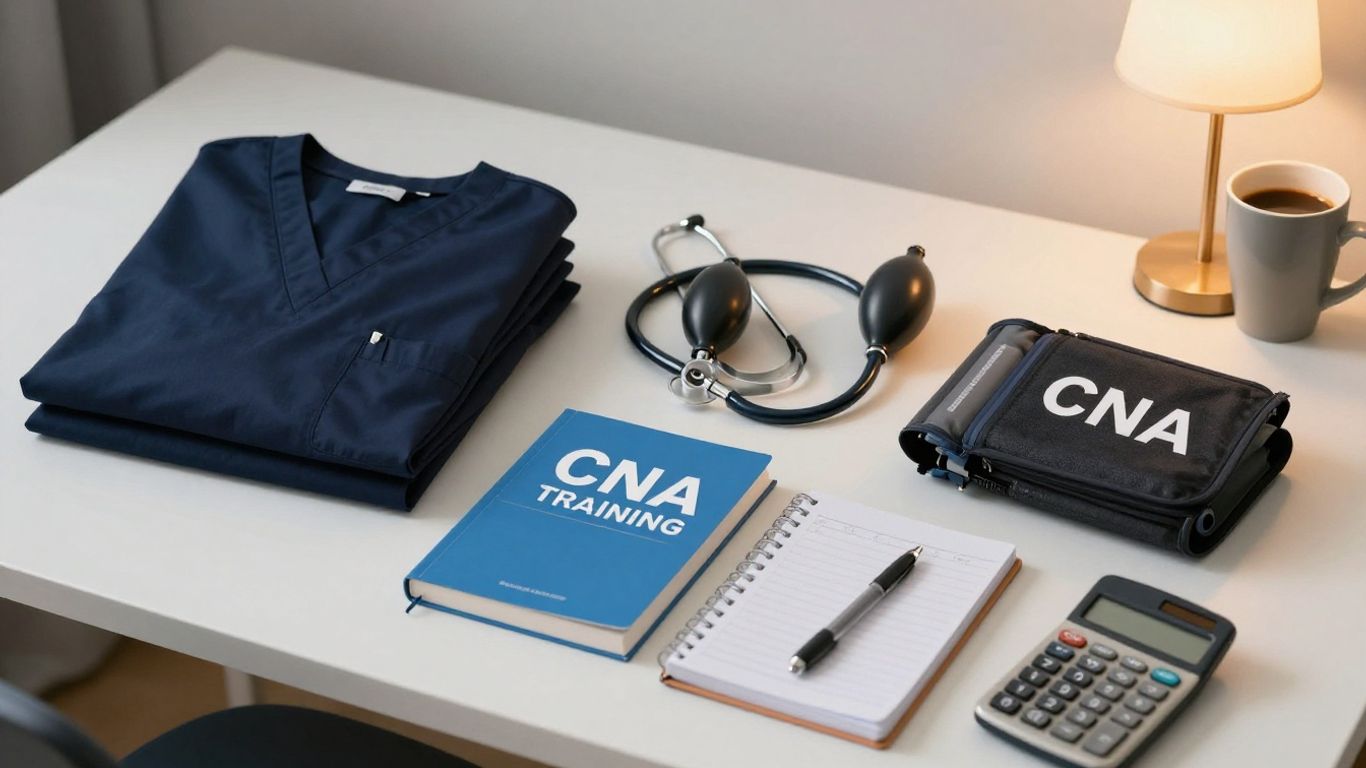
Uniforms, closed-toe shoes, a blood-pressure cuff, textbooks, CPR training, background checks, health screenings, and state testing can add up. Transportation deserves its own line, particularly if clinicals are held away from the classroom. For a general reference on keeping wage and payment records understandable, this daily payroll guide offers useful budgeting context, though it is not a CNA financial-aid resource.
Payment plans, scholarships, and employer-sponsored options
Ask about installment plans, workforce-development funding, scholarships, grants, and employer-sponsored training. Some healthcare employers support training in exchange for a work commitment, while public programs may have eligibility rules tied to income, employment, or residency. Get the terms in writing, including deadlines, repayment clauses, and whether exam costs are covered.
Evaluating low-cost programs and hidden fees
A lower price can be worthwhile when the program remains approved, complete, and transparent. Compare each school’s total cost and practical support rather than comparing tuition alone. The most useful questions are whether clinical hours are included, whether required supplies are mandatory purchases, whether missed sessions carry fees, and whether a delayed graduation creates additional charges.
Choosing a schedule and learning format
CNA training is demanding even when the program is short. The right format is the one that gives you enough time to study, attend skills practice, and complete clinical requirements without relying on perfect weeks. Before enrolling, map the schedule against work, caregiving, commuting, and recovery time.
Full-time and part-time CNA classes
Full-time classes may help you reach the exam sooner, but they can require several uninterrupted weeks and may reduce your work hours. Part-time programs spread the workload and can be easier to manage, although the longer calendar may require sustained motivation. Compare the total calendar, not just the number of classroom days.
Weekday, evening, and weekend options
Evening and weekend classes can serve working adults, but clinical hours may still occur during daytime shifts. Ask for the complete schedule, including orientation, laboratory practice, clinical rotations, testing, and make-up days. A course advertised as flexible is only useful if every required component fits your actual availability.
Hybrid coursework and in-person skills practice
Hybrid programs can move some reading, video lessons, and quizzes online while keeping hands-on skills and clinical training in person. Online coursework does not replace the need to demonstrate safe patient care under supervision. Confirm the platform, technology requirements, instructor access, lab dates, and whether online modules must be completed before attending practice sessions.
A short video can supplement review, but it should not replace the school’s demonstrations or the feedback provided during lab practice. Use digital material to revisit terminology and sequence, then return to supervised practice for correction.
Balancing training with work or family responsibilities
Before selecting a start date, identify who can cover transportation, childcare, meals, and unexpected schedule changes. Build a small buffer around clinical days because they may begin early and leave little room for lateness. Students who plan these details upfront are better positioned to protect attendance and finish on time.
Preparing for the Georgia CNA certification exam
Exam preparation should begin during the first week of training, not after the final class. The written or knowledge portion tests concepts, while the skills portion requires a calm, orderly performance. Ask schools how they track readiness and whether students receive a specific review plan before scheduling the exam.
Written or knowledge exam preparation
Review terminology, infection control, safety, communication, residents’ rights, basic care, and the reasons behind each procedure. Practice questions are most useful when you study why an answer is correct rather than memorizing a letter. Keep a running list of weak topics and bring it to instructors or tutoring sessions.
Clinical skills testing and performance standards
Skills testing rewards preparation, sequence, safety, privacy, and clear communication. Practice introducing yourself, explaining a procedure, washing hands at the right moments, protecting the patient’s dignity, and leaving the area safe. Ask instructors to observe complete performances without prompting so you can identify habits that might be missed during casual practice.
Practice tests, lab sessions, and remediation
A strong review plan combines practice tests with hands-on repetition. Schools should explain how often students use the lab, whether practice equipment is available outside scheduled class time, and how remediation works after a missed standard. Before the exam, make sure you can perform each required skill consistently rather than only when an instructor quietly guides you.
Retesting policies and certification timelines
Ask how the school handles unsuccessful exam attempts, how soon a retest can be scheduled, and whether additional preparation is required. Confirm which documents are submitted by the student and which are handled by the program. Certification timelines can depend on testing availability and paperwork, so keep copies of every application and result.
Evaluating CNA career opportunities after graduation
Graduation is a milestone, but it is not the same as certification or employment. Before choosing a program, learn what support continues after classes end and whether the school has relationships with local healthcare employers. Treat placement claims as information to verify, not as a promise of a particular job or wage.
Job placement support and local healthcare employers
Ask whether career services include resume help, interview practice, job leads, or introductions to employers. Clarify whether support is available only before graduation or continues through certification. You can also review this Atlanta CNA classes resource when researching local training and contact information, then independently confirm openings, requirements, and shift expectations with employers.
Entry-level CNA settings in Atlanta
New CNAs may consider hospitals, long-term-care facilities, rehabilitation centers, assisted living, home care, and outpatient or specialty settings where aide duties are part of the role. The best first setting depends on your comfort with pace, lifting, documentation, and different patient needs. During interviews, ask about orientation, staffing, supervision, scheduling, and opportunities to learn.
Pay expectations and factors that affect earnings
Pay varies with setting, shift, experience, credentials, overtime, and employer policies. Night, weekend, or holiday work may affect compensation, but the tradeoff should be evaluated alongside workload and commute. Compare complete offers, including benefits, orientation pay, scheduling stability, and advancement support rather than focusing on an hourly figure alone.
Advancement paths from CNA to nursing careers
CNA work can build familiarity with patient care, communication, teamwork, and healthcare routines. Some people use that experience before pursuing practical nursing or registered nursing education, while others continue developing within aide, patient-care, or specialty roles. If advancement interests you, ask prospective employers whether they offer tuition assistance, mentorship, or predictable scheduling for future coursework.
Conclusion
The right CNA program in Atlanta is the one whose approval, clinical preparation, cost, schedule, and student support fit your circumstances. Compare written details, visit when possible, and ask direct questions before paying a deposit. A careful choice gives you a clearer path from training to the Georgia certification exam and your first healthcare position.
Frequently Asked Questions
How long does CNA training in Atlanta usually take?
Many programs are designed to finish in several weeks, while part-time formats can take longer. The actual timeline depends on required hours, clinical scheduling, holidays, attendance, and whether any make-up work is needed.
Do I need healthcare experience before enrolling in a CNA program?
Usually, prior healthcare employment is not necessary. Schools may still require age, education, identification, background, health, or CPR documentation, so confirm the exact checklist with each program.
Are online CNA programs enough for certification?
Online coursework may cover some academic material, but CNA candidates generally need supervised hands-on skills practice and clinical preparation. Verify that any hybrid or online option meets Georgia training and exam-eligibility requirements.
What should I bring to a CNA school information session?
Bring questions about approval, total cost, schedule, clinical locations, attendance, exam preparation, and job support. If you already have health or education records, ask whether the admissions team can review them.
Can I work while attending CNA school?
Many students do, particularly in part-time, evening, or weekend programs. Clinical hours may not follow the classroom schedule, so compare the full calendar with your job and family responsibilities before enrolling.
What costs should I budget beyond tuition?
Plan for registration, uniforms, shoes, textbooks, equipment, CPR training, health screenings, background checks, transportation, and certification testing. Request an itemized estimate so required costs are not overlooked.
What happens if I do not pass the certification exam on the first attempt?
Retesting rules and waiting periods depend on current state procedures. Contact the testing authority and your school promptly, ask about deadlines and fees, and use remediation or additional lab practice before trying again.