Key Takeaways
Choosing among CNA schools in Charlotte, NC is easier when you compare approval, clinical practice, total cost, schedule, and exam support together.
- Verify that the program is approved for North Carolina nurse aide training.
- Look for supervised practice in a real clinical setting.
- Compare the full cost, not just advertised tuition.
- Confirm admission deadlines, health requirements, and exam preparation.
- Choose a schedule and career pathway that fit your plans.
Understand what CNA training includes in Charlotte
CNA training combines classroom instruction with practical care skills. A good program should help you understand both the technical steps of patient care and the respectful communication expected in healthcare settings. Before comparing schools, review the state requirements and the way each provider organizes learning, practice, and assessment.
Core nurse aide skills and classroom topics
Most programs introduce personal care, infection prevention, communication, resident rights, vital signs, nutrition, mobility, and basic safety. You may also study documentation, dementia care, emergency response, and how to recognize changes in a person’s condition. The classroom portion gives you the reasoning behind each task, rather than asking you to memorize steps without context.
Patient dignity matters as much as technical accuracy. Ask whether lessons include privacy, consent, cultural awareness, and clear reporting to nurses, since these habits shape everyday work as much as hands-on techniques do.
Clinical practice and hands-on assessments
Clinical practice is where classroom concepts become routines. Students may rehearse bathing, feeding, transferring, positioning, measuring vital signs, and assisting with activities of daily living under supervision. Ask how many opportunities you will have to perform each skill and whether instructors give specific feedback before an assessment.
A school should explain where clinical experiences occur, how transportation works, and what happens if a student needs more practice. Programs that treat lab time as a serious part of training generally give applicants a clearer picture of the work.
Program length, schedules, and learning formats
Program length varies by school and schedule. Weekday daytime classes may finish sooner, while evening or weekend formats can be more practical for people who work or care for family. Hybrid programs can move some theory online, but skills labs and clinical experiences still require reliable attendance in person.
For a broader overview of approved options, review this North Carolina CNA classes guide, then confirm every detail directly with the school. Pay attention to total hours, attendance rules, makeup policies, and the distance between class, lab, and clinical sites.
State certification requirements in North Carolina
North Carolina certification requires completion of an approved nurse aide training pathway and successful performance on the state competency examination. Requirements can change, so use current state guidance and ask the school which testing provider and application steps apply to your cohort.
Training alone does not guarantee certification. Confirm whether the quoted program includes exam registration guidance, what documents you must submit, and how the school handles a failed knowledge or skills portion.
Compare CNA schools in Charlotte, NC
When comparing CNA schools in Charlotte, NC, look beyond polished websites and low introductory prices. The useful questions concern approval, instructor access, clinical quality, schedule reliability, and what support remains after class begins. A short tour or information session can reveal more than a list of features.
Accreditation, approvals, and program reputation
Start by verifying approval for North Carolina nurse aide training. Accreditation may also matter, especially if you hope to continue into another healthcare program, but it should not distract from checking state approval and current operating status. Reviews can add context, though recent, specific comments are more useful than vague praise.
A practical comparison guide can help you build a checklist for evaluating CNA programs. Ask each school for current completion and exam information when available, and be cautious of promises that sound like guaranteed employment or certification.
Instructor qualifications and student support
Instructors should be able to explain both the skill and the reason behind it. Ask about their nursing or nurse aide experience, teaching background, office hours, and the process for getting help when you fall behind. Clear communication about absences, remediation, and exam registration is a meaningful sign of organization.
Some students need support with study skills, transportation planning, or balancing work with clinical attendance. Find out whether tutoring, practice sessions, advising, and career guidance are included or billed separately.
Class sizes, labs, and clinical locations
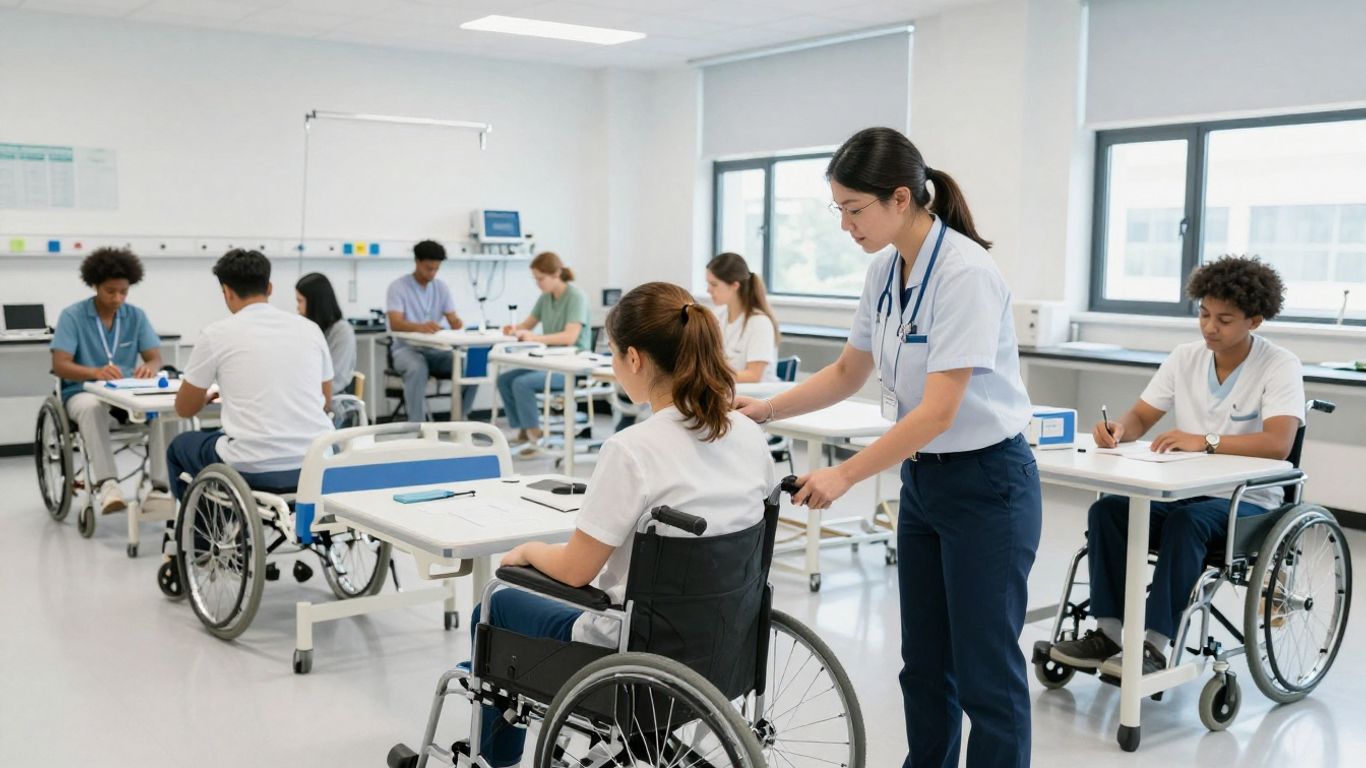
Class size affects how often you practice and how quickly an instructor can correct your technique. During a tour, look at the number of beds, mannequins, wheelchairs, and other equipment available for the group. Also ask whether clinical placements are confirmed before enrollment or arranged later.
A large lab is not automatically better, but students should not spend most of practice time waiting. The most useful setting is one where you can repeat skills, receive feedback, and gradually work with greater confidence.
Online, in-person, and hybrid options
Online learning may make reading and review easier, while in-person sessions provide direct coaching for physical skills. Hybrid formats require especially careful planning because online flexibility does not remove lab, clinical, or attendance obligations. Compare the technology platform, required login hours, instructor response times, and hands-on schedule.
For example, Carolinas College Nurse Aide describes a format combining online coursework with in-person labs and clinicals, with weekday, evening, and weekend choices. Treat that as a program-specific description and confirm current dates, hours, and fees before applying.
Estimate the cost of becoming a CNA
The advertised tuition is only one part of the budget. Registration, uniforms, shoes, supplies, transportation, screening, and examination charges can change the final amount. Request a written cost sheet so you can compare programs on equal terms.
Tuition, registration fees, and required materials
Ask whether tuition covers classroom instruction, lab access, clinical coordination, textbooks, digital resources, and skills practice. Some schools collect a separate registration or technology fee, while others bundle those costs. Confirm when each payment is due and whether enrollment deposits are refundable.
It also helps to compare total cost with schedule and support. A slightly higher price may be reasonable if it includes needed materials and more instructor-led practice, but you should not have to guess what you are buying.
Additional costs for exams, uniforms, and background checks
Budget for the state exam, uniform sets, closed-toe shoes, watch, stethoscope, immunization records, drug screening, background checks, and transportation. Requirements differ, so ask for an itemized list before paying a deposit. If clinical sites require updated records, those costs may arise during the program rather than at registration.
Use a simple comparison table to keep one school’s mandatory costs from being mistaken for another school’s optional extras:
| Cost category | What to confirm | When it may be due |
|---|---|---|
| Tuition and registration | Included instruction and deposit terms | Before class starts |
| Books and supplies | Required editions and equipment | Before lab begins |
| Uniform and shoes | Color, number of sets, dress rules | Before clinicals |
| Screening and records | Background, drug, and health checks | Before placement |
| Examination | Registration and retake charges | Near course completion |
After filling in the table, calculate transportation and missed-work costs too. The lowest posted tuition may not be the lowest overall expense if the schedule creates daily travel or repeated unpaid time away from work.
Financial aid, scholarships, and employer sponsorships
Ask whether the program accepts scholarships, workforce funds, payment plans, or employer sponsorships. Some healthcare employers help eligible employees with education expenses, while others sponsor training in exchange for a work commitment. Get the terms in writing, including repayment requirements if you leave early.
Not every non-credit CNA course qualifies for traditional financial aid. A financial aid office or workforce agency can explain which options apply to your circumstances, rather than assuming that a program’s use of the word “assistance” means tuition will be covered.
Questions to ask about refunds and payment plans
Before signing, read the withdrawal and refund policy carefully. Ask what happens if the class is canceled, you withdraw before the first meeting, you miss clinical hours, or you cannot complete the program. Also confirm whether a payment plan carries administrative fees or affects access to class materials.
Keep copies of the catalog, enrollment agreement, payment receipts, and written answers. Those records make it easier to resolve confusion later and help you compare offers without relying on memory.
Prepare for admission and enrollment
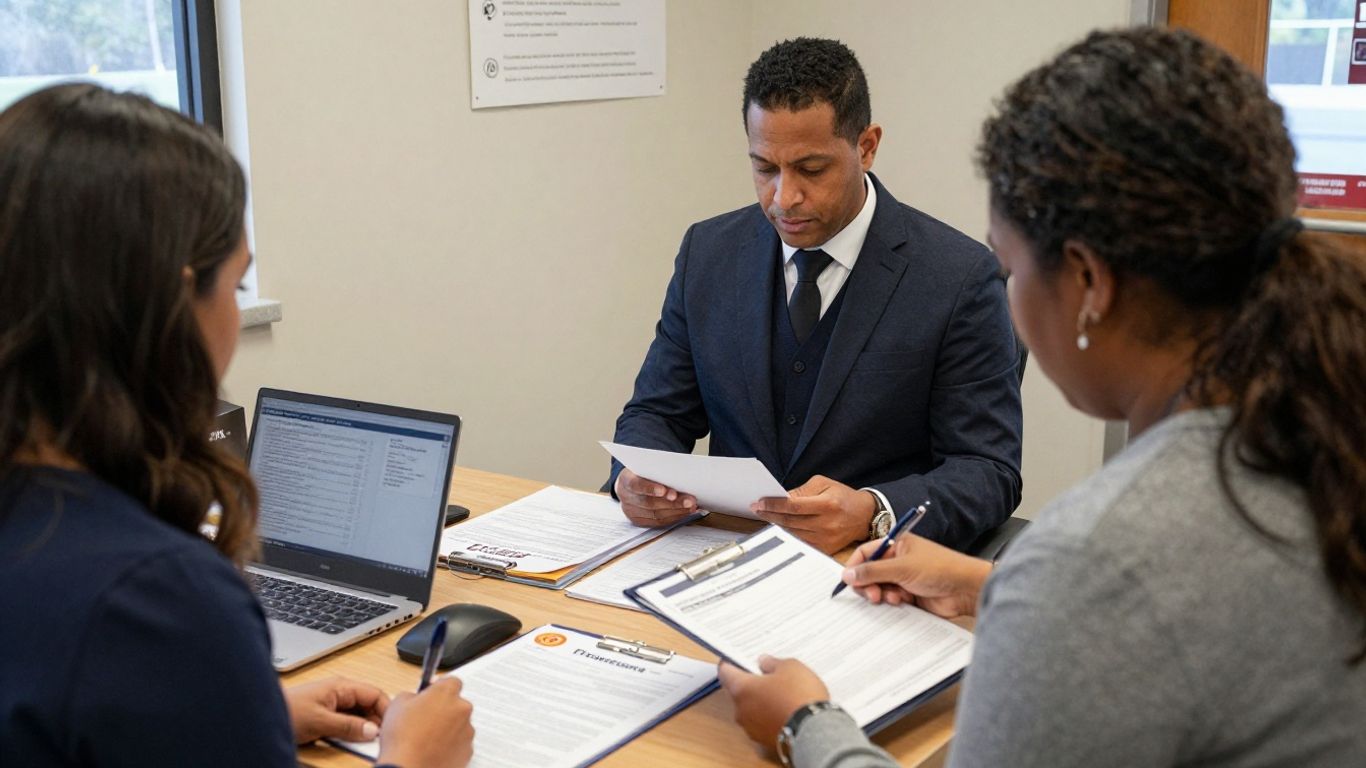
Admission steps can be simple, but missing one document may delay your start date. Schools commonly set deadlines for identification, education records, health forms, and screening results. Build a checklist early, especially if you are applying while working or caring for someone else.
Common eligibility and documentation requirements
Programs may ask for age verification, identification, an application, education information, and background disclosures. Some also require an interview, placement assessment, or proof that you can read and communicate effectively in English. Requirements are school-specific, so ask for the current admissions packet rather than relying on an old online post.
Prepare digital and paper copies of documents when possible. Check that names and dates match across records, since small inconsistencies can create avoidable delays during enrollment or testing.
Prerequisite courses, health records, and screenings
Some programs require CPR training, immunizations, tuberculosis screening, a physical examination, drug screening, or a criminal background check before clinical placement. Others complete certain steps after admission. Ask which provider must perform each test and how recently the result must have been issued.
Health requirements can take time, particularly when a vaccination record is incomplete. Contact a clinic or former school early so you have room to schedule appointments and resolve missing documentation.
Application timelines and class availability
CNA cohorts may begin several times a year, but seats can fill quickly. Ask when applications open, whether admission is first-come or selective, and when you will receive a final decision. Confirm the exact first class date, orientation date, lab schedule, clinical schedule, and expected completion date.
A flexible option is useful only if the seats and required sessions actually fit your calendar. Write the schedule into your weekly routine before enrolling, including commuting time and study hours.
How to evaluate school tours and information sessions
During a tour, notice whether staff answer direct questions and show you the actual lab rather than only a reception area. Look for clean equipment, clear safety procedures, accessible instructors, and students who have enough space to practice. Ask to see a sample calendar and the student handbook.
Use the visit to test practical details: parking, public transit, evening access, locker space, technology support, and clinical transportation. For comparison, a Charlotte CNA program guide can help organize questions about approval, cost, class size, and placement support.
Some search results may point to unrelated local services, so check the subject before trusting a page. A bathroom safety resource such as EasyBath, for example, is not evidence about CNA education and should not be confused with a training provider.
Get ready for the North Carolina CNA exam
Exam preparation should begin during training, not during the final week. The knowledge portion tests understanding of care principles, while the skills portion requires you to perform selected tasks safely and in the correct order. Ask how your school mirrors the testing environment and tracks your progress.
Written or computer-based knowledge testing
The knowledge test may be written or computer-based, depending on the testing process available to you. Review terminology, infection control, safety, communication, resident rights, basic care, and observation and reporting. Practice reading each question carefully instead of rushing toward the first familiar answer.
Use current candidate instructions for registration, identification, arrival time, and prohibited items. Your school should tell you where to find those instructions, but you remain responsible for confirming the details before test day.
Skills evaluation and common practice areas
Skills practice should include hand hygiene, personal care, mobility, positioning, vital signs, and communication with the resident. Instructors can help you develop a repeatable sequence, including privacy, safety checks, explanation, and cleanup. Practice speaking through the steps because silent knowledge can disappear under pressure.
Ask whether practice is timed and whether classmates can observe one another. Constructive peer observation often reveals missed safety steps that are hard to notice when you are focused only on your own hands.
Study strategies, practice tests, and retake policies
Short, regular study sessions are usually more useful than one long cram session. Use practice questions to identify weak topics, then return to class notes and demonstrations. Make a separate plan for skills: rehearse the sequence, perform it without prompts, and ask for correction.
- Review one knowledge topic at a time.
- Practice skills in the same order used during demonstrations.
- Record mistakes and repeat the task after feedback.
- Confirm the deadline and process for scheduling a retake.
A retake policy should explain which portion must be repeated, how soon you may test again, and what additional fees apply. Knowing the policy reduces uncertainty and helps you plan rather than treating a setback as the end of the process.
How schools support exam preparation
Ask whether the program offers mock exams, skills checkoffs, review sessions, tutoring, or individual remediation. Serenity Nurse Aide Academy describes hands-on CNA training and preparation for state exams; applicants should still verify current course details, schedules, and support directly with the school.
Good exam support is specific. An instructor who can tell you which skills need work and how you will practice them is more helpful than a general statement that graduates are “fully prepared.”
Choose a program that supports your career goals
Your first CNA position may influence whether you continue in healthcare, so consider more than passing the exam. Think about the setting, population, commute, schedule, and type of care you want to provide. A program should help you make an informed first step without promising a career outcome it cannot control.
Job placement assistance and employer connections
Ask whether career support includes resume review, interview practice, job boards, employer events, or introductions to local facilities. Find out whether placement figures are defined clearly and whether assistance continues after graduation. A school can open doors, but hiring still depends on your qualifications and the employer’s needs.
Request examples of recent employer partnerships only if the school can explain what those relationships involve. “We have connections” is less useful than a clear description of a hiring event, clinical relationship, or application support.
CNA roles in hospitals, nursing homes, and home care
CNAs may work in hospitals, nursing homes, assisted living communities, rehabilitation settings, or home care. The pace, lifting demands, documentation, supervision, and patient relationships vary by setting. During interviews, ask about orientation, staffing, shift expectations, and the scope of duties.
A program’s clinical setting may give you a useful introduction, but it does not lock you into one kind of job. Explore several environments and consider which one matches your temperament and long-term interests.
Pathways from CNA to medication aide or nursing school
CNA work can provide a foundation for additional healthcare education. Depending on North Carolina requirements and your employer, possible next steps may include medication aide training or preparation for practical or registered nursing programs. Confirm prerequisites, entrance testing, clinical requirements, and transfer policies before assuming one credential automatically leads to another.
For example, Blooming Heart School of Health describes Nurse Aide I and Medication Aide training, as well as CPR instruction. Treat that as a school-specific pathway and compare its eligibility rules with your own goals.
A search result about a female hairline guide, a hair transplant clinic, or bee hive removal is unrelated to CNA career planning. Filtering out irrelevant pages is a small but useful research habit when comparing schools online.
Questions to ask before accepting a training offer
Before accepting a place, ask for a complete written summary of the program. The answers should make clear what you will attend, pay, submit, practice, and do after graduation.
- Is the program currently approved for North Carolina nurse aide training?
- What are the total hours and required attendance dates?
- Which costs are included, and which are paid separately?
- Where do lab and clinical experiences take place?
- What exam preparation and retake guidance are provided?
If the school answers these questions plainly, you can compare it with less uncertainty. Take a day to review the agreement when possible, and do not let a limited-time enrollment claim replace careful research.
Conclusion
The best CNA school in Charlotte is the one that fits your schedule, budget, learning needs, and next career step while meeting North Carolina requirements. Compare written details, visit when possible, ask direct questions, and choose a program that treats clinical practice and student support as seriously as enrollment.
Frequently Asked Questions
How long does CNA training take in Charlotte?
The timeline depends on the school’s required hours, schedule, and clinical calendar. Ask for the total hours and the actual completion date rather than relying on phrases such as “fast track.”
What should I look for in a CNA school?
Check state approval, instructor access, lab resources, clinical placement, attendance rules, total cost, exam preparation, and career support. Recent student feedback can supplement, but not replace, those checks.
Can I complete CNA training online?
Some programs place classroom theory online, but nurse aide skills and clinical practice generally require in-person participation. Confirm the required lab days, clinical hours, technology, and attendance policy before enrolling.
What costs should I budget for besides tuition?
Plan for registration, books, supplies, uniforms, shoes, health records, screenings, background checks, transportation, and examination charges. Request an itemized estimate from each school.
Do CNA programs require a background check?
Many programs or clinical sites require a background check, and some may also require drug screening or health documentation. Ask when screening occurs and how a record could affect clinical eligibility.
How do I prepare for the CNA exam?
Attend every lab and clinical session, practice skills in sequence, review knowledge topics regularly, and use mock testing or instructor feedback. Confirm current testing instructions and retake rules before scheduling.
Can CNA training lead to nursing school?
CNA experience can help you understand patient care and healthcare teamwork, but nursing programs have their own prerequisites and admissions standards. Contact the nursing school directly to learn which courses and exams are required.