Thinking about a career in healthcare but not sure where to start? An online certified nursing assistant course is a fast and flexible way to get your foot in the door. These programs let you study from home while still getting the hands-on training you need. Whether you’re just out of high school or looking to change careers, becoming a CNA can open up new opportunities. Here’s what you need to know before signing up for an online certified nursing assistant course.
Key Takeaways
- Online certified nursing assistant courses mix online lessons with in-person clinical practice, so you get both knowledge and real-world experience.
- Most programs can be finished in just a few weeks or months, making it one of the quickest ways to start working in healthcare.
- You’ll need to meet some basic requirements, like a minimum age and passing a background check, before enrolling.
- Make sure any program you choose is approved by your state, so you’ll be eligible for certification when you finish.
- After completing your course and passing the exam, you can work in hospitals, nursing homes, or home care, and there’s room to move up in your career.
Understanding the Role of a Certified Nursing Assistant
Daily Responsibilities and Skills Needed
The day-to-day tasks for a Certified Nursing Assistant (CNA) definitely keep you busy. CNAs are on their feet a lot, helping patients with things most people take for granted—feeding, bathing, and getting dressed, to name just a few. Monitoring vital signs like temperature, pulse, and blood pressure is a standard part of the routine. You’ll also support patient mobility, using safe techniques to transfer people from beds to wheelchairs and back. Not every skill is physical—you’ll also communicate changes in a patient’s status to your supervising nurse, make sure infection control rules are followed, and provide a listening ear when someone just needs to talk.
| Common CNA Duties | Description |
|---|---|
| Personal Care | Bathing, dressing, grooming assistance |
| Vital Signs | Checking temperature, pulse, blood pressure, and breathing rate |
| Mobility Help | Assisting with walking, transferring, repositioning |
| Communication | Reporting changes, giving updates to nurses |
| Emotional Support | Being present with anxious or lonely patients |
The Impact of CNAs in Healthcare Settings
Honestly, CNAs are the backbone of many healthcare teams. Most work in nursing homes or hospitals, but you’ll also find them in home care agencies and residential living centers. They provide stability and a friendly face for patients during tough times. Their efforts give nurses time to focus on advanced care and make sure patient needs aren’t overlooked. It’s true that CNAs rarely get public praise. The reward is just knowing you helped someone have a better day, even if it’s something small, like offering a patient their favorite snack or noticing when something isn’t quite right. For anyone looking for a direct, people-centered healthcare role, it’s hard to beat this.
Many patients depend on CNAs for small but important things—getting comfortable, feeling safe, or just not being alone. It’s work that matters, even on days when it feels invisible.
Qualities of a Successful CNA
Succeeding as a CNA takes more than technical know-how. If you’re thinking about this path, keep in mind these qualities:
- Patience – Some days are long and some tasks are repetitive, but patience matters for both you and your patients.
- Attention to Detail – Noticing subtle changes in someone’s health can make a big difference.
- Physical Strength – Helping with transfers, lifting, and positioning needs stamina.
- Compassion – Genuinely caring for people, even on tough days, is key.
- Teamwork – CNAs rarely work alone; collaboration with nurses and other aides is part of the job.
Looking into online nursing assistant classes can give you a sense of the skills and commitment expected in this career, especially if you prefer a flexible way to start out.
Overview of an Online Certified Nursing Assistant Course
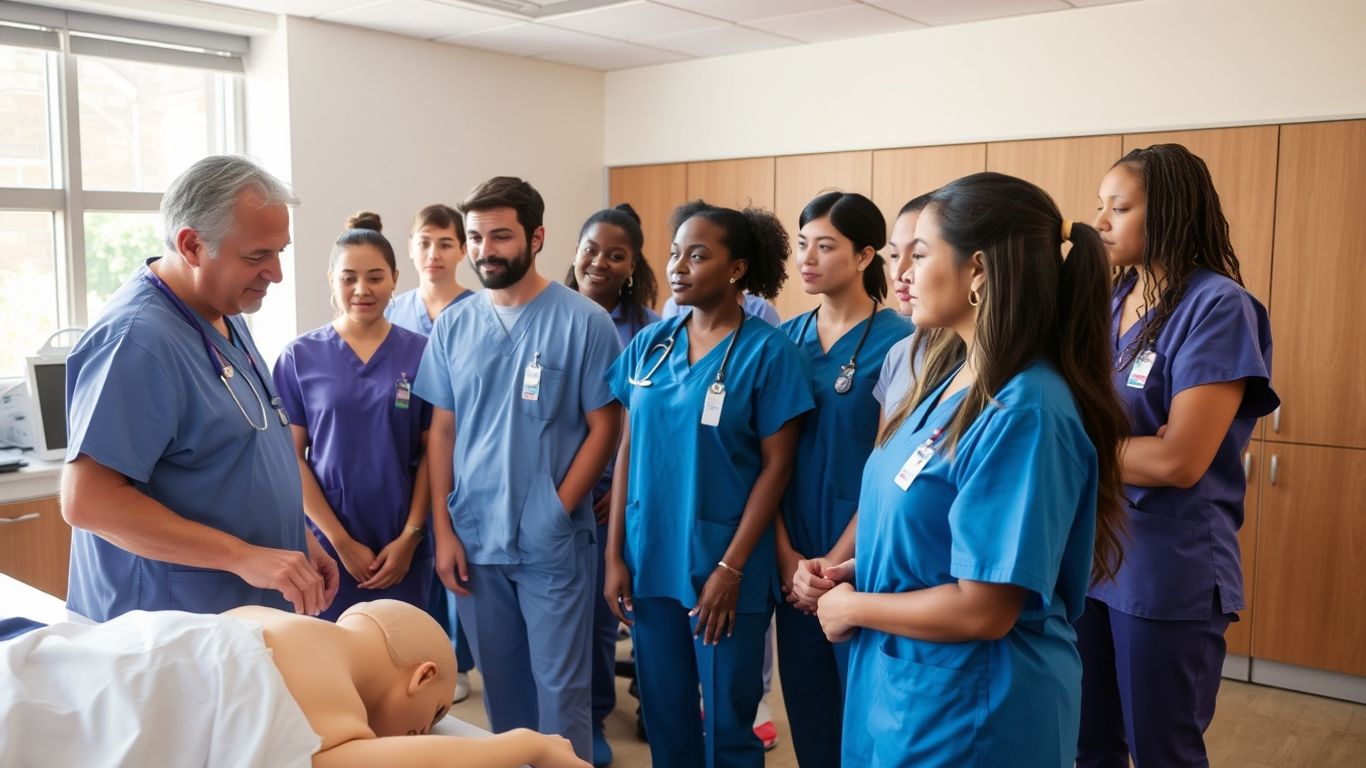
Online CNA programs are designed for people who want a quick way into healthcare, often while balancing other life stuff. They mix online study with hands-on learning, so you’ll spend time on the computer but will still need to show up in person to practice skills. Knowing what’s involved can help you decide if this path actually fits your situation.
What to Expect from Online CNA Programs
You’ll start with online modules, covering the basics of patient care, safety, infection control, and how to support everyday activities like bathing, feeding, and moving patients. These lessons are usually flexible, so you can work around your job or family. Typical features include:
- Self-paced video lectures and quizzes
- Interactive case scenarios (following real patient stories)
- Required readings and practice tests
But don’t expect to do it all from your couch. Every state requires real-world practice before you can get certified.
Online CNA programs let you fit studying into your schedule, but you’ll still need time set aside for hands-on skills training.
Typical Program Structure and Curriculum
Most CNA programs, including hybrid or online versions, stick to core topics and specific hour requirements. For example, a program may include about 40 hours of classroom learning and 80 hours in lab and clinical situations, like in this certified nurse aide program.
Here’s a look at common curriculum topics:
| Curriculum Topic | Description |
|---|---|
| Basic Patient Care | Bathing, feeding, moving, and dressing patients |
| Infection Control | Preventing spread of illness, hygiene practices |
| Vital Signs & Observation | Checking temperature, pulse, weight, etc. |
| Patient Rights | Respect, privacy, and ethical care |
| Communication Skills | Reporting and documenting patient needs |
| Special Populations | Dementia, cognitive impairments |
| Emergency Procedures | First aid and safe transfers |
Blending Online Learning with In-Person Training
While you can complete the theory parts online, actual caregiving skills can’t be learned by watching videos alone. Most states (and workplaces) want to see you perform tasks under supervision. How programs usually blend these:
- Complete your online lessons and quizzes first.
- Finish in-person lab practice, usually at a local healthcare facility or training center.
- Do your supervised clinical hours working with residents or patients, building confidence and real-world judgment.
Some tips for finding a good blend:
- Choose a program linked to a local hospital or care center for easier clinical placement.
- Look for flexible options that allow you to work while studying.
- Don’t skip out on clinicals — it’s where you’ll actually learn how to deal with people and the unexpected!
Balancing remote lessons with in-person practice means you get both knowledge and real experience — a must for anyone starting out as a CNA.
Admission Requirements for Online CNA Programs
Getting into an online Certified Nursing Assistant (CNA) program is usually pretty straightforward, but there are a few things you’ll need to have in order before you can start. Think of it like getting ready for a new job – they want to make sure you’re a good fit and can handle the responsibilities.
Educational and Age Prerequisites
Most programs have a minimum age requirement, often around 16 or 17 years old, though some might go up to 18. You’ll also need to show you’ve completed a certain level of education. While some programs might accept students who haven’t finished high school, many require a high school diploma or a GED. It’s always a good idea to check the specific requirements for the program you’re interested in, as they can differ.
- Minimum Age: Typically 16-18 years old.
- Education: High school diploma or GED often required, but some programs may have alternatives.
- Basic Skills: A foundational grasp of reading, writing, and math is usually expected.
Health and Background Checks
Because you’ll be working closely with patients, programs need to ensure you’re healthy and won’t pose a risk. This usually involves a few health-related steps:
- Physical Exam: You might need a check-up to confirm you’re physically able to perform CNA duties, like lifting or standing for long periods.
- Vaccinations: Proof of certain immunizations, such as the flu shot, COVID-19 vaccine, and tuberculosis (TB) testing, is commonly required.
- Background Check: A criminal background check is standard. This helps protect patients and ensures that individuals with certain convictions cannot work in healthcare settings.
These requirements aren’t meant to be difficult; they’re in place to maintain a safe and healthy environment for everyone involved in the training and patient care.
Application and Enrollment Steps
Once you’ve confirmed you meet the basic prerequisites, the application process is usually pretty standard. Here’s a general idea of what to expect:
- Submit an Application: Fill out the program’s application form, which can usually be found on their website.
- Provide Documentation: You’ll likely need to submit copies of your high school diploma/GED, identification, and any required health records or test results.
- Attend an Orientation: Many programs require an orientation session, either online or in person, to go over program details, expectations, and answer any questions.
- Pay Tuition/Fees: Figure out the payment plan, whether it’s a lump sum, installments, or if you qualify for financial aid or scholarships.
Meeting these admission criteria is the first step toward a rewarding career in healthcare.
How to Choose the Best Online Certified Nursing Assistant Course
Picking an online CNA course isn’t just about clicking the first result that pops up. Programs look pretty similar at first glance, but some just fit better for your life, budget, and future goals. There are a few things you should absolutely check before you lock in your choice.
Verifying State Approval and Accreditation
If your program isn’t approved by your state, your hard work won’t count toward certification. Every state sets its own requirements for CNA programs, and only those approved by your state’s board or department of health will make you eligible for the certification exam. Here’s what to do:
- Visit your state’s health or nursing board website to see which programs are officially approved.
- Don’t trust a school’s word alone—double-check their claim with the state source.
- Look for programs that follow federal curriculum requirements, which usually include basic nursing, personal care, mental health, and patient contact safety.
Taking the time to confirm approval saves you from disappointment down the line—you want your certification to actually count.
Comparing Program Formats and Lengths
Not every CNA program works for every schedule or learning style. Some run just a few weeks; others may stretch over a couple of months. Consider the format—how much is self-paced, how much is instructor-led, and how many in-person clinical hours you’ll need to fit in.
Sample Comparison Table
| Program Format | Time Commitment | Self-Paced Option | In-Person Clinicals |
|---|---|---|---|
| 100% Online Coursework | 4-8 weeks | Yes | Required |
| Hybrid (Online + Labs) | 8-12 weeks | Sometimes | Required |
| Evening/Weekend | 6-14 weeks | No | Required |
When choosing, think about:
- How fast do you want to get certified and start working?
- Do you prefer structured classes or learning at your own speed?
- Can you travel for clinicals, and is the location convenient?
If you want quick training and flexible class times, some programs complete in as little as 4 weeks.
Evaluating Costs, Payment Options, and Financial Aid
CNAs can earn a stable income, but you’ll want the training cost to make sense for your budget. Fees can run over $1,000, but there are ways to make it more affordable.
- Check the total tuition and calculate the price after financial aid.
- Ask about scholarships, grants, or reimbursement programs—sometimes employers will cover training costs.
- Make sure to factor in exam fees, uniform costs, and travel to clinical sites.
Example Price Breakdown:
| Program Fee | $1,600 |
|---|---|
| Uniform Fee | $50 |
| Exam Fee | $125 |
| Total | $1,775 |
It pays to compare programs not just on sticker price, but on any help you might get lowering costs. Some CNA grads say this made the difference between signing up and passing the course or not.
Choosing your CNA course isn’t just ticking boxes—it’s about finding a program you can finish without losing your mind or running out of money. Start with state approval, then weigh the format and price, and you’re on track to a career that offers both meaning and opportunity.
Completing Your CNA Training: Online and Clinical Components
Getting your CNA certification isn’t just about studying PowerPoints online—it’s a mix of online theory and real-world, hands-on practice. Let’s break down what you should expect when working through an online certified nursing assistant program.
Online Coursework: What You Will Learn
In the online portion, CNA students focus on basic healthcare knowledge and patient care. You’ll cover:
- Patient safety and infection control basics
- Personal care procedures such as bathing and feeding
- Vital signs—how to measure and report them accurately
- Communication skills for speaking with patients and healthcare teams
- Handling special situations: cognitive impairments, emergencies, and patient rights
Here’s a quick look at common subjects:
| Module | Topics Covered |
|---|---|
| Patient Care Skills | Bathing, feeding, dressing |
| Infection Control | Hand hygiene, PPE, preventing spread |
| Vital Signs & Monitoring | Blood pressure, pulse, temperature |
| Mental Health Support | Patient behavior, empathy, boundaries |
| Safety and Mobility | Transfers, fall prevention, equipment |
The online learning guides you through the essentials, but you’ll quickly see how much hinges on practicing those skills in real-time.
In-Person Clinical Training Explained
Online CNA courses aren’t totally remote. That’s by design: you have to master patient care in person. Once your academic modules are finished, you’ll move into required clinical training arranged by your school.
Clinical training typically includes:
- Working shifts at a nursing facility, hospital, or community healthcare center
- Practicing patient transfers, bathing, feeding, and taking vital signs under supervision
- Applying infection control procedures in the real world
- Communicating with patients and staff, often in a busy, unpredictable environment
You’ll complete a set number of supervised hours—often 75 to 175 hours, but check your state’s requirements. Federal guidelines say at least 16 must be devoted strictly to hands-on learning, and some states require more.
Tips for Success During Your Training Period
Balancing online study and in-person training is a big task. Here are ways to keep yourself on track:
- Make a schedule for both your coursework and clinical hours—don’t rely on memory alone.
- Ask questions as soon as you’re unsure about anything in your clinical rotation—there’s no such thing as a silly question here.
- Practice your skills outside formal training if possible. For example, ask family to help you practice turning and repositioning a person or simulate measuring a pulse.
- Keep all your class materials, notes, and assignments organized so you can review quickly before your clinical days.
- Rest and eat well before clinical shifts—fatigue can make it harder to perform new skills or remember procedures.
The most important thing you’ll learn during CNA clinical training is confidence—making decisions safely even when the environment is busy or stressful.
Taking the CNA Certification Exam After Your Online Course
Once you finish your online CNA program, you’re not quite done. The real test is the state certification exam, which is your ticket to actually getting hired as a CNA. Here’s what you can expect before, during, and after the exam process—nothing sugarcoated.
Exam Structure and Preparation
Most CNA certification exams follow a two-part format:
- Written or oral test: Tests your knowledge of care practices, safety, and infection control.
- Skills evaluation: You perform several nurse aide tasks for an evaluator. These could be measuring vital signs, hand washing, or helping a patient move.
Getting yourself ready?
- Review your textbooks and class notes (seriously, don’t just skim).
- Take as many practice tests as you can find—repetition helps cement what you’ve learned.
- Practice hands-on skills with friends or at your clinical site so you’re not rusty on test day.
If you’re worried about testing, try not to let nerves get the better of you. Most people pass on their first try if they put in the work.
Registering and Scheduling Your Exam
The registration process isn’t always obvious, so here are the basics:
- Find your state’s testing site or CNA board link—often, your school will give you this info.
- Submit your application, usually online. You’ll probably need proof of completing your CNA program and a few other basics, like an ID.
- Pay the testing fee. Fees vary but expect somewhere between $100 and $150.
- Choose your preferred date and location for the test.
| Step | What You’ll Need |
|---|---|
| Application | Proof of completed CNA program, photo ID |
| Payment | Debit/credit card or whichever payment is accepted |
| Scheduling | Date/location preference |
It’s important to check your state rules for deadlines—some states are strict about when you can take the test after finishing your classes. And don’t forget the required forms like your completed Physical Exam Form.
State Certification Process and Reciprocity
Passing the written and skills tests is a huge step, but you’re not official just yet. Here’s what comes next:
- Once you pass, send in your application for state certification, plus any extra documents (like background check details or fingerprints).
- Wait to get added to your state’s nurse aide registry—usually a matter of weeks.
- When you’re certified, you can now work as a CNA in your state—and sometimes in other states, too, if they have reciprocity agreements with yours.
Keep these points in mind about state certification:
- Most states require CNAs to renew their certification every two years.
- Some states ask for proof that you worked as a CNA during each renewal period.
- If you move out of state, you’ll usually need to apply for reciprocity—or in some cases, take another test.
The state exam can feel like the final boss fight, but it’s really just one more step in your new career as a CNA. Show up prepared, breathe, and remember—you’ve already done the hard part with your training.
Career Opportunities After Completing an Online Certified Nursing Assistant Course

After you finish your online CNA course and pass the state certification exam, the range of job options opens up. Certified Nursing Assistants can work in many different healthcare settings and even move up to new roles over time. You might be surprised how much flexibility there is in this field, from hospitals to home care and even specialty positions.
Where CNAs Work: Top Employment Settings
Most CNAs get started in a handful of common settings, each with its own atmosphere and typical day:
- Skilled Nursing Facilities: These are long-term care places, where you help people with daily living things over months or years.
- Hospitals: Work here means seeing different patients every day, handling various needs from basic care to urgent help.
- Residential Care Centers: These are a bit like nursing facilities but can focus on different kinds of care, such as rehab or memory care.
- Home Health Agencies: Instead of staying in one building, you travel to people’s homes and assist there, often getting to know your patients quite well.
You could also step into roles like patient care technician or hospice aide as you gain more experience or training, which are natural additions to the CNA career path.
Earning Potential and Job Outlook
CNA pay can change depending on the workplace, region, and your own experience. Here’s a breakdown of what you can expect:
| Work Setting | Median Salary (Annual) | Notes |
|---|---|---|
| Government | $45,760 | Highest pay, additional benefits |
| Hospitals | $40,170 | Fast-paced, varied patient needs |
| Nursing/Residential Care | $39,530 | Most common setting for new CNAs |
| Home Health Care | ~$37,000 | Flexible hours, independent work |
The job market for CNAs is pretty steady. Even when things slow down elsewhere, people always need skilled care. If you’re looking for a career that won’t disappear, this is it.
Advancement Pathways for CNAs
Starting as a CNA is just the beginning. There are plenty of ways to build your career from here:
- Specialize by Job Role: Move into specific areas, like becoming a medication aide, patient care technician, or hospice aide.
- Climb the Nursing Ladder: Use your experience to transition to a licensed practical nurse (LPN) or go on to become a registered nurse (RN) by enrolling in more schooling.
- Take on Leadership or Training: Some CNAs become supervisors for other aides or work as trainers for new CNA students.
The CNA path is great if you want something stable, with the option to keep growing your skills or changing up your daily routine as the years go by.
Conclusion
So, that’s the rundown on getting certified as a nursing assistant online. It might feel like a lot to take in, but the process is pretty straightforward once you break it down. You pick a state-approved program, finish your online classes, get your hands-on training done, and then take the exam. Before you know it, you could be working in a hospital, nursing home, or even helping folks in their own homes. Sure, the job is tough and the hours can be long, but a lot of people find real meaning in helping others every day. If you’re looking for a quick way to start a new career in healthcare, an online CNA course could be your ticket. Just remember to check your state’s requirements, compare programs, and think about what fits your life best. Good luck if you decide to go for it!
Frequently Asked Questions
Can I finish a CNA program completely online?
No, you can’t complete a CNA program fully online. While you can do the classroom part online, you must do the hands-on clinical training in person at a healthcare facility.
How long does it take to become a certified nursing assistant?
Most online CNA programs take about 4 to 12 weeks to finish. After that, you’ll need to complete your clinical hours and pass the state exam. The whole process can take a few months, depending on your schedule and your state’s rules.
What do I need to get into an online CNA program?
You usually need to be at least 16 or 18 years old and have a high school diploma or GED. Some programs may also ask for a background check and proof of certain vaccines, like for flu or COVID-19.
How much does an online CNA program cost?
The cost of an online CNA program can be anywhere from $300 to $2,000. The price depends on the school, how long the program is, and where you live. Some places offer payment plans or financial aid to help with costs.
What kind of jobs can I get after becoming a CNA?
After you’re certified, you can work in hospitals, nursing homes, home care, or clinics. CNAs help patients with daily tasks like eating, bathing, and moving around. Some CNAs also work in private homes or assisted living centers.
Can I use my CNA certification in another state?
Some states let you transfer your CNA certification, but you’ll need to check with the new state’s nursing board. This is called reciprocity, and you may need to fill out forms or take another test.