Key Takeaways
A two-week CNA course can be a practical route into entry-level healthcare work, but speed does not remove the need for supervised practice or state approval. Before enrolling, compare the curriculum, clinical hours, total cost, and certification pathway.
- Two-week programs compress classroom, laboratory, and clinical learning into a demanding schedule.
- State rules determine the required hours and the steps needed before certification.
- A legitimate school should clearly document approval, instructors, clinical placements, and exam preparation.
- Tuition is only one part of the budget; plan for screenings, supplies, testing, and transportation.
- Fast training suits organized learners who can study and practice consistently every day.
How 2 week CNA classes work
The phrase “2 week CNA classes” usually describes an accelerated, full-time course rather than a shortcut around CNA training. Lessons, skills practice, and clinical experience are arranged close together, so students may spend most weekdays in class or at a training site. The exact format depends on the school and the state where the program operates.
A useful starting point is this accelerated CNA program guide, which covers concentrated curricula, clinical hours, state requirements, costs, and exam planning. Treat it as a planning aid, then verify all requirements with the relevant state agency and school.
What an accelerated CNA program includes
An accelerated program generally combines theory with hands-on practice. Students learn the principles behind safe patient care, rehearse procedures in a laboratory, and apply those skills during supervised clinical training. The course may also include assignments, quizzes, demonstrations, and preparation for the state competency exam.
The pace means there is little room to postpone difficult material. A learner who misses a day may need to catch up quickly, particularly when later clinical work depends on earlier instruction.
How classroom, laboratory, and clinical hours are divided
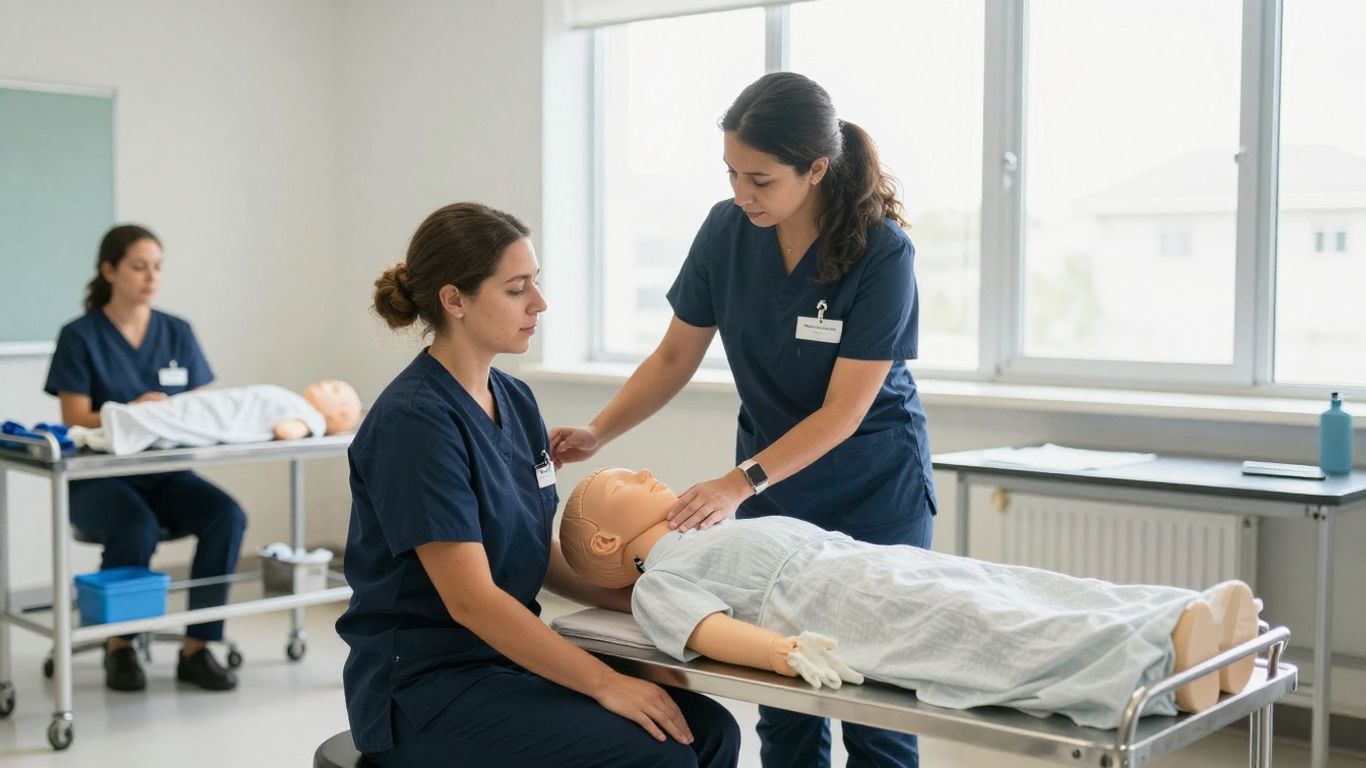
The three learning settings serve different purposes. Classroom time introduces terminology, safety concepts, communication, and the role of the nursing assistant. Laboratory sessions allow students to practice techniques with feedback, while clinical hours place those techniques in a real care environment under supervision.
Schools should provide a written hour breakdown rather than describing the course only as “two weeks.” Ask which hours are classroom, which are laboratory, and which are clinical, and whether attendance is mandatory for each portion.
Why program length can vary by state
States set their own training and testing rules, so a two-week schedule in one location may not satisfy requirements in another. Some jurisdictions require a larger number of total hours, specific clinical experiences, or particular application steps before a student can test.
For example, state-focused resources such as this California CNA certification guide can help explain why local approval and clinical requirements matter. Do not assume that completing a short course automatically makes you eligible for a neighboring state’s exam or registry.
How intensive the daily schedule may be
A compressed course often uses long weekdays, frequent skills practice, and evening study. There may be reading to complete after class, along with memorization of procedures and preparation for the next day’s demonstration. It is closer to a short-term full-time commitment than a casual evening class.
Plan ahead for travel, meals, childcare, work coverage, and sleep. The schedule is manageable for some students, but the real question is whether you can remain attentive and practice accurately throughout the entire period.
What you will learn during CNA training
CNA training focuses on helping patients with everyday needs while protecting their safety, dignity, and comfort. The work is practical, but it also requires judgment about when to follow a care plan, when to ask for help, and when to report a change to a nurse. Safe, respectful care is the thread connecting the technical skills.
Expect repeated demonstrations and practice rather than a purely online academic experience. A course may use videos or digital materials, but required hands-on and clinical components still need to be completed in the manner approved by the state.
Basic nursing skills and patient safety
Students commonly practice measuring vital signs, positioning patients, using safe body mechanics, and maintaining a clean and organized care area. They also learn how to recognize hazards and reduce the risk of falls, injury, or discomfort during routine assistance.
The goal is not to diagnose or independently plan medical treatment. CNAs work within their assigned role and report relevant observations to the supervising nurse.
Infection control and emergency procedures
Hand hygiene, personal protective equipment, cleaning procedures, and preventing cross-contamination are central parts of training. Students also review what to do when a patient becomes unresponsive, falls, or shows a sudden change in condition, including how to summon help promptly.
Emergency instruction is about following established procedures calmly and accurately. A student should know the boundaries of their role and avoid improvising beyond their training.
Personal care, mobility, and daily living assistance
Bathing, grooming, dressing, toileting, feeding, repositioning, transfers, and walking assistance are typical areas of practice. These tasks can seem straightforward until a student must account for mobility limits, privacy, pain, equipment, and the patient’s preferences at the same time.
Good technique protects both people. Students should learn to explain what they are doing, encourage independence where appropriate, and use equipment according to instruction.
Communication, documentation, and residents’ rights
Training also covers listening, professional communication, accurate reporting, documentation, confidentiality, and residents’ rights. Patients may be anxious, confused, frustrated, or reluctant to accept help, so tone and patience matter as much as procedure.
A CNA should report observations clearly and promptly without adding speculation. Respect for consent, privacy, dignity, and personal choice belongs in every interaction, not just in an exam answer.
How to choose a legitimate 2 week CNA program
A short program deserves more scrutiny, not less. A polished website or low advertised price cannot tell you whether the school is approved, whether clinical hours are real, or whether graduates are eligible to test. Compare the program against the state’s official requirements before submitting an application or deposit.
This CNA program selection guide offers a useful checklist for approval, instructors, class size, clinical training, schedules, and costs. Use those questions during a call with the school, and ask for answers in writing when the issue affects eligibility.
Checking state approval and accreditation
Ask which state agency approves the program and how you can verify that status independently. Approval should apply to the actual course and location you plan to attend, not merely to a related institution or an older course listing.
Accreditation may be relevant, but state approval and exam eligibility are especially important for a CNA pathway. If staff cannot explain the approval process or direct you to a current official listing, pause before enrolling.
Comparing instructor qualifications and class sizes
Instructors should have appropriate clinical experience and the authority to teach the required material. Ask who supervises laboratory practice, how feedback is delivered, and how many students attend each skills session.
A crowded lab can limit practice time, while a very small class is not automatically better if instruction is disorganized. Look for a clear plan that gives every student repeated opportunities to perform and correct each skill.
Reviewing clinical training requirements
Clinical training should be more than a tour or observation period. Ask where it takes place, how many hours are included, who supervises students, and whether the placement is guaranteed or arranged only after enrollment.
Find out what happens if a clinical site cancels or a student cannot attend a scheduled shift. A reputable program should explain attendance, make-up policies, uniforms, transportation, and conduct expectations before the first day.
Confirming whether the program prepares you for certification
Completion of school training and certification are separate steps. Confirm whether the program covers the knowledge and skills tested by your state, helps with the application, and explains how to schedule the competency exam and registry process.
A useful comparison point is a complete CNA career guide, which discusses training, clinical rotations, financing, and certification exams. Still, use your state’s current instructions for the final decision because exam procedures and forms can change.
Costs, schedules, and enrollment requirements
The advertised tuition is only the beginning of the financial picture. A short course can require a concentrated period away from work, and transportation or childcare may cost as much as some school fees. Build a complete budget before deciding that an accelerated schedule is affordable.
Schedule details matter just as much. A weekday daytime course may finish quickly, while evening or weekend formats usually spread the same learning over a longer period.

Typical tuition and additional training expenses
Ask for an itemized estimate covering tuition, registration, books, uniforms, shoes, equipment, background checks, health screenings, immunizations, and exam fees. Some schools bundle several items; others leave them to the student.
Also ask about refunds, payment plans, late fees, and the cost of repeating a course or skills assessment. A low deposit does not necessarily mean a low total price.
Day, evening, and weekend class options
Day classes are often the easiest format for fitting classroom, lab, and clinical hours into two weeks. Evening and weekend options can work better for employed students, but they may extend the calendar and still require substantial study time between sessions.
Before choosing, map the schedule against your actual obligations. A course that looks flexible on paper may still require daytime clinical attendance or mandatory weekday testing.
Prerequisites, background checks, and health screenings
Programs may ask for identification, education information, a background check, a physical examination, immunization records, or other health documentation. Requirements vary, and a pending document can delay enrollment or clinical placement.
Request the full checklist early. Confirm deadlines, acceptable providers, expiration periods, and whether a particular background issue affects eligibility before paying for screenings.
Questions to ask before paying a deposit
A deposit should follow clear answers, not pressure. Write down the school’s responses and compare them with its enrollment agreement. These questions cover the details most likely to affect your time and money:
- Is the specific course currently approved by the state?
- How many classroom, laboratory, and clinical hours are included?
- What expenses are not included in tuition?
- What happens if I miss a class or a clinical shift?
- Which certification exam and registry steps does the school support?
The answers should be specific enough for you to plan. If staff avoid questions about clinical placement, refunds, or exam eligibility, that uncertainty is itself a reason to keep researching.
Preparing for the CNA certification exam
Finishing training is a milestone, but the certification exam requires its own preparation. Most states use a knowledge component and a skills component, although names, scheduling, and procedures vary. Read the candidate handbook for your state instead of relying on advice from a different jurisdiction.
Set aside study time from the first day. In an accelerated course, waiting until the final weekend can leave too much material competing for attention.
What to expect on the written or knowledge test
The knowledge test commonly checks concepts taught in class, including safety, infection control, communication, personal care, basic nursing practices, and residents’ rights. Questions may ask what action should come first or which response best protects a patient.
Read each question carefully and distinguish between what a CNA can do, what must be reported, and what requires a nurse’s direction. Practice questions are most useful when you review why an answer is correct rather than memorizing letters.
How the skills evaluation is structured
The skills evaluation usually asks you to perform selected CNA procedures while an evaluator checks required steps. You may need to explain actions, maintain privacy, use supplies correctly, and demonstrate infection-control practices throughout the task.
Exact skills and scoring rules differ by state. Obtain the official candidate materials and practice in the same sequence used by the testing instructions whenever possible.
Common mistakes students make during skills testing
Many errors are not dramatic technical failures. Students may forget hand hygiene, fail to identify a patient, skip privacy measures, leave a bed unsafe, or neglect to report an observation. Nervousness can also cause a student to rush through steps that were practiced correctly in class.
Slow down enough to follow the sequence. If the testing rules allow correction or verbal clarification, use those options appropriately rather than silently moving past a missed step.
Study strategies for an accelerated course
Short daily reviews are usually more effective than one long session at the end. Use a simple routine that combines recall, physical practice, and explanation:
- Review the day’s terminology and safety principles.
- Practice one or two skills aloud using the official sequence.
- Ask a partner to observe without rescuing you too quickly.
- Write down mistakes and repeat those steps before studying new material.
This approach turns feedback into a study plan. It also helps reveal whether you understand a procedure or are only recognizing it when someone else demonstrates it.
Deciding whether a 2 week CNA class is right for you
An accelerated CNA course can shorten the time between enrollment and exam preparation, but it does not make the work effortless. You will still need to absorb information, practice hands-on skills, complete clinical requirements, and manage the administrative steps that follow training. The best choice depends on your schedule, learning habits, finances, and state requirements.
For a broader view of timelines, compare this CNA program length guide, which discusses intensive full-time and part-time formats. Use it to frame your decision rather than treating any single timeline as universal.
Benefits of completing training quickly
A two-week format may suit someone who can commit to full-time study and wants a focused transition into healthcare. The close timing between lessons and practice can keep the material fresh, and a fixed end date may make planning easier.
It can also be useful for learners who prefer momentum over a long, part-time schedule. Those benefits matter only when the program meets state standards and leaves enough time for genuine practice.
Challenges of learning in an intensive format
The pace can be tiring, especially when classroom work is followed by laboratory or clinical responsibilities. Students have less time to recover from missed lessons, arrange outside obligations, or revisit a difficult concept.
Stress can affect concentration and practical performance. Be honest about your available time, transportation, support system, and ability to study consistently before choosing the shortest calendar.
When a longer CNA program may be a better fit
A longer course may be preferable if you work full time, need evening instruction, learn best through repetition, or have limited access to childcare or transportation. More calendar weeks can provide space to absorb terminology and build confidence without compressing every obligation into a few days.
Longer does not automatically mean higher quality, just as shorter does not automatically mean inadequate. The deciding factors remain approval, curriculum, clinical experience, teaching quality, and your ability to complete the program.
Next steps after earning CNA certification
After passing the required exam, follow your state’s instructions for registry placement and renewal. Then prepare a basic résumé, gather proof of certification, and look for entry-level roles that match your training and availability.
As you compare future options, remember that Heart to Heart Healthcare Training documents a state-approved Michigan CNA program with hybrid instruction and day, evening, and weekend schedules. That example illustrates why location-specific details matter when planning the next step; it is not a substitute for your state’s rules.
Conclusion
The right two-week CNA class is not simply the one that ends fastest. It is a legitimate program with clear hours, supervised clinical practice, qualified instruction, transparent costs, and a direct explanation of certification requirements. Compare those details carefully, then choose the format that lets you learn safely and finish what you start.
Frequently Asked Questions
Can you really become a CNA in two weeks?
Some approved programs can fit required training into an intensive two-week schedule, but the answer depends on state rules, total hours, clinical requirements, and exam availability. Completing class does not always mean certification is immediate.
Are two-week CNA classes difficult?
They can be demanding because classroom instruction, skills practice, clinical work, and studying occur close together. Students usually need strong attendance, organization, and the ability to practice outside scheduled lessons.
Do two-week CNA programs include clinical training?
A legitimate program should explain its required clinical component clearly. The number of hours, location, supervision, and attendance rules vary by state and school, so confirm them before enrollment.
What are the usual CNA prerequisites?
Requirements vary, but a school may request identification, education information, a background check, health documentation, immunization records, or a physical examination. Ask for the complete checklist and deadlines.
How much do CNA classes cost?
Tuition varies widely by location and provider. Budget separately for books, uniforms, screenings, background checks, transportation, testing, and any required supplies or repeat fees.
Is online CNA training enough for certification?
Online materials may cover theory, but certification pathways commonly require in-person laboratory and clinical training. Confirm the accepted format with the school and the state agency before enrolling.
What happens after CNA training?
You generally apply for and pass the required knowledge and skills assessments, complete registry steps, and follow renewal rules. After certification, you can seek entry-level work within the CNA scope of practice in your state.