Key Takeaways
Choosing among cna classes san antonio requires more than comparing advertised tuition. Look closely at approval, practice time, instructor support, scheduling, and the steps that follow graduation.
- Confirm that the program prepares you for Texas nurse aide certification.
- Ask for a complete breakdown of tuition, supplies, fees, and refund policies.
- Make sure classroom learning includes supervised lab and clinical practice.
- Compare instructor access, class size, exam preparation, and student support.
- Choose a schedule that works with your job, transportation, and family needs.
Understand what CNA training includes
A CNA program should connect classroom knowledge with the practical work of assisting patients. You will learn how to support safety, comfort, hygiene, mobility, communication, and basic daily care. Before enrolling, ask for a course outline and confirm how much time is devoted to each part of training.
The strongest programs make expectations clear from the beginning. They explain attendance rules, clinical requirements, testing preparation, and the credentials included in the tuition. That clarity helps you compare schools on more than a low advertised price.
Core nurse aide skills and classroom instruction
Classroom instruction typically introduces infection prevention, patient rights, communication, observation, nutrition, vital signs, and safe care procedures. It should also explain professional boundaries and when a nurse aide must report a change in a patient’s condition. Look for lessons that use realistic situations rather than relying entirely on memorization.
Ask whether instructors provide written materials, demonstrations, and opportunities to ask questions. A thoughtful curriculum gives you a foundation for safe practice while helping you understand why each task matters.
Hands-on lab and clinical practice
Lab sessions give you a controlled place to practice transfers, positioning, bathing, dressing, hand hygiene, and other care skills before working with patients. Clinical practice then adds real routines, communication, and time management under supervision. Confirm that the school explains where clinical hours occur and how students are evaluated.
A tour can reveal whether equipment is available for every learner or whether students spend much of the session watching. Regular practice time matters because confidence comes from repeating a skill, receiving correction, and trying it again.
State competency exam preparation
Texas certification requires preparation for both knowledge and skills components of the competency exam. A useful program should explain the test format, provide practice questions, and schedule structured skills reviews. Ask whether mock testing is included or costs extra.
The school should also tell you what paperwork is completed by the program and what you must submit yourself. For a broader overview of Texas pathways, review this Texas CNA process alongside the school’s own instructions.
CPR, first aid, and additional certifications
Some programs include CPR or first aid training, while others treat those credentials as optional add-ons. Ask which organization issues each certificate, how long it remains current, and whether the fee is already included. Do not assume that a phrase such as “healthcare certification” means the same thing at every school.
These extras can be useful, but they should not distract from the central question: does the course provide complete nurse aide education and supervised clinical experience? Compare the full package rather than choosing based on one additional certificate.
Check Texas CNA eligibility requirements
Admission rules vary by school, even when programs lead toward the same state examination. San Antonio applicants may need to meet age or education standards, complete screening steps, and provide health documentation before clinical placement. Get the requirements in writing before paying an application or registration fee.
It is also wise to ask when each document is due. A missing immunization record or delayed background check can postpone your start date, particularly when clinical sites have their own deadlines.

Minimum age and education requirements
Many programs set a minimum age and ask for a high school diploma, GED, or equivalent documentation. The exact rule may depend on the provider, so do not rely only on a social media post or an old program flyer. Ask whether unofficial records are acceptable for application and when official proof must arrive.
If you are still completing high school or an equivalency program, ask about conditional admission. A short conversation with admissions can prevent you from applying to a class whose requirements you cannot yet satisfy.
Background checks and health screenings
A background check is commonly connected to admission or clinical placement, and some programs also require health screenings. Ask who orders the check, what it costs, and how the school handles a record that needs review. A prior issue does not always answer the question by itself; the program should explain its process without promising an outcome.
Health screening requirements may include a physical examination, drug screening, or other clearance requested by a clinical facility. Find out how current the results must be and whether you may use a provider of your choice.
Immunization and documentation requirements
Clinical sites can require immunization records, tuberculosis screening, CPR documentation, identification, and proof of insurance or other forms. Requirements can change, so request the current checklist from the admissions office. Keep paper and digital copies in a folder you can update as appointments are completed.
Ask whether the school has a deadline for submitting records before the first clinical day. This small detail can affect whether you remain eligible for the cohort you selected.
English proficiency and physical capabilities
Students need to understand instruction, communicate with patients and staff, read care information, and document observations appropriately. Some schools assess English reading or communication during admission, while others describe expectations in the catalog. Ask what support is available if you need help with medical vocabulary.
The work can involve standing, bending, assisting with movement, and following safe body mechanics. A school should describe these physical demands accurately and explain how accommodations are requested, rather than leaving students to discover them during clinical practice.
Compare CNA programs in San Antonio
San Antonio offers several kinds of training providers, and their structure can differ considerably. Compare approval status, curriculum, clinical arrangements, total cost, and student support together. A useful CNA program comparison guide can help you build a checklist, but the school itself remains responsible for giving you current details.
Try to compare at least two or three programs using the same questions. One may have a shorter calendar, another a more convenient location, and a third more flexible payment terms. The best choice is the one you can realistically complete.
Community colleges, career schools, and training centers
Community colleges may fit students who want a broader academic setting, while career schools and training centers may focus more narrowly on workforce preparation. Neither label guarantees quality. Review the actual instructor qualifications, clinical site, equipment, schedule, and approval information.
Location matters as well. Consider travel time for class and clinical days, parking or public transportation, and the reliability of your route. A lower tuition bill may not remain economical if commuting makes attendance difficult.
Program length, schedules, and attendance policies
Program calendars may range from several weeks to a few months, depending on the hours, meeting frequency, and clinical arrangement. Ask how many absences are allowed, whether make-up sessions exist, and whether missing a clinical day requires joining a later cohort. Attendance rules are not minor fine print in a hands-on course.
Write down the exact start and end dates, including exam-preparation sessions. If you work, compare those dates with your employer’s leave policy before making a deposit.
Tuition, fees, books, and required supplies
Request an itemized cost sheet rather than comparing tuition alone. Include registration, uniforms, shoes, textbooks, background checks, screenings, testing fees, and transportation to clinical placement. Ask which payments are refundable and whether financial assistance is available.
The following categories make a practical side-by-side comparison:
| Cost or feature | Question to ask | Why it matters |
|---|---|---|
| Tuition | What does the advertised price include? | Prevents surprises after enrollment |
| Supplies | Are uniforms, shoes, and books included? | Shows the true upfront cost |
| Clinical expenses | Are screenings or travel separate? | Helps you budget for placement |
| Exam fees | Is testing included or paid later? | Clarifies the cost of certification |
After you fill in the table for each school, compare the total cash you will need before the first class. A payment plan can be helpful, but only if you understand its dates, fees, and cancellation terms.
In-person, hybrid, and accelerated options
Hybrid programs may move some theory online while keeping lab and clinical work in person. Accelerated courses compress the calendar and may require full-time availability, while traditional schedules spread the workload over a longer period. Ask how online attendance is recorded and what technology you must provide.
A fast course is not automatically easier. Before choosing one, confirm that you can complete reading, practice, clinical hours, and exam preparation without rushing through essential skills.
Evaluate school quality and student support
A polished website can tell you very little about the daily learning experience. Visit the site when possible, speak with an instructor or coordinator, and ask to see the lab. Pay attention to whether answers are specific or mostly promotional.
You are evaluating a learning environment, not just a seat in a class. The right questions reveal how often students practice, who helps when they struggle, and what happens if an exam attempt does not go as planned.
Instructor qualifications and teaching experience
Ask who teaches the course, what clinical experience they bring, and whether they remain available outside scheduled class time. Experienced healthcare professionals can connect procedures to patient safety and workplace judgment. You should also learn who supervises students during clinical practice.
A school that readily explains instructor roles and qualifications is easier to assess. If admissions cannot answer basic questions, request the program director’s contact information before enrolling.
Class sizes and access to practice equipment
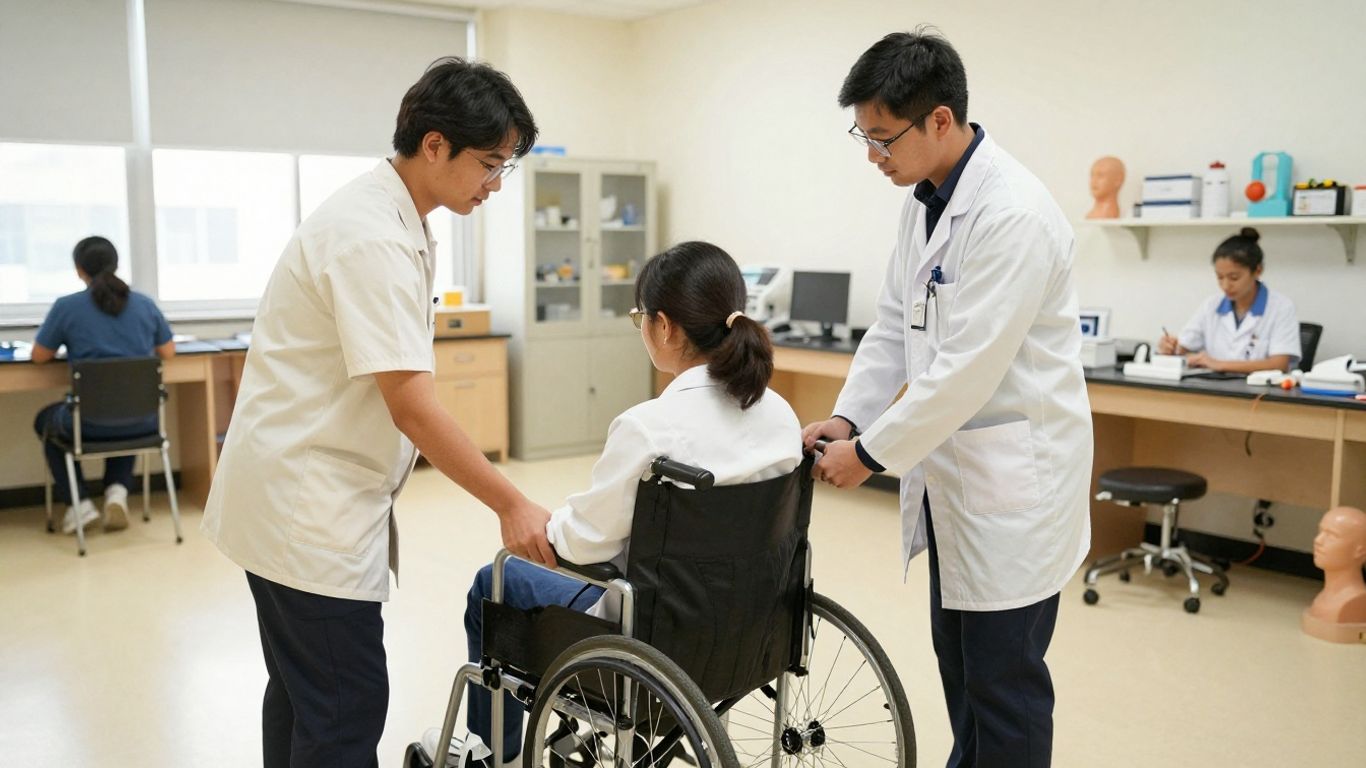
Class size affects how often you can perform each skill and receive individual feedback. Ask how many students share beds, mannequins, gait belts, wheelchairs, and other equipment. Find out whether open lab time is available for students who need additional repetition.
Observe the condition and organization of the practice space during a tour. Equipment does not need to look new, but it should be safe, functional, and sufficient for the activities promised in the curriculum.
Graduation and state exam pass rates
Ask whether the school publishes graduation and first-attempt exam pass rates, and clarify the period and student group behind each figure. A percentage without a timeframe or denominator is difficult to interpret. Also ask how many students started the cohort and how many completed it.
Use outcomes as one part of your review, not as a guarantee. A transparent program will explain its data and discuss the support available to students who need another attempt.
Tutoring, advising, and job placement assistance
Find out whether tutoring, skills coaching, advising, and career assistance are included. Ask whether job placement means resume guidance, employer introductions, interview practice, or something more limited. Get any promises about services in writing.
Schools also vary in how they communicate. Look for a clear contact person, predictable response times, and a process for raising concerns. Resources about AI for nonprofits or text-to-speech in classrooms are not substitutes for CNA advising, but they illustrate why accessibility and practical support are worth asking about directly.
Plan for the Texas CNA certification process
Finishing classes is a major milestone, but it is not the same as completing certification. Confirm the sequence of school verification, application, scheduling, knowledge testing, skills evaluation, and registry listing. The program should tell you what it submits and what remains your responsibility.
Keep copies of applications, receipts, emails, and score reports. A simple timeline can make deadlines easier to manage and can help you identify a missing step quickly.
Registering for the nurse aide exam
Ask the program director how completion is reported and how you apply for the nurse aide examination. Confirm the testing vendor, application instructions, required identification, and any deadlines. Do not schedule based on a classmate’s experience if your program gives different instructions.
Before submitting anything, check that your name and contact information match your official documents. Small errors can delay communication about eligibility or scheduling.
Preparing for the written or oral knowledge test
Review terminology, safety principles, infection control, resident rights, communication, and basic care procedures. Practice answering questions without relying only on recognition, since you need to understand the reasoning behind safe care. If an oral option is available under current rules, ask the testing provider about eligibility and arrangements.
Use practice tests to identify weak areas, then return to class notes or instructor explanations. Short, regular study sessions are often more manageable than trying to memorize everything the night before.
Practicing for the skills evaluation
The skills evaluation rewards accurate sequencing, respectful communication, infection control, and safe technique. Practice saying what you are doing, preparing supplies, protecting privacy, and cleaning the work area. Ask an instructor to watch complete runs rather than correcting only isolated movements.
Make a personal checklist of steps that are easy to forget. Rehearse under mild time pressure after your technique is sound, since the testing environment may feel different from a relaxed classroom lab.
Understanding retesting and certification timelines
Ask how many attempts are allowed for each exam component, how soon a retest can be scheduled, and whether additional fees apply. Also clarify how long you have after program completion to finish the process. These details should come from current Texas instructions and the testing provider.
If you do not pass on the first attempt, request a written plan for review and another practice session. A setback is easier to manage when you know the next deadline, cost, and preparation resources.
Choose a program that fits your career goals
Your first CNA position can shape what you learn next, so consider the settings that interest you before choosing a class. Long-term care, assisted living, hospitals, and home health may involve different routines and expectations. A program cannot guarantee a particular job, but it can help you build a relevant foundation.
Think about the kind of patient contact, pace, schedule, and supervision you prefer. Then ask whether the school’s clinical experience and career guidance align with those priorities.
Preparing for work in nursing homes and assisted living
Long-term care and assisted living roles often require patience, consistency, respectful communication, and close attention to changes in a resident’s condition. Look for training that treats dignity, daily routines, mobility, nutrition, and documentation as central skills. Clinical exposure in a similar setting may help you understand the work more realistically.
Ask whether the school discusses shift expectations and workplace communication. Those practical conversations can be as useful as technical instruction when you are preparing for a first position.
Exploring hospital and home health opportunities
Hospital and home health roles may have different hiring requirements, supervision structures, and patient-care routines. Before assuming a CNA credential qualifies you for every setting, check individual employer postings and ask the program about local opportunities. Transportation and scheduling can also matter more in home-based work.
Career advice should be specific without overstating what a certificate guarantees. Use it to identify possible entry points, then verify requirements with employers.
Building experience for future nursing education
CNA work can help you test whether direct patient care suits you and can build habits that carry into later healthcare education. It may also expose you to different specialties, documentation practices, and team dynamics. Still, future nursing programs have their own prerequisites and admissions standards.
If nursing school is a longer-term goal, ask an advisor how to preserve transcripts, document credentials, and plan prerequisite coursework. Treat the CNA program as a first step, not a promise of automatic admission elsewhere.
Balancing training with work and family responsibilities
A realistic schedule includes commuting, homework, meals, sleep, childcare, and time to recover from demanding clinical days. Write out a typical week before selecting morning, evening, weekend, hybrid, or accelerated classes. Leave room for unexpected obligations rather than planning every hour at maximum capacity.
The practical questions are straightforward:
- Can I attend every required classroom and clinical session?
- Do I have dependable transportation for early or late shifts?
- Who can help with childcare or family responsibilities?
- Can I budget for tuition, supplies, and exam-related costs?
Answering these questions honestly can steer you toward a slower program that you actually finish. A manageable pace is often more valuable than an impressive start date.
Take the next steps toward enrollment
Once you have narrowed the list, contact each school with the same short set of questions. Compare written answers, not just the friendliness of a phone call. If you need help finding nearby options, a local CNA class search can make the first round of research easier.
Then visit the most promising programs and verify the details before signing an enrollment agreement. The same habit of checking credentials and transparent terms applies when reading about choosing a dentist in Encino, San Antonio car rentals, or 24/7 locksmith services: look for specific information, current details, and a clear way to ask follow-up questions.
Questions to ask during a school tour
A tour should help you picture an ordinary class day, not merely display a reception area. Ask to see the lab, learn how practice time is scheduled, and request an explanation of clinical supervision. Notice whether staff answer directly and invite reasonable questions.
Useful questions include:
- Is the program currently approved for Texas nurse aide training?
- How are clinical sites assigned, and how far might students travel?
- What happens if I miss a required lab or clinical day?
- Which exam and career services are included in tuition?
Write down the answers while they are fresh. Comparing notes later is much easier than relying on memory.
Documents to gather before applying
Prepare identification, education records, immunization information, screening results, and any forms the program lists. Ask whether documents must be original, certified, current, or uploaded in a particular format. Keep a copy of everything you submit.
If a record is still pending, tell admissions early. Staff may be able to explain acceptable alternatives or the final date for completing the file.
How to compare enrollment deadlines
Some programs enroll by cohort, while others accept students on a rolling basis. Record the application deadline, orientation date, deposit deadline, document deadline, and first class date in one calendar. Also ask when the next cohort begins if the current one fills.
Do not let urgency replace due diligence. A few extra days spent checking costs, approval, clinical arrangements, and cancellation terms can save considerable frustration.
Warning signs of an unreliable CNA program
Be cautious when a school will not provide an itemized price, avoids questions about approval, guarantees a job, or promises certification without clearly describing the state examination. Other concerns include pressure to pay immediately, unclear clinical arrangements, and claims that seem too good to verify.
Walk away if staff discourage you from reading the enrollment agreement or refuse to identify the program director. Reliable schools should be willing to explain requirements, limitations, and next steps in plain language.
Conclusion
The right CNA program in San Antonio is one that combines approved training, meaningful practice, clear costs, reliable support, and a schedule you can sustain. Compare schools carefully, verify every requirement, and choose the path that prepares you not only to pass the exam but also to provide safe, respectful patient care.
Frequently Asked Questions
How long do CNA classes in San Antonio usually take?
Program length varies by provider and schedule. Accelerated courses may compress instruction into several weeks, while part-time programs can take longer; confirm the total classroom, lab, and clinical hours before enrolling.
Do I need a high school diploma to start a CNA program?
Many schools request a diploma, GED, or equivalent, but admission rules vary. Ask the specific program what proof it accepts and whether students still completing an equivalency program may apply.
Are CNA classes offered online?
Some programs place portions of theory online, but hands-on lab and supervised clinical practice generally require in-person participation. Confirm exactly which activities are online and what technology you must provide.
What costs should I budget for besides tuition?
Plan for registration, books, uniforms, shoes, screenings, background checks, transportation, and examination fees. Request an itemized estimate so you can compare the true cost of each program.
What does the Texas CNA exam include?
The competency process includes a knowledge component and a skills evaluation. Your school should explain the current application, scheduling, testing, and retesting procedures.
Can CNA training lead to hospital work?
It can provide an entry point into healthcare, but individual hospitals set their own hiring requirements. Review job postings and ask programs about clinical experience and career preparation relevant to hospital roles.
What should I do if I fail one part of the exam?
Ask the testing provider about retesting limits, fees, deadlines, and scheduling. Then use instructor feedback or additional practice to address the specific skills or knowledge areas that need improvement.