Key Takeaways
Starting your journey as a nurse aide requires balancing academic theory with hands-on practice. These pointers clarify the path ahead for your training:
- Hybrid programs combine online learning modules with local clinical rotations.
- Flexible scheduling often allows students to manage work or family commitments.
- Mandatory requirements typically include background checks and specific health screenings.
- Hands-on clinical sessions ensure you feel comfortable with direct patient care.
- Verifying accreditation helps ensure your certification leads to employment opportunities.
Understanding the hybrid CNA structure
Choosing a hybrid CNA program creates a unique pathway for students who need to balance their education with existing life responsibilities. This structure typically divides the curriculum into discrete segments that allow you to master theoretical knowledge before setting foot in a medical facility. By decoupling the classroom component from the physical skill laboratory, these programs provide a structured yet accessible entry point into the nursing field.
How online coursework is delivered
Online coursework is often hosted through a dedicated learning portal where you access recorded lectures, reading assignments, and interactive modules. This phase allows you to absorb complex medical terminology and care principles at your own pace before moving into more rigorous settings. For instance, the Critical Care Training Center offers a robust online framework that allows students to engage with essential concepts without being tied to a physical campus during the initial weeks.
The role of virtual simulation in training
Virtual simulation serves as a digital bridge between reading about a procedure and actually touching a patient. It allows you to practice decision-making in a safe, risk-free environment where you can review your performance immediately. This tech-driven approach reinforces critical thinking skills so you feel prepared when the time comes to apply your knowledge to real-world scenarios.
Minimum technology requirements for students
Reliable internet access and a functional computer are the backbone of any remote-learning experience. You need a device capable of running browser-based testing platforms and video conferencing software without frequent crashes. Before you commit, make sure your hardware meets the specifications listed in the course enrollment packet to prevent mid-term connectivity issues.
Benefits of choosing a hybrid format

Opting for a hybrid model means you are no longer constrained by the rigid schedules of traditional vocational classes. This approach creates a more efficient educational experience by allowing you to focus your physical attendance on practical skills, which is the most critical part of becoming a well-prepared healthcare professional. Many students find that this balance reduces the burnout often associated with commuting long distances for every single minute of content.
Flexibility for working students
If you have a job, you likely appreciate the ability to log in and complete assignments during non-traditional hours. This structure supports those who need to maintain their income streams while they transition into a new career path. By handling the theory portion at home, you clear your schedule for only the most essential in-person activities.
Cost-effectiveness compared to traditional programs
Hybrid programs frequently require fewer hours of expensive in-person instruction, which can lead to reduced overhead and lower course fees. Some institutions pass these savings on to students by minimizing the need for physical infrastructure usage per student. When costs are minimized, your path to certification becomes significantly more accessible and financially sustainable.
Accelerated learning timelines
Because you are responsible for the self-paced online components, many students move through the content faster than a standard classroom track allows. This can compress your total training time, allowing you to enter the workforce on a shorter schedule. This efficiency provides a distinct advantage for those looking to start their new nursing career quickly.
Mandatory requirements for enrollment
Preparing for the administrative side of nursing school is just as important as the clinical side. Most programs require you to submit documentation that proves your physical readiness and legal eligibility to work closely with patients in clinical settings. You must complete these steps early, as background checks and health records can take several days or even weeks to process.
Background check and health screening prerequisites
Safety remains the top priority in any medical education setting, necessitating strict background checks to protect patients. Additionally, health screenings are required to ensure you can physically perform duties like lifting, repositioning, and standing for long periods. For example, Elgin Community College requires students to provide proof of immunizations, drug screen results, and a current heart health certification before training begins.
Minimum age and education level verification
While most programs are open to anyone with a secondary education, you should check specific age requirements tied to your state’s laws. Some nursing assistant programs mandate that you are at least 16 or 18 years old to comply with labor and safety regulations at clinical sites. You will typically need to provide transcripts or a diploma as proof of your educational level during the application process.
Language proficiency and entrance assessments
Effective communication is essential for the safety of your patients and teammates. Many programs administer a reading and writing assessment to ensure you can accurately document vitals and report patient observations. If English is not your first language, you might need to provide additional certification of your literacy skills to ensure you can comprehend standard medical instruction.
Balancing online theory with in-person clinicals
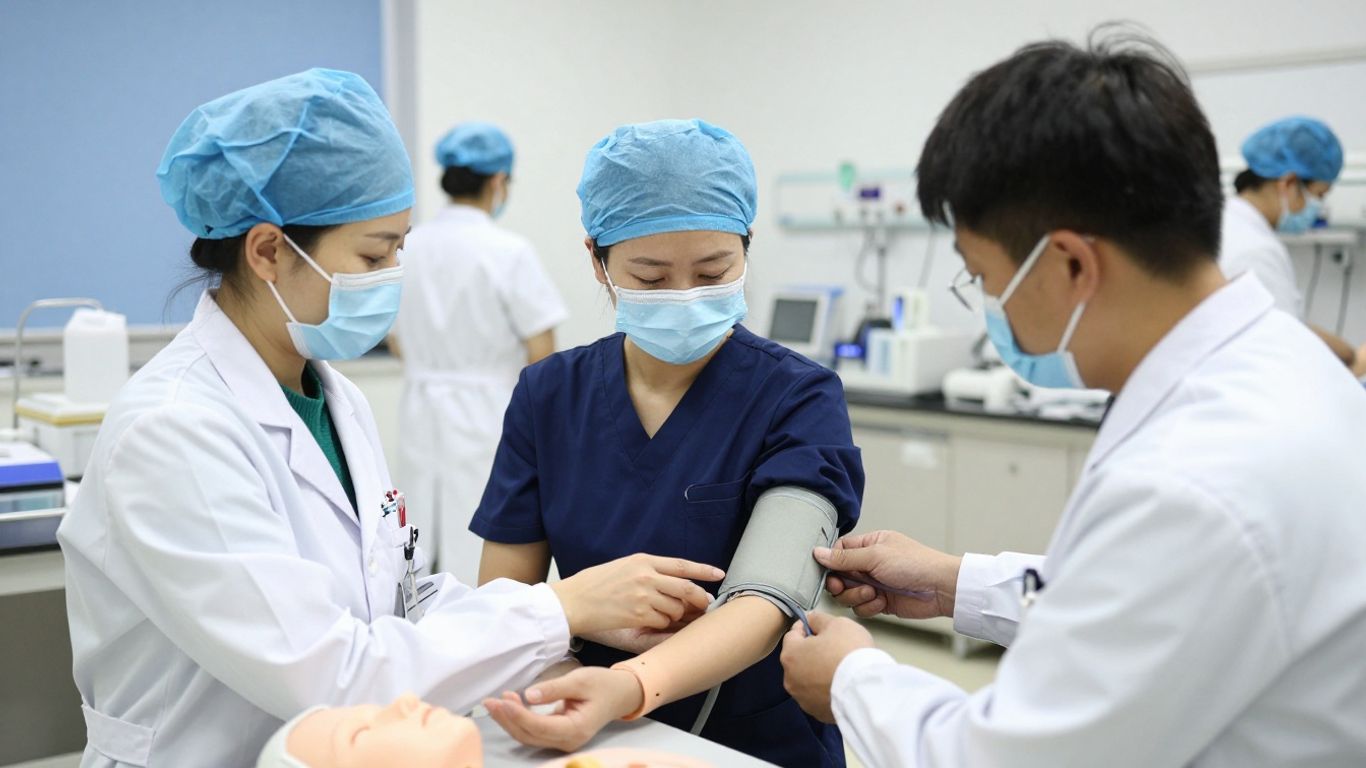
Clinical hours represent the core of your education where theory meets human interaction. Developing a plan for when and where you will complete these supervised hours is essential for success. This balancing act requires organization, as you are responsible for integrating classroom findings and applying them successfully in a live clinical environment.
Scheduling your clinical rotation sites
Finding the right clinical site can influence your future career outlook significantly. Many programs coordinate with local healthcare facilities to provide diverse learning environments. Here is how your program components generally stack up to ensure you develop the right skills:
| Training Aspect | Theoretical Component | Practical Application |
|---|---|---|
| Basic Patient Care | Online module videos | Bedside hygiene practice |
| Vital Sign Monitoring | Digital assessment tools | Manual blood pressure checks |
| Safety Procedures | Risk assessment guides | Incident reporting training |
By following this structure, you consolidate learning into concrete, actionable steps. You should work closely with your program coordinator to secure a placement that aligns with your commute and availability.
Safety protocols for hands-on skill practice
Safety is not just a policy but a daily practice in the lab. You will learn to use personal protective equipment, follow standard precautions to prevent disease transmission, and maintain a sterile, efficient workspace. It is standard for students to follow a few core rules to ensure everyone stays safe during these intense sessions, such as:
- Wear appropriate, closed-toe footwear for the lab environment.
- Sanitize all shared equipment immediately before and after use.
- Complete health clearance sign-offs prior to your first session.
- Follow the designated instructor-led protocols for hazardous waste.
These practices protect your own health while ensuring you uphold the professional standards required for the MassBay Community College clinical placement model.
Expectations for instructor-led check-offs
During your clinicals, an instructor will evaluate your practical skills one by one to ensure you meet the state-mandated benchmarks. These check-offs are formal assessments where you demonstrate how to safely move a patient or correctly record intake and output. Passing these checks is a prerequisite to moving forward in your studies, so take the feedback you receive seriously as it helps refine your patient-care technique.
Evaluating program accreditation and quality
Quality assurance sets apart good programs from those that fail to prepare you for the state board exams. You must verify that the education you are paying for aligns with legal standards in your region. Without proper accreditation, your training hours might not count toward your state testing eligibility.
Verifying state-approved curriculum standards
Before you enroll, check if the program is officially recognized by your state’s health or nursing department. These agencies set the minimum hourly requirements for both theory and clinical practice. Choosing an approved program prevents delays in scheduling your final state certification test.
Reading reviews and graduate employment outcomes
Look for feedback from past students who have successfully navigated the program you are considering. Their insights regarding the support they received from instructors can be incredibly revealing. You might also check if the school publishes data on graduate employment rates, as this is a key indicator of whether local employers trust the program’s training quality.
Checking pass rates for state certification exams
High pass rates on state certification exams usually indicate a curriculum well-aligned with the test’s requirements. Institutions that support students through the exam registration process and offer review sessions often see better results. Feel free to ask the program director about their recent pass rates to gauge how well they prepare their cohort for the final challenge.
Preparing for the state certification exam
The final exam is the last step between you and your professional career. Preparing for this requires a mix of test-strategy review and physical skill practice that mirrors the intensity of the testing day. By systematically reviewing your coursework and engaging with your peers, you can approach the test with confidence.
Reviewing content modules from the online portal
Go back through the digital portal and revisit sections where your test scores were lower. Even if you understand the material, practicing the reasoning behind the questions will help you during the actual test. Repetition is often the best strategy for mastering terminology and procedure hierarchies.
Practicing clinical skills in supervised labs
Book extra lab time if your facility offers it. Working through the clinical skills under the watchful eye of an instructor allows you to catch small mistakes before they become habits. The more you perform these tasks, the more natural they will become when you are under the pressure of an official exam setting.
Utilizing practice tests to improve performance
Practice tests are the most effective indicator of whether you have mastered the content. Take several timed sessions to get accustomed to the logic of the questions and the time constraints of the exam board. If you find yourself consistently missing a specific category, focus your final review sessions on that area to close the knowledge gap.
Conclusion
Choosing a hybrid CNA program requires careful research and planning, but it offers a flexible route into a fulfilling healthcare career. By balancing the self-directed nature of online theory with the structured, hands-on environment of clinical labs, you become well-equipped to serve your future patients with compassion. Stay focused on your goals, satisfy all administrative and practical requirements, and you will be ready to succeed in your state certification exam and beyond.
Frequently Asked Questions
How long does a hybrid CNA program typically take to complete?
Most hybrid programs range from six to twelve weeks depending on the required clinical hours and your personal availability for completing the online modules.
Can I work while enrolled in a hybrid nursing assistant program?
Yes, the hybrid format is specifically designed for students who need to maintain employment, as much of the coursework can be completed on your own schedule outside of clinical hours.
What happens if I fail the clinical portion of my training?
Most schools offer remedial sessions or a chance to repeat the clinical hours, but you must typically pass these segments to remain eligible for the state certification exam.
Do I need to buy my own equipment for the hybrid lab sessions?
Usually, the facility provides all necessary medical equipment, though you might be required to purchase professional scrubs, a stethoscope, and comfortable footwear.
Is the clinical portion of the program located near my home?
Programs typically partner with local nursing homes and clinics near the school, though the exact location depends on where your specific program has established its agreements.
Do I receive a degree after completing these programs?
These programs typically grant a certificate of completion rather than a college degree, which is the industry-standard qualification required to register for the state nurse aide exam.
How do I find out if a program is state-approved?
Visit your state’s official Department of Health or Nursing board website, which maintains a list of all currently authorized nursing assistant training programs in the region.