Key Takeaways
Starting your journey as a nursing assistant requires careful planning and a clear understanding of the regulatory landscape. This guide provides essential insights for anyone looking to enter the healthcare field.
- State-approved training is mandatory for all aspiring certified nurse aides in Louisiana.
- Clinical rotations are essential to building the hands-on skills required for the state competency exam.
- Comparing programs involves evaluating instructor credentials and the specific resources offered for job placement.
- Financial planning should include researching grants like WIOA or private school payment plans.
- Career advancement opportunities often include transitioning into roles like LPN or RN after gaining initial patient experience.
Understanding the certification process in Louisiana
Louisiana Department of Health requirements
Becoming a certified professional starts with meeting standards set by the state to ensure patient safety and quality of care. The Louisiana Department of Health provides a comprehensive framework that governs how training providers must operate. You need to verify that your chosen course is state-approved, as this is the only path to sitting for the final certification exam.
Length and structure of state-approved courses
Most entry-level Certified Nursing Aide programs in the state are designed to be intensive and efficient. While specific course lengths can vary, they generally focus on a mix of classroom theory and supervised practice. Managing your schedule is vital because these programs move quickly and require consistent attendance to cover the curriculum effectively.
Clinical rotation expectations
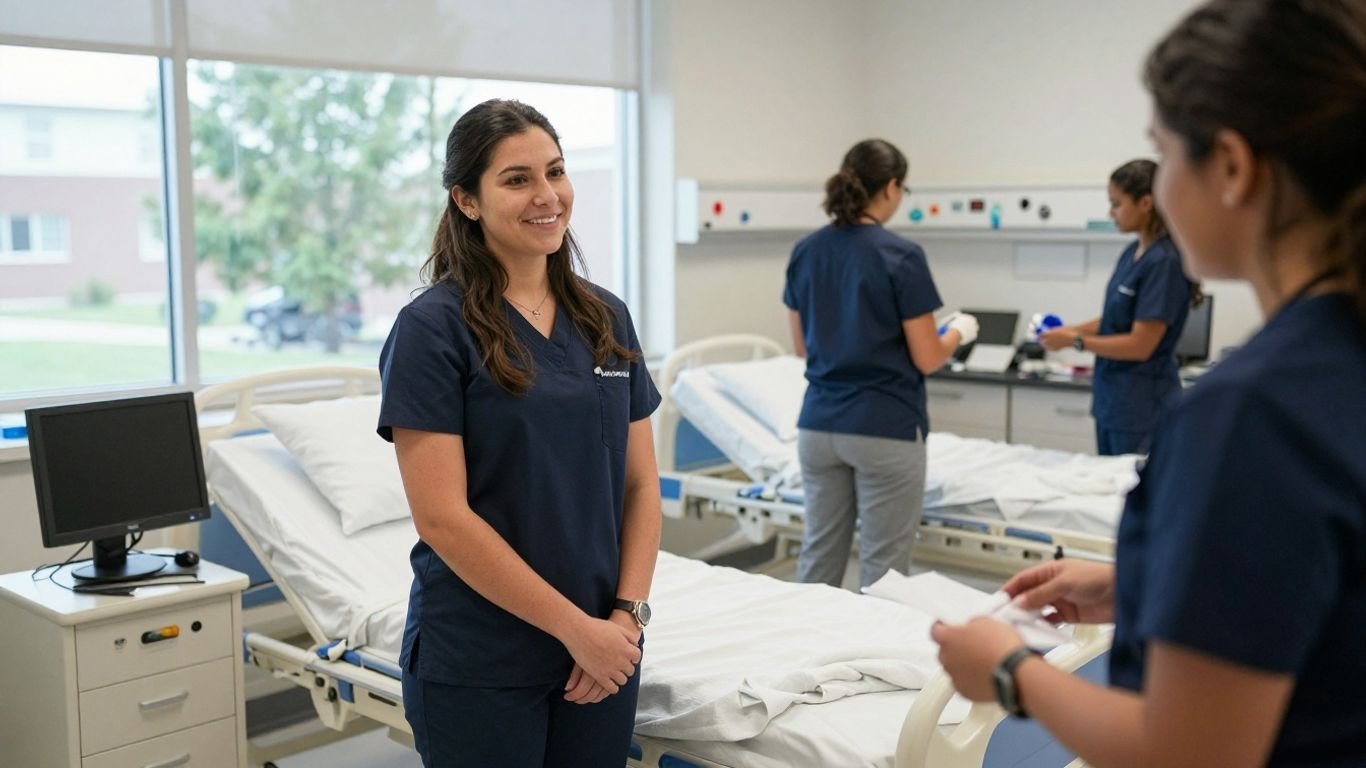
Students spend significant time performing actual bedside care under the observation of licensed professionals. This is where you learn to handle the daily responsibilities that define the role. Much like the precision needed in thermoplastic road marking paint applications where standards of quality are strictly enforced, every procedure you perform during your rotation must meet established safety benchmarks to ensure patient well-being.
Importance of taking the state competency exam
Finalizing your status requires passing a two-part assessment that tests both your written knowledge and practical skills. You should dedicate time to reviewing your course materials thoroughly before the test date. Success on this exam is the ultimate gatekeeper for your professional credentialing.
Key factors to consider when comparing programs

Faculty experience and credentials
When you look at different schools, prioritize those where educators have extensive backgrounds in long-term care. You want to learn from people who understand the rhythm of a busy medical facility. Experienced faculty often have insights that exceed standard textbooks, providing valuable context that you might not find elsewhere.
Student-to-instructor ratios in clinical settings
Smaller groups ensure you get personalized attention during critical tasks. If you find yourself in a lecture setting, it might feel easier to get lost in the crowd, but in a clinical lab, you need someone watching your technique closely. A well-managed Delta College program often emphasizes this balance to ensure every student feels supported during their training.
Flexibility of class schedules for working adults
Finding a path that fits your life is just as crucial as finding the right school. Whether you are seeking a Gold Coast Hinterland style peaceful study environment or a fast-paced urban campus, check the course timing. Some programs offer weekend or evening options, allowing you to maintain your current employment while advancing your new career.
Access to job placement assistance services
Programs that offer career counseling often provide a significant advantage for new graduates. To see how this works, consider this summary of common support services:
| Support Service | Primary Goal | Availability |
|---|---|---|
| Resume Workshops | Professional Presentation | Monthly |
| Mock Interviews | Confidence Building | Quarterly |
| Networking Events | Employer Connections | Bi-annually |
Having these resources available means you are not navigating the job market alone immediately after your certification.
Popular CNA training options in Baton Rouge

Evaluating vocational and technical colleges
Local institutions often serve as the cornerstone of healthcare training within the city. They provide a structured environment and usually have long-standing partnerships with local hospitals. Because they adhere to strict state regulations, you can expect a very reliable curriculum that covers every aspect of the required caregiving standards.
Opportunities through community-based organizations
Some local non-profits offer specialized training that focuses on the heart of patient-centered care. For example, the YWCA of Greater Baton Rouge provides comprehensive workforce development programs. Working with these organizations can provide extra layers of support that are quite helpful for students who might need guidance navigating the complexities of entering the workforce.
Considering private medical training centers
Private centers often provide faster enrollment cycles and can be a great option if you are eager to get into the job market quickly. When sourcing materials or specific tools for your lab training, you might occasionally work with specialized suppliers similar to those utilized by Acrylic.SG for precision cut components. These centers aim for student-centered experiences that cater to varied learning styles.
Assessing online hybrid program availability
While the theoretical portion of training might be available online, ensure your program still prioritizes the mandatory in-person hours. Some learners prefer the ability to complete lectures at home before heading to the clinical site. It is a common trend to simplify the logistical side, but never compromise on the requirement for hands-on, supervised patient contact.
Navigating tuition costs and financial aid
Estimating total program expenses and fees
It is helpful to break down not just tuition, but the auxiliary costs like scrubs, background checks, and exam fees. Even if the sticker price looks low, these hidden costs can add up quickly. Always ask for a clear list of potential expenses before signing any enrollment agreements.
Looking for WIOA and state-sponsored funding
Many students find help through government-funded workforce development initiatives. Researching these grants is a smart way to offset tuition because they are specifically designed to help citizens gain employable skills. Understanding the administrative side of these programs is similar to navigating the complexities of the Inversão do Sujeito Passivo in business, where specific requirements must be met to qualify for certain benefits.
Assessing payment plans offered by private schools
If grants are not an option, many schools offer split-payment plans. This makes the total investment easier to manage over the duration of your course. You should always clarify the terms of these plans before starting your first day of class.
ROI analysis for local healthcare certifications
When we look at the long-term potential of your training, the investment is usually quite reasonable. The stability of the healthcare industry ensures that your skills remain in demand across various settings, from long-term care facilities to hospitals and home health agencies.
Career development after completing your CNA program
Steps to apply for the Louisiana nurse aide registry
Once you pass your exam, your next major task is getting your name on the state registry. This is the official step that confirms your employability. Ensure your application includes all required documentation, such as your proof of course completion and exam results, to avoid unnecessary delays.
Finding top hospital and long-term care employers
Baton Rouge has several major healthcare systems that frequently hire entry-level staff. Networking with your clinical instructors can be a great way to identify facilities that are currently looking for new talent. You can also research the career pages of large hospital systems to see their current openings.
Transitioning from CNA to LPN or RN pathways
Many clinicians start here and gradually move toward nursing or management roles. The Heart Academy and similar centers often provide the foundational bridge for this growth. It is a very rewarding path that allows you to increase your responsibility, salary, and scope of practice over time.
Maintaining certification through continuing education requirements
Certification is not a one-time event; it requires staying active and meeting certain work-hour thresholds. Keeping track of your hours is essential. You might find that working in a facility with a strong aesthetic focus, much like a clinic managed by Evercare Wellness and Aesthetics, provides unique chances to learn about different types of specialized care while maintaining your base certification.
Conclusion
Choosing the right training program is a pivotal step in starting a stable and meaningful healthcare career in local Baton Rouge communities. By carefully evaluating school credentials, financial support options, and the quality of clinical instruction, you can find a program that prepares you for success on the state exam and your future patient care roles. With proper preparation and a solid foundation, you will be well-equipped to serve your community and grow professionally in this vital field.
Frequently Asked Questions
What are the main prerequisites for entering a CNA class?
Depending on the specific school, you typically need to be 18 years of age, provide proof of high school graduation or a GED, and pass a criminal background check to ensure safety.
How long does a typical training program last?
Most state-approved programs consist of at least 75 hours of training, typically spanning about four to eight weeks depending on whether you take a full-time or part-time class schedule.
Can I work at a hospital immediately after graduating?
Yes, many graduates find roles in hospitals, though you must first ensure your name has been successfully entered into the state nurse aide registry after passing your exam.
Are there free or low-cost options for training?
Some programs are subsidized by state workforce development funds, and many local long-term care facilities will offer to pay for your training if you sign an agreement to work for them after graduation.
Do I need to be a certified nurse aide for long?
There is no minimum time you must work as a CNA before applying to nursing school, but the clinical experience you gain provides a massive advantage during your LPN or RN education.
Is the state exam hard to pass?
The exam tests your knowledge of nursing theory and your ability to perform basic patient care skills; with consistent study and practice of your clinical skills, most students perform quite well.
Can I transfer my certification if I move states?
Nursing assistant certifications are generally specific to the state where you earned them, though you can usually apply for reciprocity by submitting your current registry status to the nursing board of your new state.