Key Takeaways
Choosing a CNA program takes more than comparing its advertised length or price. Check the approval, training details, schedule, exam process, and support you can expect before enrolling.
- Confirm that the program meets North Carolina requirements and ask about admissions prerequisites.
- Compare classroom instruction, supervised practice, and how students prepare for the competency exam.
- Calculate the full cost, including supplies, uniforms, transportation, and exam fees.
- Choose a schedule that accommodates clinical sessions and the program’s attendance rules.
- Ask what help is available with exam preparation, job searching, and future healthcare training.
Check eligibility and program approval
Before you compare schedules or tuition, make sure you can meet the program’s entry requirements and that its training fits the North Carolina pathway. Requirements can vary by school, so confirm them directly rather than relying on a general listing. A little checking up front can save time and prevent a surprise after you have paid a deposit.
Review age, education, and background requirements
Ask the admissions office for its current minimum age, education, and background requirements. Some programs may ask for proof of high school completion or an equivalent credential, while others may use different entry criteria. Get the details in writing and clarify whether a background check is part of admission or a later step.
Confirm the program meets North Carolina requirements
A course title alone does not establish that a program meets state requirements. Ask how the training qualifies students for the North Carolina Nurse Aide I competency exam, and verify any approval or eligibility details with the school and the relevant state office. This overview of North Carolina CNA training can help you understand the kinds of program and certification details worth checking.
Ask whether prerequisites or health documents are needed
Find out whether the school requires health records, immunization documentation, a physical examination, or other forms before clinical practice. Requirements and deadlines may differ, and some documents can take time to obtain. Request a complete checklist before you commit so you can plan for appointments and paperwork.
Compare course content and hands-on training
A good comparison looks past the course name to what students actually study and practice. Ask how classroom lessons connect to lab work and clinical experience, and who supervises each setting. Programs in Raleigh may describe their formats differently, so make sure you understand what is included before you weigh one option against another.
Look for classroom topics such as infection control and patient safety
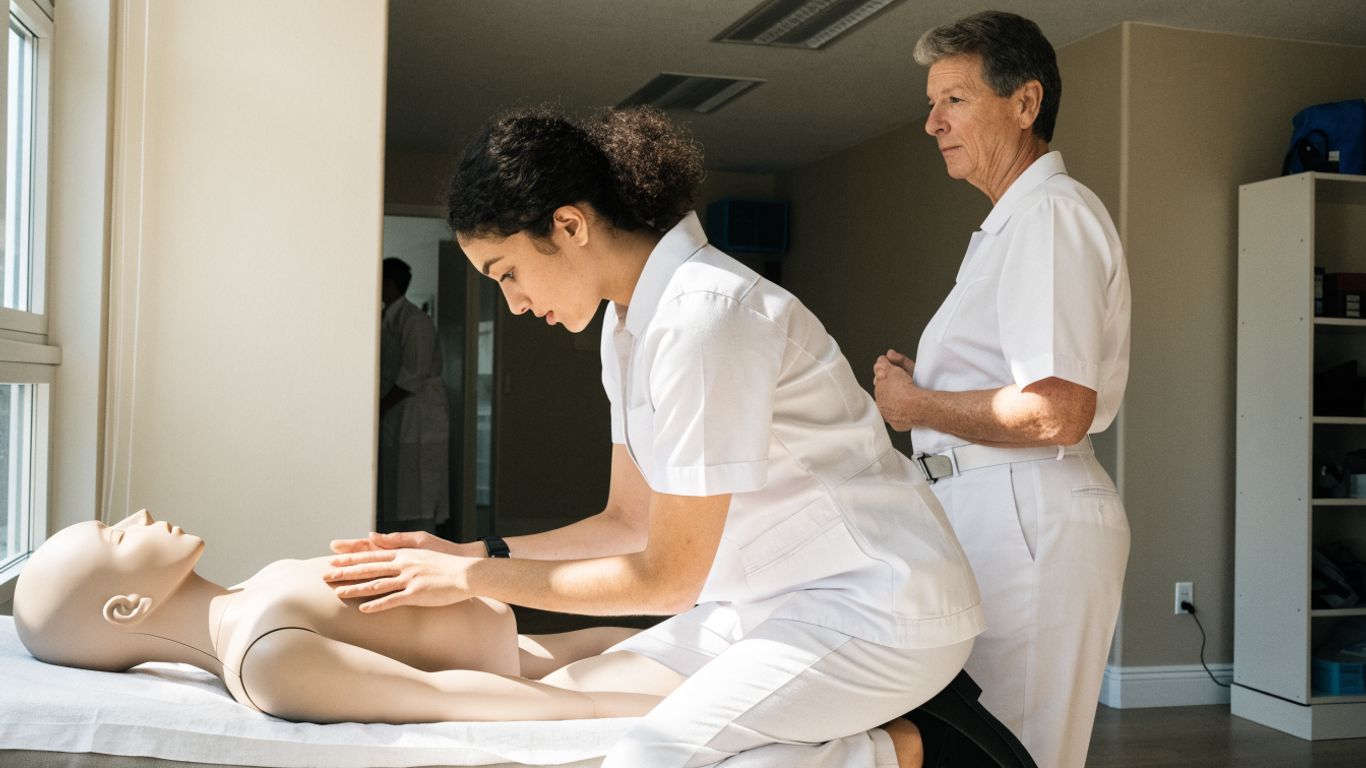
Ask for a course outline and look for topics that support safe, respectful care, including infection control, communication, and patient safety. The outline should give you a clearer picture of how the course prepares students for everyday responsibilities, rather than leaving you to infer its content from a short advertisement. Published information for the Wake Tech Nurse Aide program describes classroom instruction alongside hands-on lab and clinical training.
Check how clinical practice is supervised
Clinical practice gives students a chance to apply what they have learned with guidance, so ask who supervises the experience and how it is organized. Clarify whether lab sessions happen before clinical work, what setting students use, and whether travel to a clinical location is required. These details affect both the learning experience and the time you need to set aside.
Ask how the course prepares students for the competency exam
Exam preparation is easier to judge when a school can explain how practice and instruction relate to the written or oral and skills portions. Ask whether students have time to rehearse skills, receive feedback, and identify areas that need more work. A concise plan for connecting course practice to exam readiness is more useful than a broad promise that graduates will feel prepared.
Understand tuition and other costs
Tuition is only one part of the expense of training. Ask for a complete estimate that separates required charges from optional purchases, and check when each payment is due. A simple side-by-side comparison can help you see which costs are confirmed and which still need an answer.
Compare tuition across Raleigh-area programs
Request the current tuition amount and ask what it covers, such as instruction, lab time, or course materials. Compare programs using the same categories instead of weighing one school’s advertised tuition against another’s total estimate. The table below offers a practical way to organize what you learn.
| Cost category | What to ask | Your estimate |
|---|---|---|
| Tuition | What instruction and course materials are included? | Confirm with school |
| Supplies and uniform | Which items are required, and where may they be purchased? | Confirm with school |
| Exam and registration | Which fees are separate from tuition? | Confirm with school |
| Travel and schedule | How much will travel to class and clinical sessions add? | Estimate for your situation |
After you collect the figures, add required costs rather than comparing tuition alone. If a school cannot yet provide a final amount for a particular item, mark it as unconfirmed instead of treating it as included.
Ask about fees for supplies, uniforms, and exams
Ask whether students need specific shoes, uniforms, books, or supplies, and whether the school recommends a particular source. Confirm which exam or registration fees are paid to the program and which, if any, are paid separately. The habit of separating purchase categories is useful in many decisions, from comparing healthcare providers to planning daycare enrollment paperwork, condo ownership costs, dog trainer options, and family snack choices—though those guides address different subjects.
Explore payment plans, financial aid, or employer sponsorship
Ask whether payment is due all at once or in installments, and clarify deadlines, deposits, and refund rules. If you plan to use financial aid or employer support, confirm eligibility and timing directly with the school and the sponsoring organization. For example, SembraSchool describes a flexible payment plan; check its current terms with the school before relying on them in your budget.
Find a schedule and format that fit
The most suitable program is one you can realistically complete alongside work, family, and other commitments. Compare the full calendar, including classroom sessions, lab practice, and clinical hours, rather than focusing only on the advertised course length. Ask about locations and attendance expectations early, since missed time may be difficult to make up.

Compare full-time, part-time, and accelerated options
Ask for the weekly schedule and the expected start and end dates, then consider how reliably you can attend each session. An accelerated option may compress the work into fewer weeks, while a part-time schedule may spread it out; confirm the actual workload and required hours with the program. Local listings, such as those for CareOne Health Institute, can show the kinds of schedule formats to ask about, but availability changes, so verify current dates directly.
Confirm when and where clinical sessions take place
Find out whether clinical sessions happen on campus or at another location, and ask what days and times students should expect. Travel can add a meaningful commitment, particularly if clinical shifts start early or take place outside your usual commute. Include those hours and locations in your planning before deciding that a class schedule will fit.
Ask about attendance rules and make-up classes
Attendance requirements can affect course completion, even when the rest of your work is on track. Ask how absences are recorded, whether there is a minimum attendance threshold, and how make-up sessions are handled. To make the policy concrete, write down the details you need to confirm:
- The minimum attendance required for completion.
- How to report an unavoidable absence.
- Whether missed lab or clinical hours can be made up.
- Any additional cost or deadline for make-up sessions.
Knowing the policy before class begins makes it easier to judge whether the program is workable for your circumstances. Keep the school’s answer with your enrollment materials so you can refer to it if your availability changes.
Plan for the North Carolina competency exam
Completing a training course and passing the competency exam are distinct steps, so ask how the school supports students through both. Requirements and procedures can change, and exam arrangements may involve a separate registration process. Treat the program’s explanation as a starting point, then confirm current details with the appropriate state and testing resources.
Learn what the written or oral and skills portions involve
Ask the program to explain the written or oral component and the skills portion in plain language. Find out how practice is built into the course and whether instructors give students feedback on the skills they need to demonstrate. Understanding the broad structure helps you plan study time without assuming that classroom attendance alone guarantees exam readiness.
Find out how exam registration and fees are handled
Ask whether students register independently or receive guidance from the school, and when registration should happen. Confirm the current fee, payment method, deadlines, and any identification or documentation required on exam day. Keep your own record of the answers because the training fee and the exam fee may be separate.
Ask what happens if you need to retake a portion
Before enrolling, ask what steps follow if you do not pass a portion on the first attempt. The program can clarify any support it offers, while the testing authority can confirm current retake rules, fees, and time limits. A short preparation routine can also help you make useful use of feedback:
- Review the result and identify the specific area to improve.
- Ask an instructor what practice is available before another attempt.
- Confirm the retake process, deadline, and fee with the testing authority.
- Set aside study and practice time before scheduling again.
This approach turns a setback into a clear next step, while keeping the official retake requirements in view. Avoid assuming that a school’s past procedure is still current; verify the details when you need them.
Evaluate job support and next steps
A CNA course is often a first step into healthcare, so it is reasonable to ask what support continues after instruction ends. Schools differ in the services they offer, and a general promise of career help may not tell you what students actually receive. Ask for specific examples, then consider how the training fits your longer-term goals.
Ask about career counseling and local employer connections
Ask whether the school offers career counseling or shares information about local employers, and whether those services are available to all students or only graduates. Be clear about what you want to know: for example, whether the support is a one-time conversation or ongoing guidance. Do not assume that employer connections guarantee an interview or a job.
Check whether graduates receive help with résumés or interviews
Find out whether résumé feedback, interview practice, or job-search workshops are available, and whether you need to sign up separately. Ask when this help is offered and whether there are limits on access after graduation. Specific answers will give you a more realistic sense of the support available as you begin applying.
Consider how Nurse Aide I experience can support longer-term healthcare goals
Nurse Aide I training can help you explore direct patient care and build experience relevant to future healthcare plans. Think about whether the skills, work settings, and schedule align with the roles you may want to pursue next. If you are still comparing locations or program types, this guide to choosing CNA training offers another set of questions to consider alongside Raleigh-specific details.
Conclusion
The strongest choice is the program that meets North Carolina requirements and fits your budget, schedule, and learning needs—not simply the one with the shortest timeline or lowest advertised tuition. Verify each detail with the school, compare the full costs and training experience, and make a realistic plan for the competency exam before you enroll.
Frequently Asked Questions
How long do CNA classes in Raleigh take?
Program length depends on the school’s schedule and how instruction, lab work, and clinical sessions are arranged. Ask for the full calendar and required hours rather than relying only on a headline duration.
Do I need a high school diploma to enroll in CNA classes in Raleigh?
Admission requirements vary by program. Ask each school about education requirements, minimum age, background checks, and any other prerequisites before applying.
Are CNA classes in Raleigh available part time?
Some local programs may offer different schedule formats, but offerings and dates change. Contact schools directly to confirm current part-time options and whether clinical sessions fit your availability.
What should I compare when choosing a CNA program?
Compare state requirements, course content, supervised practice, schedule, total cost, exam preparation, and student support. Ask for details in writing where possible.
Does completing a CNA course mean I am certified?
Course completion and certification are separate steps. Confirm the current North Carolina competency exam and registry process with the appropriate state resources.
What costs should I budget for beyond tuition?
Ask about supplies, uniforms, books, travel, exam or registration fees, and any costs for make-up sessions. Request a full estimate so you can compare programs on the same basis.
What happens if I do not pass the competency exam on my first attempt?
Retake requirements, fees, and deadlines should be confirmed with the testing authority. Ask the school whether it offers additional practice or guidance before you try again.