Key Takeaways
Three-week CNA classes compress the usual training experience into a demanding, highly organized schedule. Before enrolling, confirm that the program meets your state’s requirements and includes enough supervised practice for both the certification exam and real patient care.
- Expect a fast pace with classroom, lab, and clinical learning close together.
- Confirm admission, health, background-check, and state-approval requirements before paying tuition.
- Look for meaningful hands-on practice, qualified instructors, and clear exam preparation.
- Budget for tuition, supplies, transportation, testing, and possible retest fees.
- Certification can lead to entry-level healthcare work and future nursing education.
How 3 week CNA classes work
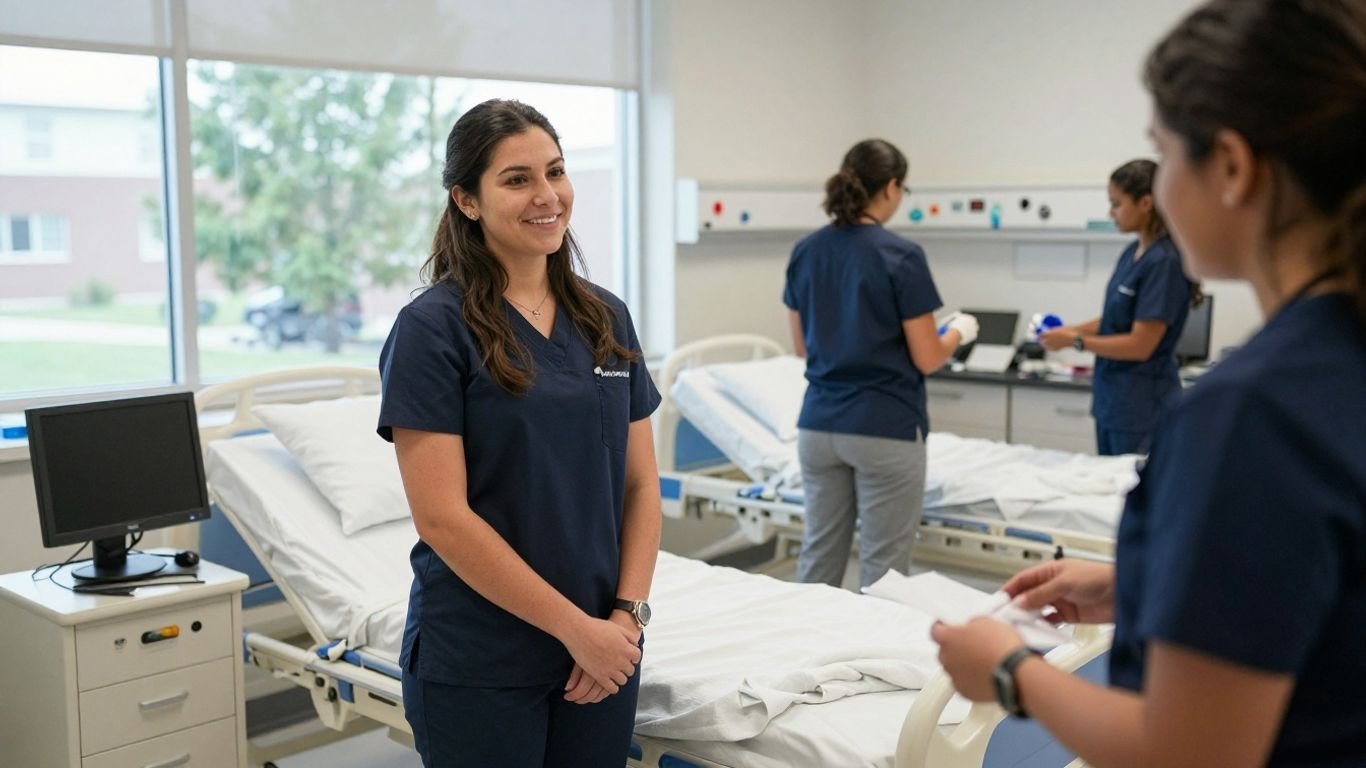
Three-week CNA classes are designed for students who can commit substantial time over a short period. Rather than spreading lessons across several months, the program brings theory, skills practice, and clinical preparation together in a tight sequence. The exact number of hours and required components vary by state, so the course length alone does not prove that a program is approved. For a useful comparison point, this guide to intensive 3-week CNA training explains the fast-track format and its connection to competency testing.
What the accelerated format includes
An accelerated course commonly moves from basic healthcare concepts to personal care, safety, infection control, communication, and supervised skills practice. Students may cover several related topics in one day, then return to them during lab or clinical work. A legitimate program should explain which hours are classroom instruction, which are lab practice, and which are supervised clinical training.
The short calendar does not mean the learning is casual. Attendance, preparation, and practice matter because missing one session can leave little time to catch up before the next skill builds on it.
How classroom and hands-on training are balanced
Classroom instruction gives students the vocabulary and reasoning behind patient care. In the lab, those ideas become repeatable actions such as positioning, transferring, taking vital signs, and maintaining clean procedures. Clinical practice then adds real-world communication, time pressure, and professional behavior under supervision.
Ask how often students perform each required skill rather than accepting a general promise of “hands-on training.” Repetition with feedback is more useful than watching a demonstration once.
Typical daily and weekly schedules
A three-week class may meet for long weekday sessions, several evenings, weekends, or a mixture of formats. The schedule may also include separate clinical days, which can make the overall commitment larger than the calendar suggests. Before enrolling, compare the published timetable with your work, family, and transportation responsibilities.
Some providers publish day, evening, and weekend options. The broader point is that a flexible schedule still requires consistent attendance; missing a clinical day may be especially difficult to replace.
How fast-paced learning affects preparation
The accelerated format rewards students who review every day instead of waiting for a weekly study session. New terminology, procedures, and safety rules can accumulate quickly, and uncertainty should be raised with the instructor immediately. Daily practice protects confidence when skills are evaluated under observation.
A short course can suit a focused learner, but it may be stressful for someone who needs more time to absorb technical material. Treat the pace as a central enrollment decision, not a minor scheduling detail.
What you will learn in a 3 week CNA program
A 3 week CNA program should build practical competence, not merely provide a quick overview of healthcare work. Lessons generally connect everyday patient assistance with safety, dignity, observation, and reporting. The specific curriculum is controlled by state rules and the provider’s approved plan, so request a written outline before registering.
Basic nursing skills and personal care
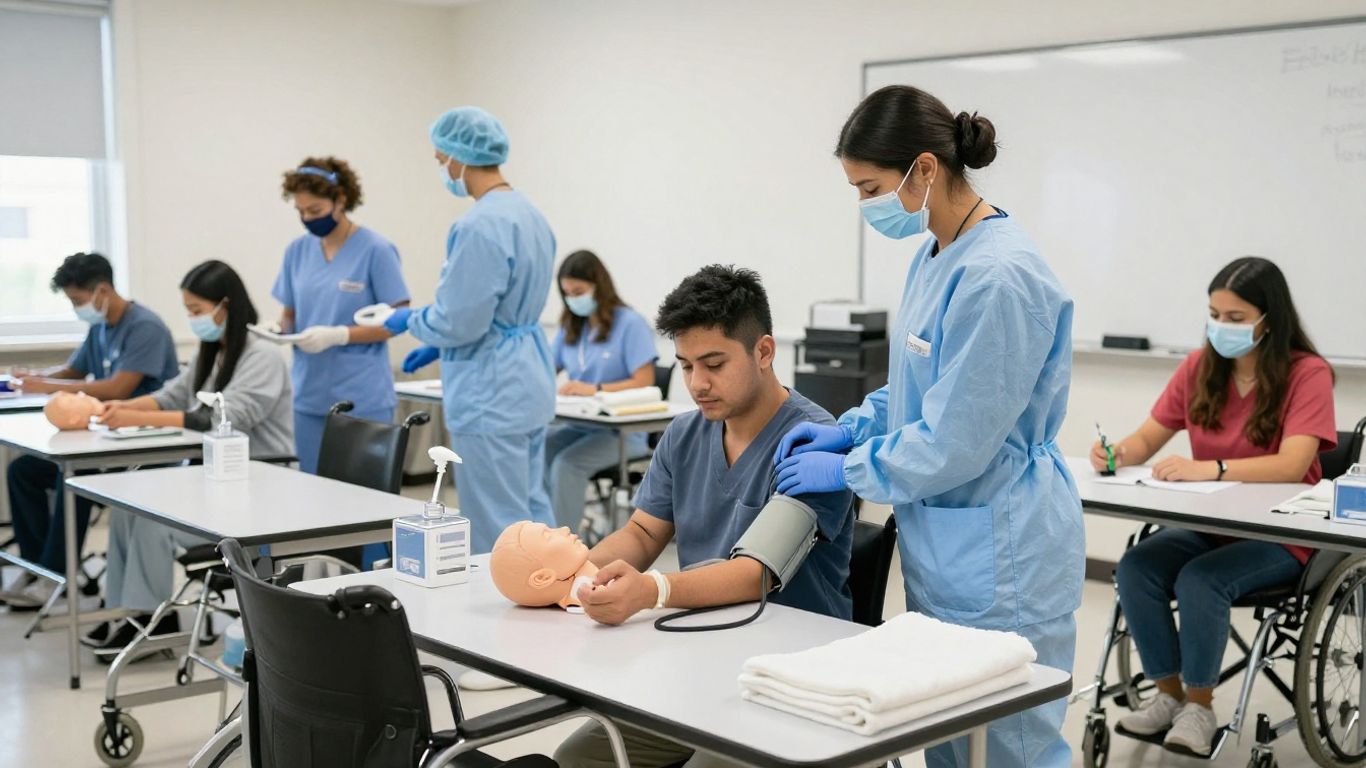
Students typically learn how to assist with activities of daily living while respecting privacy and individual preferences. Training may include bathing, grooming, dressing, toileting, feeding, positioning, and making an occupied or unoccupied bed. The goal is not speed alone; it is completing care safely while noticing changes in a patient’s condition.
Vital signs, mobility, and infection control
Core practice often includes measuring temperature, pulse, respirations, blood pressure, and oxygen-related observations according to the program’s requirements. Students also practice transfers, ambulation, range-of-motion support, and fall prevention. Hand hygiene, personal protective equipment, cleaning procedures, and prevention of cross-contamination are woven through these skills.
Communication, safety, and patient rights
A CNA works closely with patients, families, nurses, and other care team members. Training addresses respectful communication, listening, privacy, consent, boundaries, abuse prevention, and the right to receive care without humiliation. Safety lessons may cover call lights, environmental hazards, emergency reporting, and when to seek help rather than improvise.
Documentation and professional responsibilities
Students learn that observations must be reported accurately and promptly through the process required by the employer or facility. Professional responsibilities can include confidentiality, punctuality, appropriate appearance, teamwork, and staying within the CNA role. Documentation practice should reinforce clear facts rather than guesses or diagnoses.
Admission requirements and enrollment steps
Admission rules differ by state and school, but most providers have a defined process rather than an informal sign-up. You may need to complete an application, submit records, pass a background review, and satisfy health requirements before clinical participation. Starting early helps because screening or document delays can push your start date back.
Age, education, and background requirements
Many programs set a minimum age and may ask for identification, education records, or evidence of basic reading and communication ability. Background-check rules can affect clinical placement and later employment, but a provider should explain how its state handles disqualifying records. Do not assume that a short course has fewer legal requirements.
Ask whether eligibility is determined by the school, the state registry, or the clinical site. Those requirements may overlap but are not always identical.
Health records, immunizations, and screenings
Clinical sites often require a physical examination, immunization records, a tuberculosis screening, or other health documentation. Requirements can change by state, facility, or public-health policy. Obtain the provider’s current checklist before scheduling appointments so you do not pay for an incomplete or unnecessary record.
Documents to prepare before applying
Gather government-issued identification, education records if requested, background-check information, health forms, and any prior certification documents. Keep digital and paper copies where possible. A missing signature or outdated screening can delay enrollment even when the application itself is accepted.
Questions to ask a training provider
A short conversation with admissions can reveal whether the program is organized. Ask about approval, total hours, clinical location, instructor support, exam registration, attendance rules, and what happens if you need additional practice. Also ask when tuition becomes nonrefundable and which costs are paid separately.
For broader planning, compare the requirements for accelerated CNA programs with the rules published by your state and the school you are considering. Online articles can frame questions, but the provider and state registry should settle eligibility.
Choosing the right CNA class
The best class is not necessarily the shortest or cheapest one. It should give you a credible route through approved instruction, supervised practice, testing, and employment preparation. When comparing providers, look beyond polished advertising and ask for details you can verify.
State approval and program accreditation
Start by checking whether the program is approved by the relevant state agency and whether its graduates are eligible for the nurse aide competency process. “Accredited,” “licensed,” and “approved” can have different meanings, so ask which agency grants the status. A provider that avoids a direct answer deserves caution.
Instructor qualifications and class size
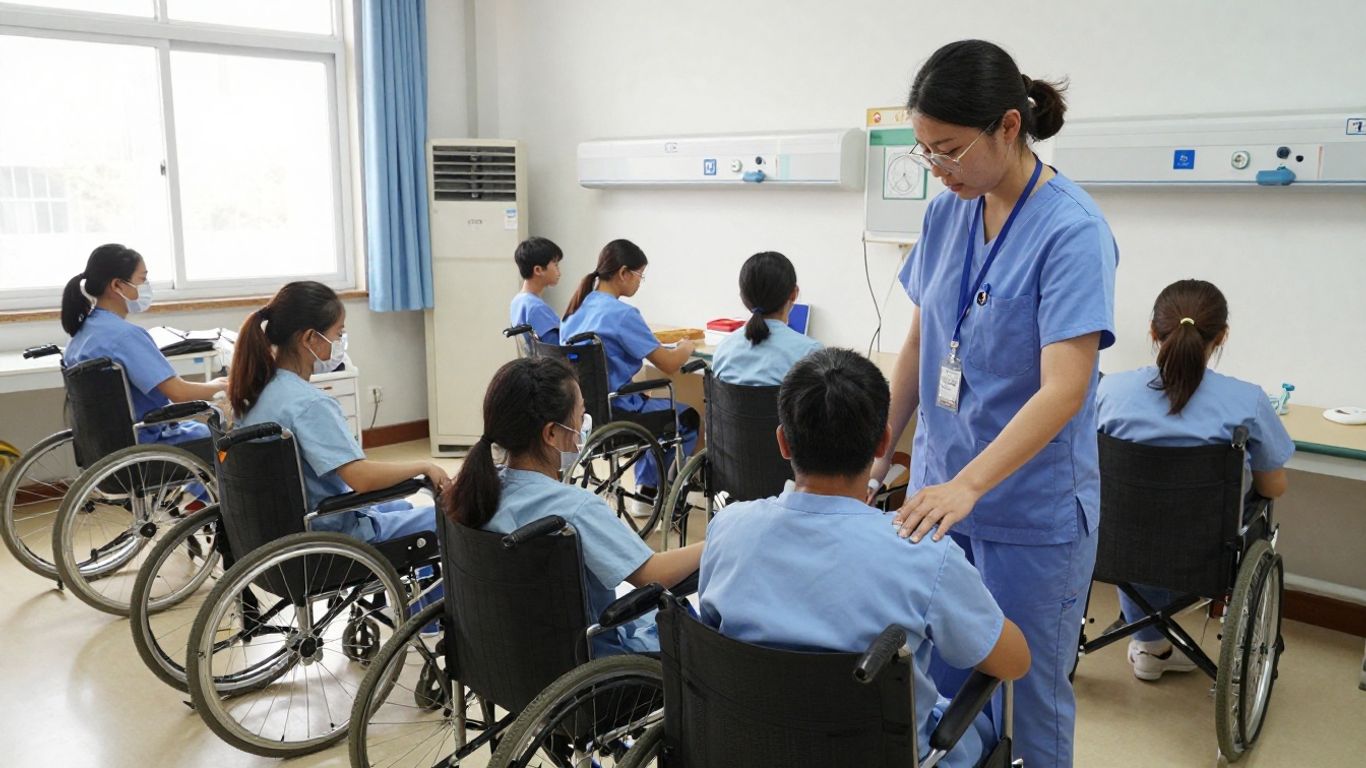
Instructors should be able to explain their clinical background, teaching role, and availability for questions. Class size matters because students need enough equipment time and individual correction. A crowded lab may allow observation but not enough repetition to build safe habits.
Clinical training and skills practice
Clinical training should be supervised, scheduled clearly, and connected to the skills taught in class. Ask where it occurs, how many hours are included, whether transportation is your responsibility, and how missed clinical time is handled. A program comparison guide such as evaluating CNA class options can help you organize those questions.
Tuition, payment plans, and financial aid
Request a written cost breakdown before paying a deposit. Tuition may not include uniforms, books, supplies, background checks, health screenings, testing, transportation, or a retest. Some students may also find facility-sponsored or workforce-funded options; for example, free CNA training opportunities may involve an employment commitment, so read the terms carefully.
Preparing for the CNA certification exam
The certification exam usually tests both knowledge and practical performance, although the structure and registration process vary by state. A three-week course may introduce the material quickly, but your own review and repeated skills practice will determine how prepared you feel. Use the state candidate handbook as the final authority for test rules.
Written or knowledge test preparation
Review terminology, infection prevention, safety, communication, personal care, observation, and reporting. Practice answering questions without relying only on recognition; explain why an answer is safe and appropriate. Short daily sessions are often easier to sustain than one long review immediately before the exam.
Skills test practice and evaluation
Skills testing rewards a reliable sequence, clear communication, privacy, hand hygiene, and attention to safety. Practice aloud and ask a partner or instructor to observe without rescuing you too quickly. Use the official checklist when available, because small omissions can matter even when the overall task looks complete.
Common reasons students fail
Students may lose points by rushing, skipping infection-control steps, failing to identify the patient, forgetting privacy, or not reporting an unsafe situation. Anxiety can also cause a practiced sequence to disappear. Slow down, narrate appropriate actions, and ask for clarification when the testing instructions permit it.
How to schedule a retest if needed
If you do not pass, read the score report and state retesting instructions before choosing another date. You may need to submit a new application, pay a fee, complete a waiting period, or repeat only one part of the exam. Use the gap for targeted practice rather than repeating the entire course without identifying the original weakness.
Costs, schedules, and other practical considerations
The advertised tuition is only one part of the decision. A short program can reduce the time away from work, but it may create a heavier weekly commitment and more immediate expenses. Build a realistic budget and calendar before signing an enrollment agreement.
Tuition and additional training expenses
Ask whether the quoted price includes instruction, lab use, clinical placement, books, uniforms, equipment, background checks, health screenings, exam fees, and certification paperwork. Put every amount in one place so programs can be compared fairly. A lower tuition price may not remain lower after required extras are added.
Day, evening, weekend, and online options
Day classes may suit students with open weekdays, while evening or weekend formats can help people who work. Online theory can offer flexibility, but required lab and clinical work still need an approved in-person arrangement. Confirm which sessions are live, which are self-paced, and how attendance is recorded.
Transportation, childcare, and time management
Plan for the full route, not just the classroom. Clinical sites may be farther away, start earlier, or have different parking arrangements. A simple weekly plan should account for:
- Class and clinical attendance
- Reading, quizzes, and skills practice
- Transportation time and backup options
- Childcare, meals, and recovery time
This kind of planning makes the course demanding but more manageable. It also exposes conflicts before they become attendance problems.
Refund policies and cancellation terms
Read the enrollment agreement before paying. Look for deadlines, administrative fees, transfer rules, clinical-placement conditions, and the policy for withdrawal or cancellation by either side. Ask whether a missed start date can be moved to another cohort and whether unused materials can be returned.
Career options after completing CNA training
CNA certification can provide an entry point into direct patient care, but employment eligibility depends on state certification, employer requirements, and the results of any screening. The first job is also a chance to learn which patient populations and work environments suit you. Consider the duties, schedule, supervision, and advancement opportunities rather than focusing only on the job title.
Entry-level settings that hire CNAs
CNAs may find opportunities in nursing homes, assisted-living communities, hospitals, rehabilitation centers, home-care services, and other healthcare settings. Openings vary by location and by the credentials an employer requires. The CNA career overview offers a broad starting point for reviewing duties, training, and possible workplaces.
Typical duties in long-term care and hospitals
Daily work can include assisting with personal care, mobility, meals, comfort, observation, room organization, and communication with the nursing team. Long-term care may involve building relationships with residents over time, while hospital work can involve faster changes and frequent transfers between units. In every setting, the CNA works within the assigned role and reports concerns to the appropriate nurse.
How certification affects job eligibility
Completing a class is not always the same as appearing on a state nurse aide registry. Employers may require an active listing, a passing exam, background clearance, current health records, or additional orientation. Confirm your status and keep copies of exam and training records during the application process.
Further education and nursing career pathways
Some CNAs later pursue medication aide training, practical nursing, registered nursing, or another healthcare specialty. The next step depends on prerequisites, finances, academic readiness, and personal goals. CNA work can provide useful exposure to patient care, but it does not replace the education or licensure required for another nursing role.
Conclusion
Three week CNA classes can be a practical route into patient care when the program is approved, the schedule is realistic, and the training includes meaningful practice. Compare the full cost, clinical structure, admission rules, and exam support before enrolling, then commit to steady preparation throughout the course.
Frequently Asked Questions
Are 3 week CNA classes enough to become certified?
They can be enough when the program satisfies state requirements and you complete the required training and competency exam. Always verify the current rules with your state registry.
Are three-week CNA programs difficult?
They can be intense because lessons, practice, and preparation are compressed. Students usually need reliable attendance and time for review outside scheduled class hours.
Do CNA classes include clinical training?
Many approved programs include supervised clinical training, but the hours and location vary. Ask for the clinical schedule and requirements before enrolling.
What documents are usually needed to enroll?
Common requests include identification, an application, health records, screening results, and background-check information. Education records may also be required depending on the state and provider.
Can I take CNA classes online?
Some programs offer online theory, but hands-on lab and clinical requirements generally need an approved in-person setting. Confirm exactly which components are online.
What happens if I fail the CNA exam?
You can usually retest under your state’s rules, which may include a waiting period, fee, or new application. Use the score report to focus your preparation.
Where can CNAs work after certification?
Possible settings include long-term care, assisted living, hospitals, rehabilitation, and home care. Hiring requirements and available roles vary by location and employer.