Key Takeaways
Choosing among CNA schools in San Antonio takes more than comparing advertised tuition. Approval, hands-on practice, scheduling, total cost, and certification support all deserve a close look.
- Verify that the program is approved for Texas nurse aide training.
- Compare the full cost, including uniforms, supplies, testing, and transportation.
- Look for meaningful skills-lab practice and supervised clinical experience.
- Ask how the school supports exam preparation and retesting.
- Choose a schedule and location you can realistically maintain.
Understand what CNA programs in San Antonio offer
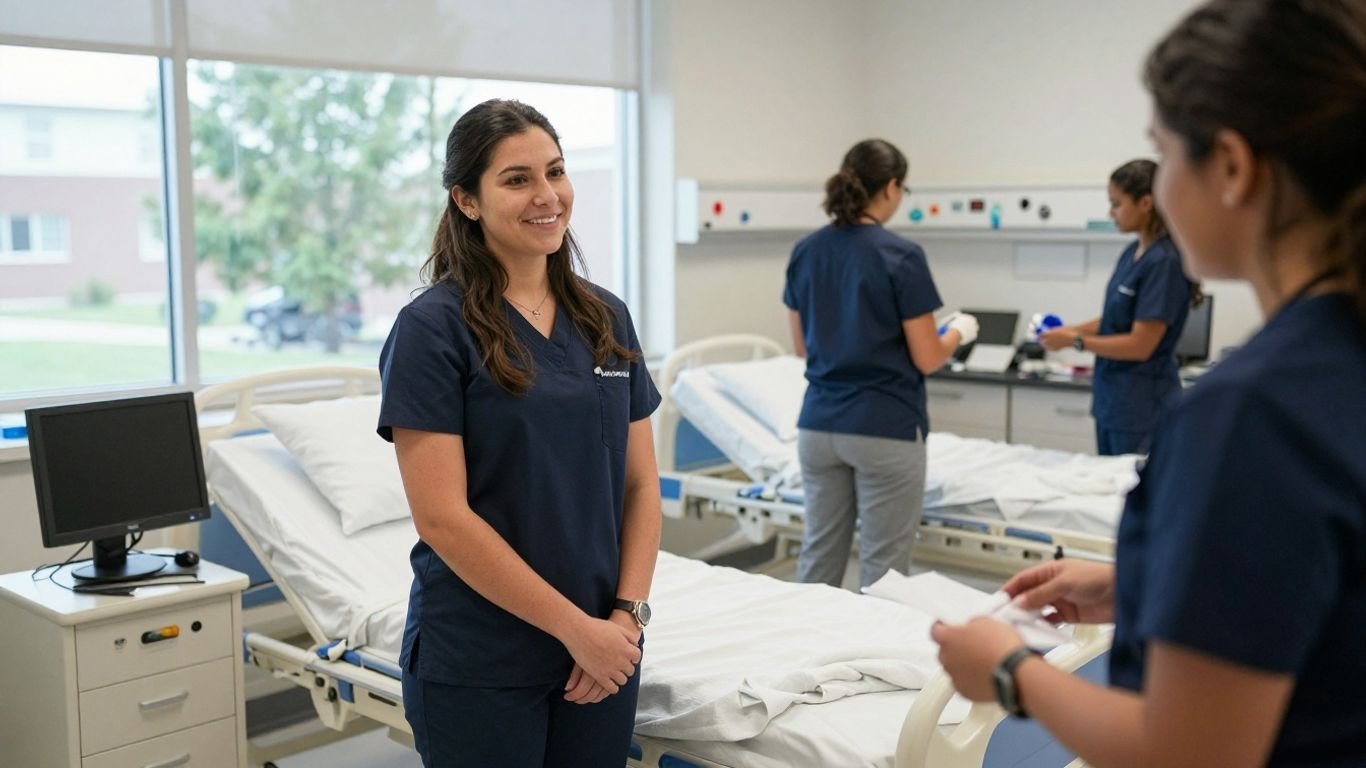
CNA programs introduce students to the practical work of assisting patients with daily care and comfort. A good program balances classroom instruction with repeated practice, so students are not learning important procedures for the first time during clinical rotations. When comparing cna schools in san antonio texas, consider what the program teaches and how deliberately it helps you build confidence.
The right course should also make its approval status, attendance expectations, completion requirements, and certification pathway easy to understand. Those details affect both your timeline and your ability to move from training into an entry-level healthcare position.
Core skills and responsibilities covered in training
Students generally learn how to assist with bathing, dressing, grooming, mobility, positioning, feeding, and other activities of daily living. Training also introduces vital signs, documentation, resident rights, respectful communication, and recognizing changes that should be reported to a nurse. These are hands-on responsibilities, not simply textbook topics.
A strong course explains the CNA role clearly: provide assigned supportive care, protect a patient’s dignity, follow directions, and report observations rather than diagnosing or independently treating medical conditions. Patient dignity matters in every task, from helping someone transfer to explaining what you are about to do.
Program formats, schedules, and learning options
San Antonio programs may use weekday daytime classes, evening sessions, weekend schedules, or accelerated formats. Some courses combine online academic work with required in-person lab and clinical hours. Ask how often you must attend on campus and whether clinical shifts are assigned at times that work with your job or family responsibilities.
Online content can be convenient, but it does not replace supervised practice for physical skills. Before enrolling, confirm the attendance policy, make-up rules, course length, and whether lab and clinical hours are included in the published schedule.
State-approved training and certification requirements
Texas nurse aide training should align with the requirements of the state certification process. Confirm the school’s approval through current state information rather than relying only on a marketing statement. You should also ask whether the program explains exam registration, required documentation, and what happens if a student needs another attempt.
A useful starting point is this Texas CNA certification overview, which can help you organize questions about training hours, testing, and program approval. Requirements and fees can change, so verify current details with the appropriate Texas agency and the school before paying a deposit.
Differences between CNA, LVN, and RN pathways
A CNA provides foundational supportive care under the direction of licensed nursing staff. An LVN has a broader licensed nursing role, while an RN completes a more advanced education and licensing pathway involving assessment, care planning, clinical judgment, and coordination. The programs differ substantially in length, cost, prerequisites, and responsibility.
CNA training can be a practical first step for someone who wants direct patient-care experience before deciding whether to pursue further nursing education. It is not a substitute for LVN or RN preparation, and completing a CNA course does not automatically transfer into a higher-level nursing program.
Compare CNA schools in San Antonio Texas
Once you understand the basic pathway, compare schools using the same questions and the same cost assumptions. A short course is not necessarily a better course if it leaves little time for skills practice or makes clinical attendance difficult. Reviews can be useful, but they should supplement—not replace—verification of approval, curriculum, and outcomes.
This CNA program comparison guide offers a helpful framework for looking beyond tuition and considering approval, instruction, lab work, clinical practice, and exam preparation. Use a similar framework when speaking directly with schools.
Accreditation, approval, and school reputation
Ask whether the program is approved for Texas nurse aide training and which agency or authority oversees that approval. The word “accredited” can mean different things in different settings, so request the exact name of the approving body and confirm that the approval applies to the program you plan to take.
Reputation is best assessed through several sources: current student feedback, published policies, the school catalog, and direct conversations with admissions staff. A school that answers clearly about complaints, attendance, clinical placements, and exam eligibility is easier to evaluate than one that offers only broad promises.
Instructor experience and student support
Instructors should be able to explain both the procedure and the reason behind it. Ask about their healthcare background, availability outside class, tutoring, skills remediation, and support if you fall behind. Personal attention can matter especially during transfers, vital-sign practice, infection-control procedures, and resident communication exercises.
The Texas Regional Healthcare Training Center describes a state-approved CNA program with skill-focused training, supportive instructors, and day, evening, and weekend scheduling. Treat those as features to verify for the current offering, including the exact schedule and support available to your class.
Class size, facilities, and hands-on practice
A classroom can look polished and still provide too little practice time. Ask how many students share equipment, how lab sessions are supervised, and whether each student performs required skills repeatedly. Find out where clinical rotations occur and whether transportation to those sites is your responsibility.
The learning environment should make it possible to practice safely, receive corrections, and repeat a procedure until it becomes consistent. A tour or detailed virtual orientation can reveal more than a brochure, particularly when you ask to see the lab schedule rather than only the equipment.
Graduation, exam, and employment outcomes
Ask how the school defines completion, whether it tracks exam participation and pass rates, and how recently its outcome figures were calculated. If employment support is offered, clarify whether it includes résumé assistance, interview preparation, job leads, or simply a list of local employers. Outcomes describe a program’s history, not a guarantee for every student.
Compare schools using a small set of practical measures rather than one impressive percentage. Look for consistent reporting, clear definitions, and an explanation of how the school supports graduates who do not pass the first time.
Evaluate program costs and admission requirements
The advertised tuition is only one part of the financial decision. Registration, books, uniforms, shoes, equipment, background checks, health screenings, transportation, and exam fees may all affect your actual budget. Request a written estimate that separates required costs from optional purchases.
Admission requirements can also affect timing. A missing document, delayed screening, or unresolved eligibility question may prevent you from starting with the class you planned to attend.
Tuition, registration fees, books, and equipment
Ask whether tuition includes lab supplies, textbooks, uniforms, CPR training, clinical transportation, and exam-related expenses. Some schools bundle these items, while others charge them at different points in the course. The cheapest initial quote may not be the lowest total cost.
Write down each expense and when it is due. Include time away from work and travel to both campus and clinical sites, since those indirect costs can be significant for an accelerated program.
Financial aid, payment plans, and sponsored training
Some students may qualify for payment plans, workforce assistance, employer sponsorship, scholarships, or other funding. Ask whether financial aid applies to the entire program or only to tuition, and whether you must be approved before the first payment is due.
Do not assume a sponsored place is free without conditions. Clarify attendance requirements, repayment terms, employment commitments, and what happens if you withdraw or need to repeat part of the course.
Prerequisites, background checks, and health screenings
Programs commonly ask for identification, education information, immunization records, a physical or health clearance, and a background check. Some also require a drug screen. Requirements vary, and a prior conviction or positive screening can affect eligibility for an occupational license, so raise questions early rather than after enrollment.
For example, Alamo Colleges identifies a background check and drug screen as participation requirements for its continuing education nurse aide program and points students toward licensing guidance. Use any school’s notice as a prompt to request the current written eligibility rules for your specific program.
Documents and deadlines for applying
Make a checklist before applications open. Confirm the deadline for transcripts or proof of education, identification, screening forms, deposits, financial-aid paperwork, and orientation attendance. Ask whether applications are reviewed on a rolling basis or only after a cohort deadline.
Keep copies of every submission and request confirmation when documents are received. If a class fills quickly, applying early may help, but only after you have verified the schedule, total price, approval status, and clinical expectations.
Review classroom and clinical training
CNA education works best when its pieces connect. Classroom lessons explain the principles, the skills lab lets you rehearse them, and clinical practice places those skills in a real care environment. Ask how the program moves students through those stages and how instructors respond when a student needs more practice.
A hands-on CNA training guide can help you compare classroom instruction, supervised practice, clinical experience, and certification support. Those categories are useful when reviewing catalogs or touring a campus.

Foundational subjects covered in the classroom
Classroom instruction may include basic anatomy, communication, resident rights, ethics, infection prevention, emergency awareness, nutrition, documentation, and the principles of personal care. Students should understand not only what to do, but also when to stop, seek help, and report a change in condition.
Look for lessons that use scenarios rather than relying entirely on memorization. Discussing privacy, dementia care, cultural differences, and difficult conversations helps prepare students for the human side of the job.
Skills lab practice and competency assessments
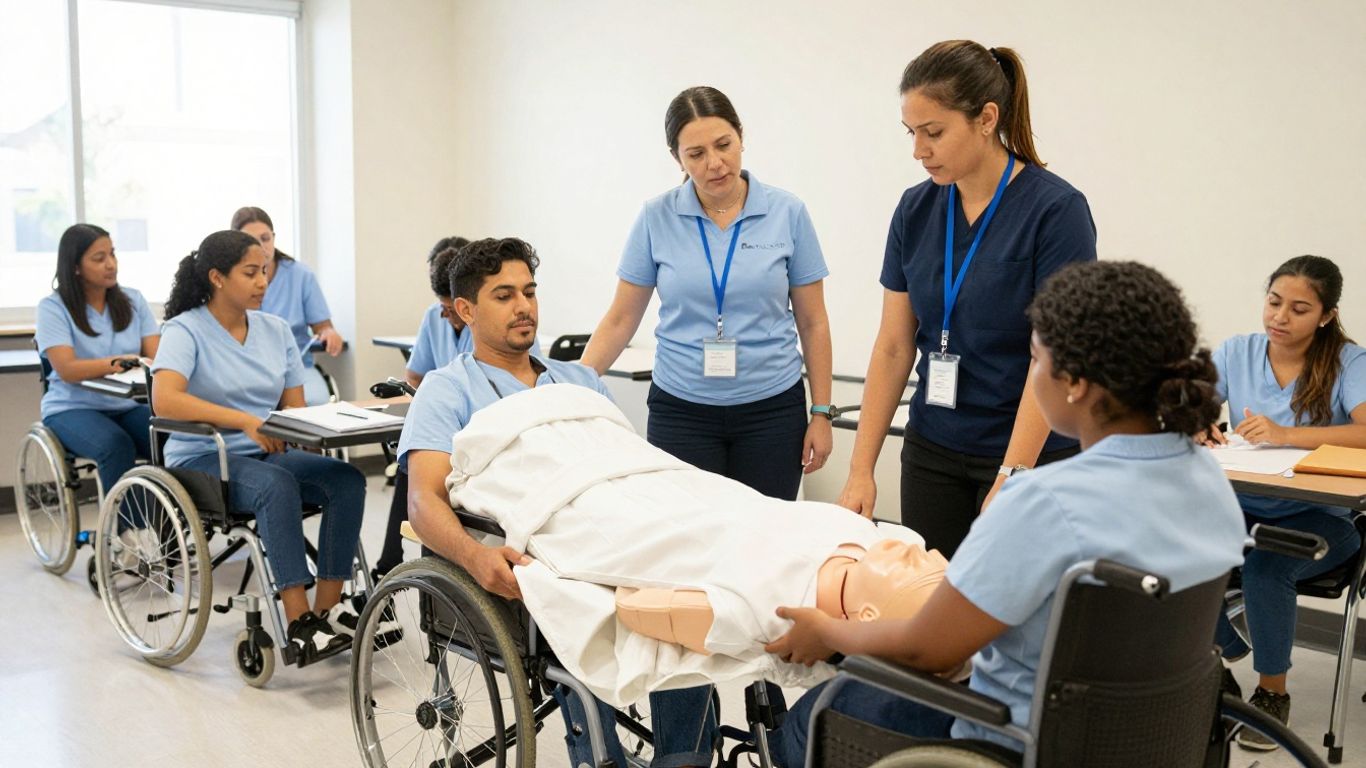
The lab is where students build safe habits before working with residents. Ask whether every student gets individual practice time, how skills are demonstrated, and whether assessments use a clear checklist. Students should have opportunities to correct errors and repeat skills before a formal evaluation.
A useful program explains how competency is measured and what happens after an unsuccessful attempt. That process should feel instructional, not mysterious, because knowing the standard makes practice more focused.
Clinical rotations in nursing homes and healthcare settings
Clinical rotations give students supervised experience with real residents or patients in an approved care setting. Ask how many clinical hours are included, who supervises students, how placements are selected, and whether the site is close enough for you to attend reliably.
Clinical work may involve long periods on your feet, early starts, and emotionally challenging situations. Prepare by learning the site’s attendance, uniform, transportation, and conduct expectations before the first shift.
Safety, infection control, and patient communication
Safety should run through every part of training, from hand hygiene and personal protective equipment to body mechanics, fall prevention, and safe transfers. Communication matters just as much: introduce yourself, explain care, listen carefully, protect privacy, and report concerns promptly.
Safe care depends on consistent habits, clear communication, and knowing when to ask for help.
After class, reflect on which habits need more repetition. A patient-care task performed quickly is not successful if it compromises dignity, infection control, or safety.
Prepare for the Texas CNA certification process
Certification preparation should begin before the final week of class. Ask the school to explain the sequence from training completion to exam registration and to identify which documents you must submit yourself. Keep your records organized so an administrative issue does not delay your test date.
The exam usually requires both knowledge and skills preparation. Use the school’s approved materials, practice under timed conditions, and confirm current testing instructions directly with the designated Texas testing authority.
Completing the required training hours
Attend every required classroom, lab, and clinical session and understand the program’s policy for absences. Make-up work may involve additional fees, a different cohort, or a delay in completion. Do not assume that watching a recording can replace an in-person lab or clinical requirement.
Before graduation, request confirmation that your hours and competencies have been recorded correctly. This is also a good time to ask when the school will release completion documentation and what you must do next.
Registering for the Texas nurse aide exams
Registration generally involves submitting information, paying applicable fees, selecting a testing date, and bringing acceptable identification. Your school may help with the process, but confirm which steps remain your responsibility and whether the testing vendor has specific rules.
Check names, dates, and identification details carefully. A small mismatch can create an avoidable delay, especially when registration records must match your official documents.
Preparing for the written or oral knowledge test
Review terminology, resident rights, infection control, safety, communication, and the CNA scope of responsibility. Practice questions can show where you need more study, but avoid memorizing answers without understanding the underlying care principle.
Read each question slowly and distinguish the safest first action from a later intervention. If an oral option is available under current rules, ask the testing authority about eligibility and the registration procedure well before your preferred test date.
Practicing for the skills evaluation
Use a checklist to rehearse hand hygiene, privacy, introductions, explanations, safety checks, and closing documentation. Practice speaking through each step while maintaining a calm pace. Ask an instructor or classmate to observe, because small omissions are harder to notice when practicing alone.
The goal is not to perform theatrically. It is to show safe, organized care while responding appropriately to the evaluator and the patient scenario.
Choose a CNA program based on your career goals
The best program is the one you can complete successfully and use as a foundation for your next step. Someone seeking a quick entry into long-term care may prioritize an accelerated schedule, while someone testing the healthcare field may value tutoring, career guidance, and time to practice.
Think honestly about your available hours, transportation, finances, and preferred care setting. A realistic match is more valuable than a program that looks ideal on paper but conflicts with everyday obligations.
Selecting a schedule that fits work or family needs
Compare class times with your full weekly routine, including commuting, childcare, study, and clinical shifts. Ask whether the schedule is fixed or subject to change and whether evening or weekend options apply to clinical training as well as lectures.
Choose a pace that leaves enough room to learn safely. An accelerated course can be appropriate for a focused student, but it may be difficult if you need to work full time or require extra practice.
Considering locations, transportation, and commute time
Map the campus, lab, testing site, and likely clinical locations before enrolling. Public transportation, parking costs, traffic, and early-morning shifts can turn a manageable schedule into a stressful one. Ask whether the school assigns clinical sites or allows students to choose among available locations.
A nearby campus is helpful, but the clinical commute may matter more. Build a transportation backup plan for days when a car is unavailable or a bus connection is delayed.
Exploring entry-level healthcare work settings
CNAs may work in nursing homes, assisted living communities, hospitals, rehabilitation centers, home-care settings, or other patient-care environments, depending on employer requirements and the role. Each setting has its own pace, routines, resident population, and staffing structure.
During clinical training, notice which environment suits your temperament. Consider whether you prefer longer relationships with residents, faster changes in patient condition, rehabilitation goals, or home-based care.
Identifying pathways for future nursing education
If you may pursue LVN or RN education later, ask whether the school provides advising or keeps records that will help with your next application. Do not assume CNA coursework will transfer as college credit; verify prerequisites and admission policies with the future nursing program.
CNA work can still be valuable preparation even when credits do not transfer. It develops comfort with patient interaction, teamwork, documentation, and the realities of direct care.
Apply to a CNA school in San Antonio
Application time is when your research becomes a decision. Recheck the school’s current approval, schedule, full cost, screening requirements, clinical plan, and exam support before submitting money or documents. A short conversation with admissions can reveal whether the program’s communication style suits you.
Keep your comparison notes, not just the promotional material. The details that matter most are often found in policies, calendars, and answers to specific questions.
Build a shortlist of suitable programs
Start with three or four programs that meet your basic requirements for approval, schedule, location, and budget. Then compare their lab access, clinical arrangements, instructor support, completion policies, and certification preparation.
A shortlist prevents one attractive feature from dominating the decision. Remove any program that cannot clearly explain its approval status, total cost, or required attendance.
Contact admissions offices with key questions
Ask who approves the program, how many hours are classroom, lab, and clinical, what supplies are included, and where clinical rotations take place. Also ask about background checks, health screenings, payment deadlines, exam registration, retesting, and employment support.
For an additional point of comparison, Center for Excellence Nurse Aide Training describes TWC-approved nurse aide training and publishes information about its approval and grievance process. The broader lesson is to ask every school where students can find formal policies and complaint procedures.
When researching career options online, keep unrelated information separate from your school comparison. For example, CIRS and CAE codes, Java virtual threads, tuning file services, Traffic Secrets Book, and NBA parlay strategies address entirely different subjects and should not influence a CNA enrollment decision.
Gather application materials and meet deadlines
Prepare identification, education records, screening documents, immunization information, payment details, and any required forms in advance. Confirm whether documents must be original, notarized, uploaded, or delivered in person.
Use a calendar for application, orientation, payment, screening, and class-start dates. Submit materials early enough to fix a missing signature or incomplete record without losing your place.
Plan your first steps after acceptance
After acceptance, confirm the first class location, dress code, supplies, attendance rules, parking, and clinical expectations. Create a weekly study routine before the course becomes busy, and arrange transportation and family support for the entire program rather than only the first week.
Your first goal is steady participation. Arrive prepared, practice deliberately, ask questions early, and keep every certification document. Those simple habits can make the transition from student to entry-level healthcare worker much smoother.
Conclusion
Choosing among CNA schools in San Antonio Texas is a practical decision that deserves careful comparison. Verify approval, calculate the full cost, examine the quality of lab and clinical training, and choose a schedule you can sustain. With a realistic plan and consistent preparation, CNA training can provide a strong beginning in direct patient care.
Frequently Asked Questions
How long does a CNA program in San Antonio take?
Program length varies by school and schedule. Accelerated courses may meet more frequently, while evening or weekend programs usually spread training over a longer period. Confirm the required classroom, lab, and clinical hours before enrolling.
What should I compare besides CNA tuition?
Compare registration fees, books, uniforms, supplies, screenings, transportation, testing costs, attendance policies, clinical locations, instructor support, and retesting assistance. These details determine the real cost and practicality of a program.
Do CNA programs require a background check?
Many programs require a background check, and some also require a drug screen or health clearance. A prior record can affect eligibility for an occupational license, so ask the school and relevant licensing authority about current rules before applying.
Is online CNA training enough for certification?
Online lessons may cover some academic content, but certification preparation generally includes required in-person lab and clinical training. Ask exactly which parts of the program must be completed on campus or at a healthcare facility.
Where can CNAs work after certification?
Depending on employer requirements, CNAs may work in nursing homes, assisted living, hospitals, rehabilitation settings, home care, and other patient-care environments. Clinical experience can help you decide which setting fits you best.
Can CNA training lead to LVN or RN education?
CNA work can provide useful patient-care experience before further nursing education. However, CNA coursework does not automatically replace LVN or RN prerequisites, so check admission and transfer policies with the future nursing program.
What should I do if I do not pass the certification exam?
Review the testing authority’s retesting rules, identify the areas that need work, and ask the school whether tutoring or skills remediation is available. Schedule another attempt only after you have practiced the specific knowledge or skills that caused difficulty.