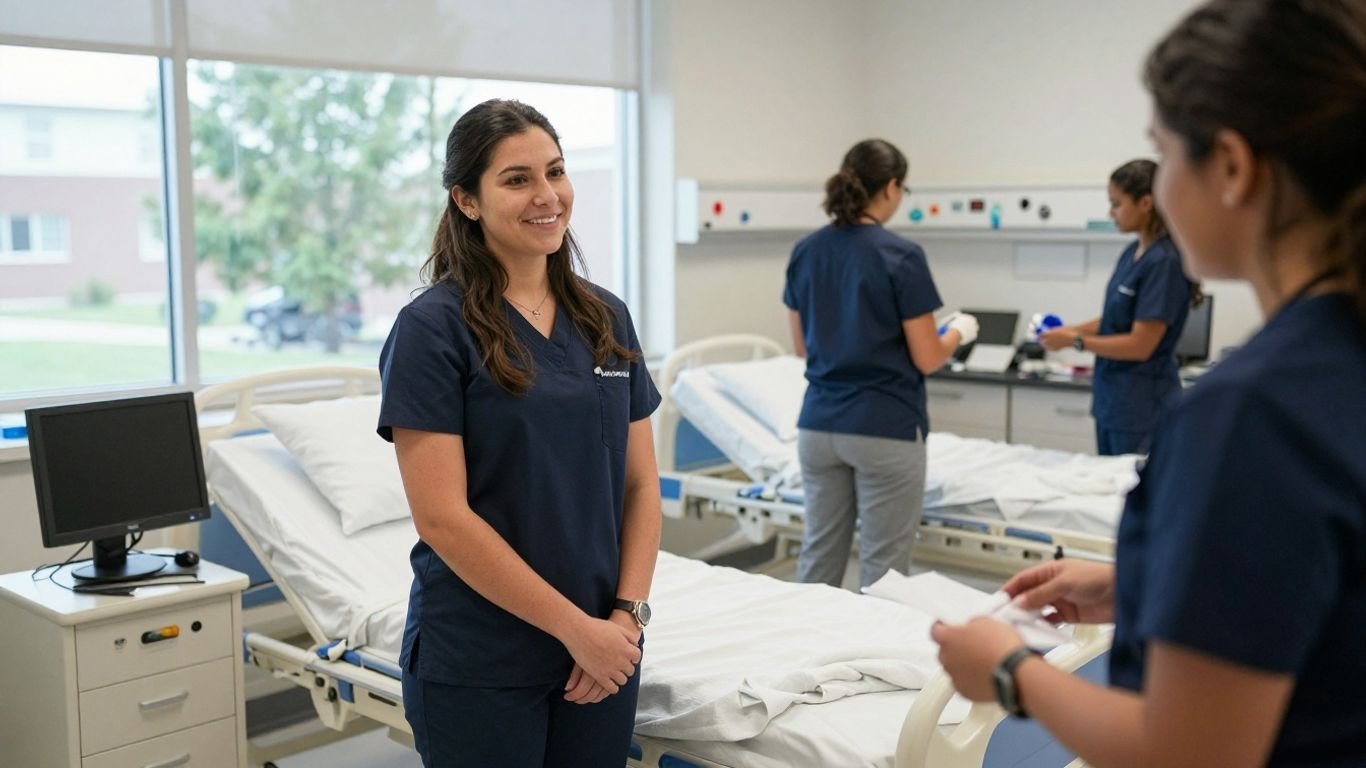
Key Takeaways
Choosing among cna schools nyc requires more than comparing advertised tuition. Look for approved training, meaningful clinical practice, a workable schedule, and clear support through the certification exam.
- Confirm New York eligibility rules, training hours, and exam requirements before enrolling.
- Compare the full cost, including registration, uniforms, supplies, transportation, and testing.
- Ask where clinical training takes place and how closely instructors supervise skills practice.
- Match the schedule and learning format to your work, family, and transportation needs.
- Choose a school that supports your immediate CNA plans and longer-term healthcare goals.
Understand New York CNA training requirements
New York CNA training has several moving parts, and the details can affect whether you are eligible to test. Before paying a deposit, verify the program’s approval status, required instruction, clinical component, and process for registering for the state competency exam. A little research at the beginning can prevent an expensive detour later.
New York State eligibility rules
Programs commonly ask applicants to meet basic age and education standards, although exact requirements can vary by provider. You may also need to complete health screening, background checks, and other documentation before entering a clinical setting. Review the state’s current nurse aide guidance and ask the admissions office to confirm what applies to your situation.
A useful overview of New York programs and the certification process is available in this New York CNA training guide. Treat any general guide as a starting point, then confirm details directly with the school and the New York State Department of Health.
Required classroom and clinical hours
New York training commonly includes 100 hours divided between classroom instruction and supervised practical experience. The balance matters: theory helps you understand safety, communication, and basic care, while clinical practice gives you a controlled setting in which to perform those skills. Ask for a written breakdown rather than relying on a short course description.
A program that compresses the calendar should not quietly remove required practice. Confirm how missed hours are made up, whether clinical hours occur at an approved facility, and whether attendance is tracked separately for classroom, lab, and clinical work.
Background checks and health documentation
Healthcare facilities need students to meet their safety and screening rules before clinical placement. Schools may request identification, immunization records, a physical examination, tuberculosis screening, CPR documentation, or a criminal background check. The exact list and timing can differ, so ask for the complete checklist before your start date.
Do not assume that submitting an application completes these steps. Some documents expire, and a delayed screening can postpone clinical participation even when classroom instruction has already begun.
The New York nurse aide certification exam
The New York nurse aide certification exam generally includes a knowledge component and a skills demonstration. Your course should explain how registration works, what testing vendor or process is used, and what happens if you need a retake. The best preparation is usually a mix of practice questions, hands-on rehearsal, and feedback from an instructor.
Keep copies of your completion paperwork and confirm that the school has submitted whatever is needed to establish your eligibility. Exam preparation is easier when you know the testing timeline before graduation.
Compare CNA schools in NYC
CNA schools in NYC can look similar in a search result while offering very different student experiences. Compare the format, approval status, instructors, attendance rules, clinical arrangements, and support services side by side. The right choice is the one that is credible and manageable, not merely the one with the shortest headline schedule.
In-person, hybrid, and online learning options
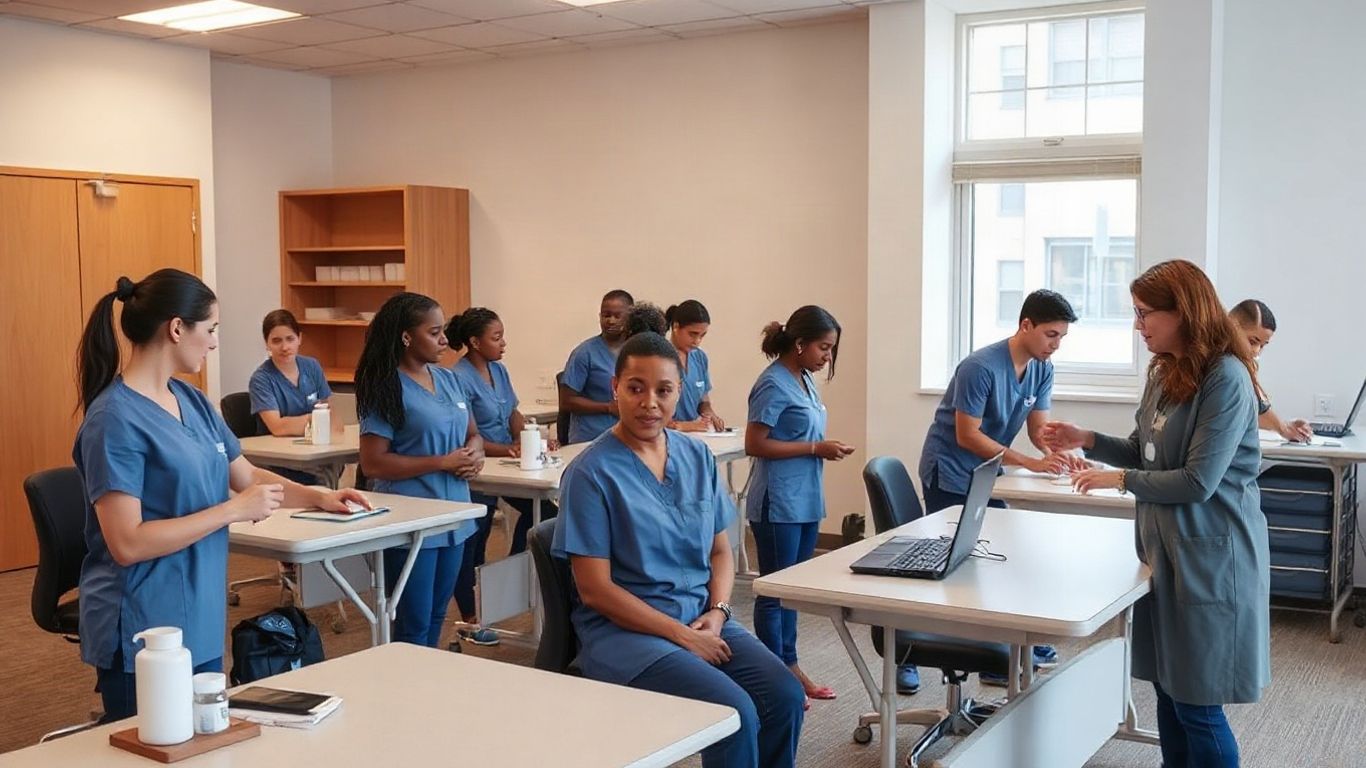
In-person classes offer immediate access to equipment and instructor correction. Hybrid programs can place theory online while keeping skills labs and clinical practice in person; fully online instruction deserves careful scrutiny because nurse aide competencies still require supervised hands-on work. Ask whether online sessions are live, self-paced, or a combination of both.
The City College of New York is one example of a New York CNA program described as hybrid, while broader online CNA class guidance can help you understand the questions to ask about labs and clinical hours. Use those resources to frame your comparison rather than assuming every hybrid format works the same way.
Program accreditation and state approval
Approval is not a decorative credential. It affects whether your training can lead to exam eligibility and whether the curriculum meets state expectations. Ask the school to identify the approving agency, show where its approval can be verified, and explain whether the specific CNA course—not just the institution—is covered.
You can also review an approved New York nurse aide program resource before making a shortlist. If a school avoids direct answers about approval, pause before submitting money or personal documents.
Class schedules and attendance policies
A CNA course can be academically sound and still be a poor fit if the schedule is impossible. Compare weekday, evening, weekend, and accelerated options, then ask how many absences are permitted and whether make-up work is available. Clinical attendance often has stricter rules because facilities and instructors must coordinate student placements.
Write down the actual start and end times, including orientation, lab sessions, and clinical days. A schedule that appears flexible online may still require several fixed in-person commitments each week.
Student-to-instructor ratios and support services
Ask how many students share one instructor during lab and clinical practice. Small groups do not guarantee quality, but they can make it easier to receive repeated corrections while learning transfers, vital signs, infection control, and communication techniques. Also ask whether tutoring, exam review, accessibility support, and career advising are included.
For perspective, compare what each school provides beyond instruction. A provider such as New Age Training describes licensed training and an approved regional testing-site role in its source material; verify the current details directly before treating them as part of your decision.
Evaluate program costs and financial aid
Tuition is only one part of the price of becoming a CNA. Registration, uniforms, shoes, books, screening, transportation, and the certification exam can shift the final number considerably. Request a written cost sheet and ask which charges are optional, refundable, or due before the first class.
Tuition, registration fees, and supplies
Start with the published tuition, then build a personal estimate around it. Include application fees, enrollment deposits, lab supplies, uniforms, clinical shoes, background checks, health requirements, textbooks, and exam costs. If a school advertises a low price, ask whether those items are included or billed separately.
The goal is not to find the smallest number on a webpage. It is to understand the amount you must have available before training begins and the amount you may need later.
Payment plans and employer-sponsored training
Some schools allow installments, while employers may cover training in exchange for a work commitment. Read the terms carefully: a payment plan can have administrative fees, and employer-sponsored training may include a required employment period or repayment clause if you leave early.
Ask for every agreement in writing. You can also review a practical program cost comparison guide when building questions about fees, supplies, clinical placement, and transportation.
Scholarships and workforce development funding
Financial help may come through workforce agencies, community organizations, public colleges, employers, or school-specific scholarships. Eligibility can depend on income, residence, employment status, age, or a commitment to work in a participating facility. Funding may cover tuition but not necessarily uniforms, transportation, or exam fees.
Apply early and ask whether awards are limited to particular cohorts. Keep copies of forms and deadlines so a missing document does not cost you a place in the class.
Comparing total costs between schools
A simple comparison table can keep low advertised tuition from distorting your choice. Fill in blanks rather than guessing, and use the same categories for every program.
| Cost category | School A | School B | School C |
|---|---|---|---|
| Tuition and registration | $ | $ | $ |
| Uniforms, books, and supplies | $ | $ | $ |
| Screening and health documents | $ | $ | $ |
| Transportation and meals | $ | $ | $ |
| Exam and retake costs | $ | $ | $ |
The totals will be more useful than tuition alone. If one school is less expensive but requires a long commute or unpaid schedule changes, include those practical costs in your decision.
Look closely at hands-on training
CNA work is physical, interpersonal, and detail-oriented, so hands-on training deserves close attention. A polished classroom is less meaningful if students have limited time with equipment or little feedback while performing essential tasks. Ask to see the lab, understand the clinical arrangement, and find out how competence is evaluated.
Clinical placement locations
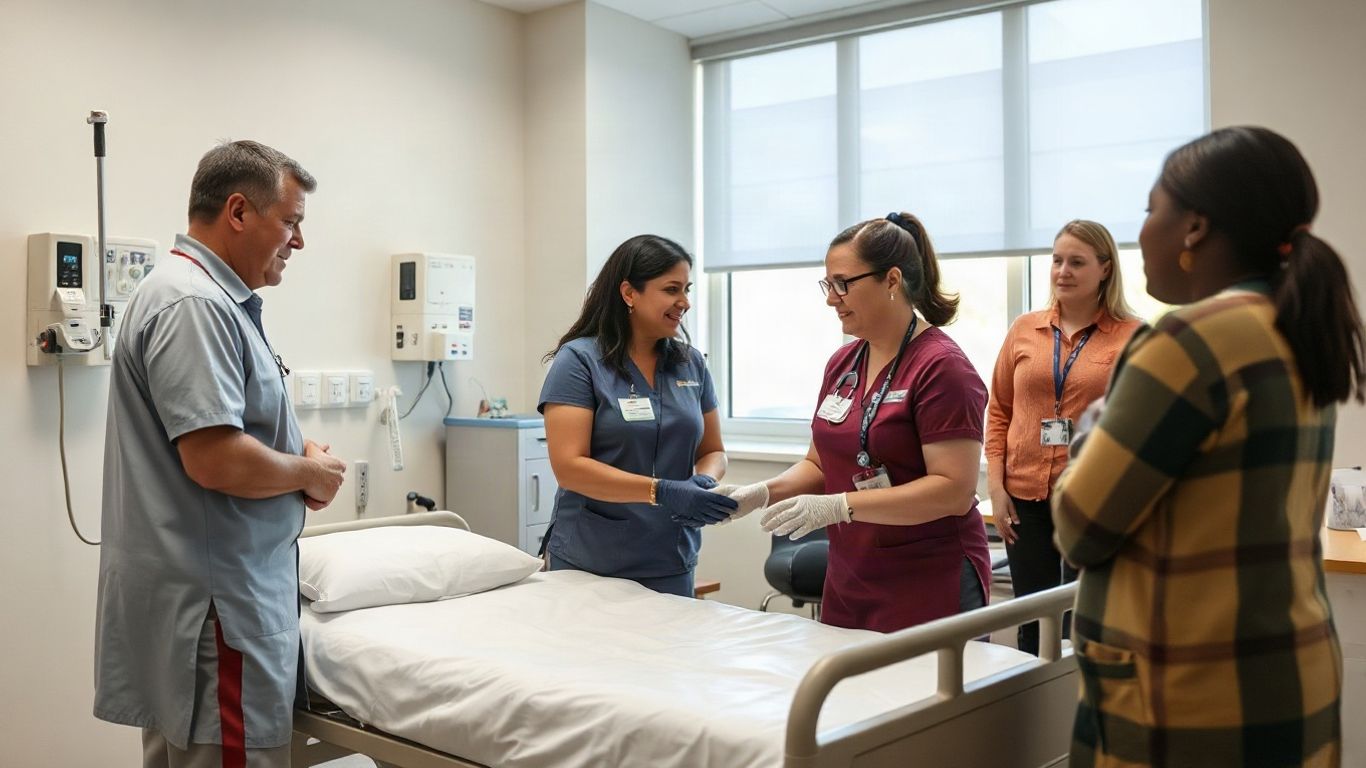
Find out whether the school arranges clinical placements or expects students to find their own sites. Ask about the types of facilities used, the travel time, the usual shift, and whether placements are guaranteed for every enrolled student. A placement in a nursing home, hospital-related setting, or other approved care environment can expose you to different patient needs.
The location should be realistic for your life. A distant placement may create costs and scheduling pressure that were not obvious during enrollment.
Skills covered in lab sessions
Lab sessions should give you repeated practice with the core tasks expected of a nurse aide. Ask how the program teaches infection prevention, hand hygiene, vital signs, positioning, transfers, mobility assistance, personal care, documentation, and respectful communication. You should have opportunities to perform skills, make mistakes safely, and try again.
Before enrolling, ask these focused questions:
- How many students share each practice station?
- How often does an instructor observe and correct each student?
- Which skills are practiced before the first clinical day?
- How are students told that they are ready for the exam?
The answers reveal whether lab time is genuinely instructional or mostly observational. Look for a clear progression from demonstration to guided practice to independent performance.
Supervised experience in healthcare settings
Clinical experience should connect classroom lessons to real routines without treating students as unpaid substitutes for staff. Ask who supervises students, how feedback is documented, and whether students receive an orientation to privacy, infection control, and facility procedures. You should know what you may and may not do within the student role.
Regular feedback is especially valuable when you are learning how to communicate with patients who are anxious, confused, in pain, or reluctant to accept assistance. Professional behavior is part of competence, not an optional extra.
Transportation and scheduling considerations
Clinical shifts may begin earlier than classroom sessions and may not be located near the school. Map the route at the actual start time, estimate the fare, and allow for delays. If you work or care for family members, ask how much notice you receive about placement schedules.
A schedule that looks manageable on paper can become exhausting when paired with a long commute. Choose a program whose practical demands you can sustain through graduation.
Choose a program that supports career goals
Your first CNA role may be the immediate goal, but it does not have to be the only one. Think about the setting where you want to begin, the population you hope to serve, and whether you may later pursue LPN or RN education. A school cannot guarantee a job, but it can provide useful preparation and honest information about next steps.
Nursing homes, hospitals, and home care opportunities
CNAs may work in long-term care, hospitals, rehabilitation, assisted living, or home care, depending on local hiring needs and employer requirements. The daily work can feel different in each setting: one may emphasize routines and continuity, while another may involve faster turnover and closer teamwork. Ask whether the program discusses these environments realistically.
Clinical exposure does not promise a particular job, but it can help you identify which setting fits your strengths and boundaries.
Job placement rates and employer connections
Be cautious with impressive-sounding placement claims that do not explain how they were calculated. Ask how many graduates were surveyed, the time period covered, what counts as placement, and whether the jobs were full-time, part-time, or temporary. Also ask whether employers visit the school, accept applications from graduates, or participate in practice interviews.
A provider such as TIA School of Allied Health describes hands-on healthcare training and an externship in its source material. Confirm the current CNA-specific details, placement terms, and eligibility requirements directly with admissions.
Pathways from CNA to LPN or RN
CNA work can help you test whether direct patient care suits you before committing to a longer nursing program. It may also build familiarity with healthcare communication, documentation, teamwork, and routine patient needs. However, CNA certification does not automatically transfer into LPN or RN credit.
Ask colleges about prerequisites, entrance exams, transfer policies, and the difference between working experience and academic credit. Planning early can keep your next step from becoming an afterthought.
Benefits of local NYC healthcare experience
New York City experience can expose you to varied patient populations, large care systems, and different workplace routines. It may also help you build references and learn how local employers organize onboarding. The value depends on the quality of the placement and the support you receive, not simply on having a city address.
Use clinical conversations to learn what employers expect from entry-level aides. Keep a record of skills practiced, feedback received, and questions to explore in future interviews.
Prepare for enrollment and certification
Once you have a shortlist, preparation becomes practical rather than abstract. Gather documents, make a list of questions, and set aside time for study before the course becomes demanding. A calm application process gives you more room to notice unclear policies or unexpected costs.
Documents to gather before applying
Most applicants benefit from assembling identification, education records, health documentation, immunization information, screening results, and any required background-check forms. Some schools may request proof of residence, employment information, or a current CPR credential. Keep digital and paper copies where possible.
Also ask how long each document remains valid. A health form completed too early may need to be repeated before clinical placement.
Questions to ask admissions staff
Admissions staff should be able to answer direct questions without turning every answer into a sales pitch. Ask about state approval, total cost, attendance, clinical sites, class size, instructor qualifications, exam preparation, refund terms, and graduate support.
Before you enroll, make sure you can answer these questions:
- What exactly is included in the quoted tuition?
- Which hours are classroom, lab, and clinical hours?
- What happens if I miss a required session?
- When and how do graduates register for the exam?
Write down the name and role of anyone who gives you an important answer. If the enrollment agreement contradicts a verbal promise, rely on the written terms and request clarification.
Study strategies for the certification exam
Study in short, regular sessions rather than waiting until the final week. Review terminology, infection control, safety, patient rights, communication, and the sequence of practical skills. Practice explaining each step aloud, because an exam is easier when you understand the reason behind an action rather than memorizing isolated motions.
Use instructor feedback to target weak areas. You can also record yourself reviewing a skill sequence, then compare your explanation with the official testing instructions provided by the relevant authority.
Video demonstrations can supplement practice, but they cannot replace supervised instruction or the official exam guidance. Use them to refresh concepts, then rehearse skills with the equipment and standards your program teaches.
Steps to take after completing the program
After graduation, confirm that your completion record is accurate and that you know how to schedule the competency exam. Prepare a simple résumé, request references while your work is fresh in an instructor’s mind, and track applications in a spreadsheet. If you do not pass on the first attempt, ask what must be repeated and make a focused retake plan.
Once certified, keep your registry information current and learn the renewal rules that apply to your credential. Your first job can be a starting point for stronger skills, better references, and future nursing education.
Conclusion
The best CNA program in New York City is the one that combines state-compliant training with realistic scheduling, supervised clinical practice, transparent costs, and support that matches your goals. Compare schools carefully, ask specific questions, and choose a program you can complete with confidence.
Frequently Asked Questions
How long does CNA training take in New York?
Program length varies, but New York training commonly includes 100 hours of classroom and clinical instruction. Ask each school for its exact calendar and attendance requirements.
Are online CNA programs accepted in New York?
Some programs use online theory with in-person lab and clinical training. Confirm that the complete program is approved and that the required hands-on hours occur under proper supervision.
What does CNA training usually cost in NYC?
Costs vary by provider and may include tuition, registration, uniforms, supplies, screening, transportation, and exam fees. Compare the full amount rather than tuition alone.
Do I need a high school diploma to become a CNA?
Many programs request a high school diploma or equivalent, but requirements differ. Ask the school to confirm its current eligibility rules before applying.
Is clinical training required for CNA certification?
Yes, nurse aide preparation requires supervised hands-on experience. A program that offers only online coursework is unlikely to meet the complete training requirement by itself.
Can a CNA become an LPN or RN?
CNA experience can provide useful exposure to patient care, but it does not automatically grant nursing-school credit. Check prerequisites and admissions policies for the LPN or RN program you are considering.
What should I ask before enrolling in a CNA school?
Ask about approval, total cost, clinical placement, class size, attendance, exam preparation, refund rules, and job support. Request important answers in writing so you can compare schools fairly.