Key Takeaways
Choosing CNA classes in San Antonio is easier when you compare the whole program, not just its advertised tuition. Look for approved training, realistic scheduling, hands-on practice, and clear support through testing and employment.
- Confirm that the program prepares students for Texas nurse aide certification.
- Compare classroom, laboratory, and supervised clinical instruction.
- Budget for fees, uniforms, screenings, supplies, transportation, and exam costs.
- Choose a schedule that you can attend consistently through clinical training.
- Ask how the program supports exam preparation and the first job search.
Understand what CNA classes in San Antonio include
CNA classes in San Antonio should give you more than a short introduction to healthcare work. A sound program combines basic patient-care knowledge with repeated practice, supervised clinical experience, and preparation for the Texas competency process. Before enrolling, ask for a written outline of the hours and activities included.
Core skills covered in nurse aide training
Nurse aide training generally introduces personal care, safe transfers, positioning, infection prevention, communication, vital signs, nutrition, and respectful assistance with daily activities. Students also learn how to observe a patient and report changes to the appropriate licensed professional. The goal is dependable, safe support rather than independent diagnosis or treatment.
A useful course outline should explain how each skill moves from demonstration to guided practice and then to supervised performance. Pay attention to whether the program discusses privacy, dignity, safety, and communication as part of ordinary care instead of treating them as optional soft skills.
Classroom, laboratory, and clinical instruction
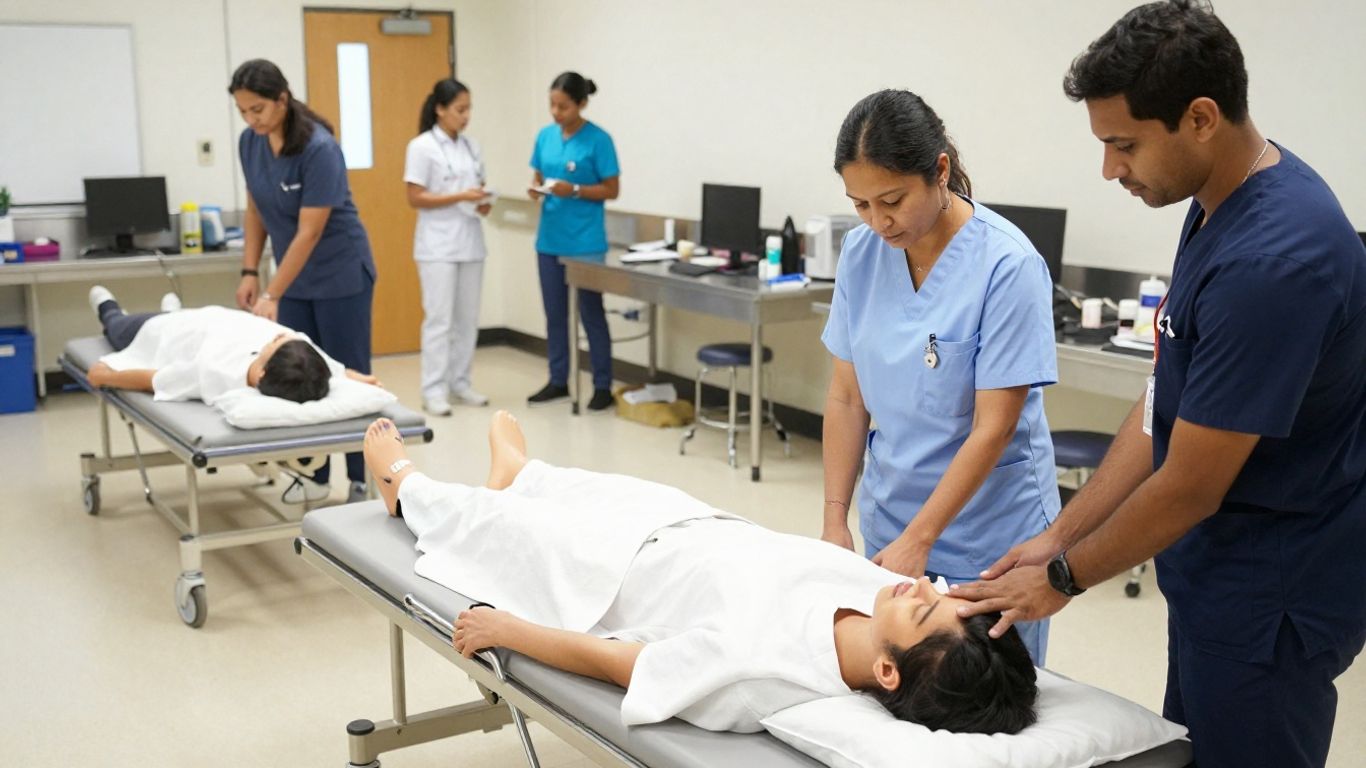
Classroom lessons provide the vocabulary and principles behind care, while a laboratory gives students a controlled place to practice. Clinical instruction adds the pace and unpredictability of working around real patients under supervision. You want all three parts clearly identified, with enough time to ask questions and correct technique.
A CNA program comparison guide can help you organize questions about approval, classroom learning, laboratory practice, clinical hours, instructor support, and exam preparation. Use any guide as a starting point, then verify details directly with the program because schedules and requirements can change.
Texas licensing and competency exam preparation
Ask how the school prepares students for both the written or knowledge portion and the skills portion of the Texas nurse aide exam. Preparation may include practice questions, timed demonstrations, instructor feedback, and a review of testing procedures. The strongest signal is not a promise of an outcome but a clear explanation of when and how students rehearse the required competencies.
The Texas CNA certification overview is another useful place to review the broader certification path and state-focused questions. Keep a personal checklist of application steps, testing deadlines, identification requirements, and any documents the program tells you to bring.
Typical program length and attendance expectations
Program length varies with the school’s calendar, required hours, and whether classes run full time or part time. Some programs move quickly, while others spread instruction over several months so students have more time between lessons. A short course is only useful if it still provides the required classroom, lab, and clinical preparation.
Ask what happens if you miss a class, arrive late, or cannot attend a clinical shift. Attendance rules may be stricter during hands-on training, and make-up opportunities may be limited. Treat the published calendar as a firm commitment rather than an estimate.
Compare CNA training providers in San Antonio
San Antonio offers several types of CNA training providers, and each may suit a different student. Public programs can provide a structured academic setting, private schools may emphasize quick entry, and employer or workforce programs may reduce upfront cost. Comparing them on the same criteria makes the decision less vulnerable to flashy advertising.
Community college and public training options
Community college and other public training options may offer continuing education, career services, or established healthcare instruction. Review the exact course sequence, enrollment dates, contact hours, and clinical arrangements rather than assuming every course follows the same model. Ask whether tuition includes testing, CPR or BLS training, equipment, or other credentials.
Public programs can also have fixed registration windows and limited seats. Apply early when possible, but do not skip the information session or catalog review simply because the institution is familiar.
Private career schools and healthcare institutes
Private career schools and healthcare institutes often appeal to students who want a concentrated schedule or several start dates. Compare instructor access, class size, practice equipment, clinical placement, refund rules, and the full cost of attendance. A fast calendar should not mean that practice time is compressed beyond what you can reasonably absorb.
For a concrete local example of how schedules and aid may be presented, Institute of Allied Healthcare describes an 18-day Nurse Aide program, payment options, and possible grant support for eligible students. Confirm current details with the school and ask which requirements apply to your situation.
Employer-sponsored and workforce-funded programs
Some employers and workforce agencies help eligible students train for in-demand healthcare roles. These programs may have eligibility rules tied to income, residency, employment status, age, or career goals, and assistance may cover only certain costs. Ask whether funding pays for tuition alone or also includes uniforms, screenings, transportation, testing, and required supplies.
Funding can also carry obligations, such as attending every session, completing paperwork by a deadline, or accepting career-support services. Get the terms in writing before turning down another option.
Questions to ask during an information session
An information session is a chance to test whether the program is organized and candid. Admissions staff should be able to explain the schedule, clinical setting, instructor qualifications, total cost, approval status, and process after graduation without relying on vague assurances.
Bring a short list so that every school answers the same questions:
- How many hours are classroom, laboratory, and clinical instruction?
- Which costs are separate from tuition?
- What are the attendance and make-up policies?
- How are students prepared for both parts of the Texas exam?
After the session, compare the answers with the written catalog and enrollment agreement. Differences between a sales conversation and the official documents deserve a follow-up question.
Check admission requirements before applying
Admission requirements can delay a start date even when you are otherwise ready to learn. Schools may require proof of age or education, identification, background screening, health records, and documentation before clinical placement. Make a folder for these items early so an avoidable paperwork issue does not interrupt your plan.
Minimum age and education requirements
Many programs set a minimum age and ask for a high school diploma, GED, or another accepted education record, but the exact rules belong to the individual school and applicable Texas requirements. Some programs may also assess reading, writing, mathematics, or English proficiency. Ask whether testing is required before admission or simply recommended for success.
Do not assume that a previous healthcare course automatically satisfies every prerequisite. Request a written list and ask how the school evaluates transcripts, international education, or equivalent credentials.
Identification, background checks, and screening
Clinical sites may require a government-issued identification document and a background check before allowing students to participate. A record does not always mean automatic denial, but it can require review, additional documentation, or a different placement decision. Ask who conducts the check, when it occurs, and whether the fee is included.
You should also ask about drug screening if the program or clinical partner requires it. The answer may affect both your budget and your enrollment timeline, so it is better to know before paying a nonrefundable deposit.
Immunizations, health records, and physical exams
Healthcare training commonly involves health documentation for clinical participation. Depending on the program and clinical site, students may need immunization records, tuberculosis screening, a physical examination, or other clearance. The school should tell you which forms are accepted and how recent the records must be.
Schedule appointments early if records are incomplete. A missing vaccine record or delayed screening can prevent a student from starting clinical work even after classroom instruction has begun.
Documents needed for enrollment
Most applicants should expect to provide identification, an education record, contact information, and completed admission forms. Additional documents may include proof of residency, financial-aid paperwork, health forms, background-check authorization, or emergency contact details. Keep digital scans and paper copies in case different offices request the same information.
A simple enrollment checklist is more useful than relying on memory. Ask for the deadline for each item, especially when the class has a fixed start date or limited seats.
Evaluate program cost and financial support
The advertised tuition is only one part of the price of becoming a CNA. A realistic budget includes required supplies, health clearance, transportation, testing, and time away from work. Comparing total cost helps you distinguish a genuinely affordable program from one that simply advertises a low first payment.

Tuition, fees, uniforms, and required supplies
Request an itemized estimate before enrolling. It should identify tuition, registration, books, uniforms, shoes, equipment, background checks, screenings, CPR or BLS training, exam fees, and any graduation or certification charges. If an item is optional, ask whether it is nevertheless expected for clinical participation.
A program with higher tuition may include more of these items, while a cheaper-looking option may leave them to you. The total cost matters more than the first number you see online.
Payment plans and funding opportunities
Ask whether the school offers installment payments, deposits, scholarships, grants, or other aid for eligible students. Find out when each payment is due and what happens if you withdraw, fail to attend, or cannot complete clinical training. Written refund and cancellation policies are especially important when a program requires a large upfront payment.
Do not count on funding until eligibility is confirmed. Keep copies of applications, award notices, and conversations with the financial-aid or admissions office.
Workforce assistance and eligible career programs
Workforce assistance may be available through local career programs, employer partnerships, or public grants. Eligibility can depend on personal circumstances, and application processing may take time. Ask whether the funding source has an approved-school list and whether it pays for all required parts of the course.
For comparison, Alamo Colleges describes a face-to-face Certified Nurse Aide program with hands-on training, a stated contact-hour structure, and possible grants or scholarships. Treat those published figures as program-specific information and confirm the current cost, eligibility rules, and start dates directly.
Comparing value beyond the advertised tuition
Cost should be weighed against the learning environment and the support you receive. Consider whether the program provides adequate lab practice, supervised clinical experience, responsive instructors, exam preparation, and useful career guidance. A slightly longer course may be better value if it gives you time to build confidence and correct mistakes.
This is where a simple comparison table can keep the decision grounded:
| Cost or value factor | What to verify | Why it matters |
|---|---|---|
| Required fees | Screening, supplies, uniforms, and exams | Reveals the real enrollment budget |
| Practice opportunities | Lab access and supervised clinical hours | Shows how often you can perform skills |
| Student support | Instructor access and exam review | Helps you address problems before testing |
| Career assistance | Resume guidance and employer connections | Clarifies support after course completion |
After filling in the table for each program, look for missing answers rather than automatically choosing the lowest total. Unclear costs and vague clinical details are reasons to pause and ask for documentation.
Choose a schedule and learning format that fits
A program only works if you can attend consistently and arrive prepared for practice. Think through work, family responsibilities, transportation, study time, and the possibility of early or late clinical shifts. Flexible scheduling is helpful, but flexibility should not come at the expense of required hands-on instruction.
Full-time and part-time class schedules
Full-time classes can shorten the time between enrollment and certification, but they require a concentrated commitment. Part-time schedules may be easier to combine with work or caregiving, although the longer timeline can create more opportunities for missed sessions or competing responsibilities. Ask for the full calendar, not just the first week.
Compare the number of weekly hours with your actual availability. A schedule that looks manageable on paper may become difficult once commuting, assignments, and clinical preparation are included.
Day, evening, and weekend options
Day, evening, and weekend classes can make training possible for people with different work patterns. Confirm whether the same instructor, lab access, and clinical opportunities are available across every schedule. Sometimes classroom hours are flexible while clinical shifts are assigned at specific times.
Texas Regional Healthcare Training Center is one example of a local training provider whose published information discusses day, evening, and weekend options. Ask about current offerings, seat availability, and whether the schedule you need is offered for the next start date.
In-person instruction versus blended learning
Online or blended instruction may make theory lessons easier to fit around other obligations, but it does not remove the need for in-person skills practice and supervised clinical work. Ask exactly which activities occur online, how instructors answer questions, where laboratory practice takes place, and how attendance is recorded.
Before choosing a blended course, confirm that it meets Texas requirements and that you can reliably access the required computer, internet connection, and learning platform. Convenience is useful only when the format still gives you enough feedback.
Travel time, clinical placement, and attendance policies
The campus may be close to home while the clinical site is much farther away. Ask where clinical rotations occur, whether transportation is your responsibility, and when placement details are provided. You should also understand rules for lateness, absences, illness, and make-up shifts.
Travel time belongs in your schedule and budget from the beginning. A dependable route can matter as much as a convenient class time, particularly when clinical attendance is mandatory.
Prepare for certification and your first CNA job
Training is the foundation, but the transition to certification and employment benefits from deliberate preparation. Set aside regular review time, practice skills in the order used during evaluation, and keep notes on corrections from instructors. A calm, organized approach is more useful than cramming at the last minute.
Written and skills exam study strategies
For the written exam, review terminology, safety principles, infection control, communication, and the responsibilities of a nurse aide. For the skills exam, practice aloud and follow each sequence carefully, including hand hygiene, privacy, explanations, safety checks, and reporting. Ask instructors to observe a complete performance rather than only isolated steps.
Use practice questions to find weak areas, not simply to chase a high score. The Texas Nurse Aide Exam preparation guide offers another way to think about prerequisites, clinical preparation, testing, and the path from training to certification.
Common clinical skills to practice
Practice should cover the skills listed by your program and the applicable Texas testing materials. In addition to technical steps, work on communication, body mechanics, infection prevention, and maintaining patient dignity throughout the interaction. Small omissions can matter, so build a habit of checking the entire sequence.
If you use a demonstration video or review lesson, treat it as a supplement to instructor feedback. A video cannot replace supervised practice or the judgment of an instructor watching your technique.
After watching a review, practice the skill without pausing and then compare your performance with the official checklist or instructor guidance. That extra step turns passive viewing into useful rehearsal.
Resume and interview preparation for entry-level roles
A beginner resume can highlight clinical hours, relevant coursework, CPR or BLS training, customer service, reliability, and communication. Describe what you practiced without claiming responsibilities outside the CNA scope of practice. Bring copies of certifications and be ready to explain how you protect privacy and safety.
In interviews, employers may ask how you would respond to a change in a patient’s condition, a difficult interaction, or a competing task. Answer with a clear sequence: keep the person safe, follow procedure, and report concerns to the appropriate supervisor.
Long-term pathways after becoming a CNA
CNA work can provide experience in settings such as long-term care, assisted living, hospitals, home health, or other care environments, depending on employer requirements and the scope of the role. Over time, you may decide to pursue additional healthcare education or specialize in a different direction. Keep records of training, employment, and continuing education as you build your next plan.
The first program does not have to determine your entire career. It should give you a sound foundation, realistic expectations, and enough practical confidence to take the next step safely.
Conclusion
The right CNA program in San Antonio is the one whose approval, instruction, clinical practice, cost, schedule, and student support fit your circumstances. Compare written details, ask direct questions, and budget for the full journey from admission through certification. A careful choice now can make training more manageable and your first healthcare role a stronger start.
Frequently Asked Questions
How long do CNA classes in San Antonio usually take?
Programs may run for a few weeks or several months, depending on the required hours, calendar, and whether the schedule is full time or part time. Confirm the exact classroom, laboratory, and clinical timeline with each school.
What should I look for in a CNA program?
Look for appropriate Texas approval, clear training hours, meaningful lab and clinical practice, qualified instructors, transparent costs, exam preparation, and a schedule you can attend consistently.
Do CNA programs require a high school diploma or GED?
Many programs ask for a diploma or GED, but requirements vary. Ask the admissions office whether alternatives, placement testing, or additional documentation are accepted.
Are background checks and health screenings required?
They are common because clinical sites need students to meet safety and participation standards. Ask when screening occurs, which records are required, and whether the costs are included in tuition.
Can I take CNA classes while working?
Possibly. Evening, weekend, part-time, or blended options may help, but clinical hours can have fixed attendance requirements. Review the entire calendar before enrolling.
What costs should I budget for besides tuition?
Plan for registration, books, uniforms, shoes, equipment, background checks, health screenings, transportation, CPR or BLS training, and certification-related testing fees.
What can I do after becoming a CNA?
You can apply for entry-level aide roles in settings permitted by your training and employer requirements. You can also use the experience to explore additional healthcare education and longer-term career pathways.