Key Takeaways
CNA training in Colorado can be completed through several approved formats, but every route requires careful attention to eligibility, clinical practice, testing, and registry rules.
- Confirm that your program is approved before enrolling.
- Compare total costs, not tuition alone.
- Expect both classroom learning and hands-on clinical practice.
- Prepare for written or oral testing and a practical skills exam.
- Check registry and renewal requirements after certification.
Understand Colorado CNA certification requirements
Becoming a nursing assistant in Colorado involves more than signing up for one of the many cna classes in colorado. You must meet eligibility requirements, complete an approved education program, pass the competency evaluation, and complete the registry process. Requirements can change, so use current state guidance and verify details with your selected school.
Eligibility rules and minimum age expectations
Most applicants should begin by confirming the school’s age, education, and identification requirements. Programs may ask for government-issued identification, a high school credential or equivalent, and the ability to communicate safely with patients and supervisors. Ask about admission rules before paying a deposit, especially if you are changing careers or applying while still in school.
Colorado’s requirements are summarized in this Colorado CNA certification guide, which can help you build an initial checklist. The school itself remains the best source for current enrollment documents and deadlines, since individual programs may set additional admission standards.
Required training hours and clinical experience
Colorado CNA education commonly includes a 75-hour minimum, divided among classroom instruction, laboratory practice, and supervised clinical experience. The classroom portion introduces subjects such as infection prevention, communication, resident rights, basic care, and observation. Skills practice then gives you a controlled place to repeat procedures before working with patients.
Clinical experience is not a formality. It is where students learn how care routines unfold in a real facility, including time management, privacy, respectful communication, and reporting changes in a patient’s condition. Confirm exactly how many clinical hours are included and where they take place.
Background checks, health screenings, and documentation
Schools commonly require background-check paperwork and health documentation before students enter a clinical setting. Depending on the program, that may include immunization records, tuberculosis screening, CPR documentation, or other occupational-health forms. Missing paperwork can delay your start date even when your tuition has already been paid.
Keep copies of every form, receipt, and completion record. It is also wise to ask whether the school arranges screenings or expects you to schedule them independently, because those details affect both your budget and your timeline.
How the Colorado nurse aide exam works
The competency evaluation generally tests both knowledge and practical ability. Students should expect a written or oral component covering foundational nursing-assistant concepts and a skills component requiring safe, orderly performance of selected tasks. The testing vendor and state-approved program can explain registration, identification, scheduling, and retake procedures.
A useful preparation habit is to practice each skill aloud, including hand hygiene, explanations to the patient, privacy steps, safety checks, and reporting. Safe technique matters more than speed, because examiners need to see that you can provide dependable care.
Compare CNA classes in Colorado
CNA classes in Colorado vary widely in schedule, setting, tuition, and student support. A traditional college course may offer a predictable campus routine, while a hybrid program can shift some theory work online. Compare the actual learning experience rather than assuming that a shorter calendar means less work.
In-person programs at colleges and schools
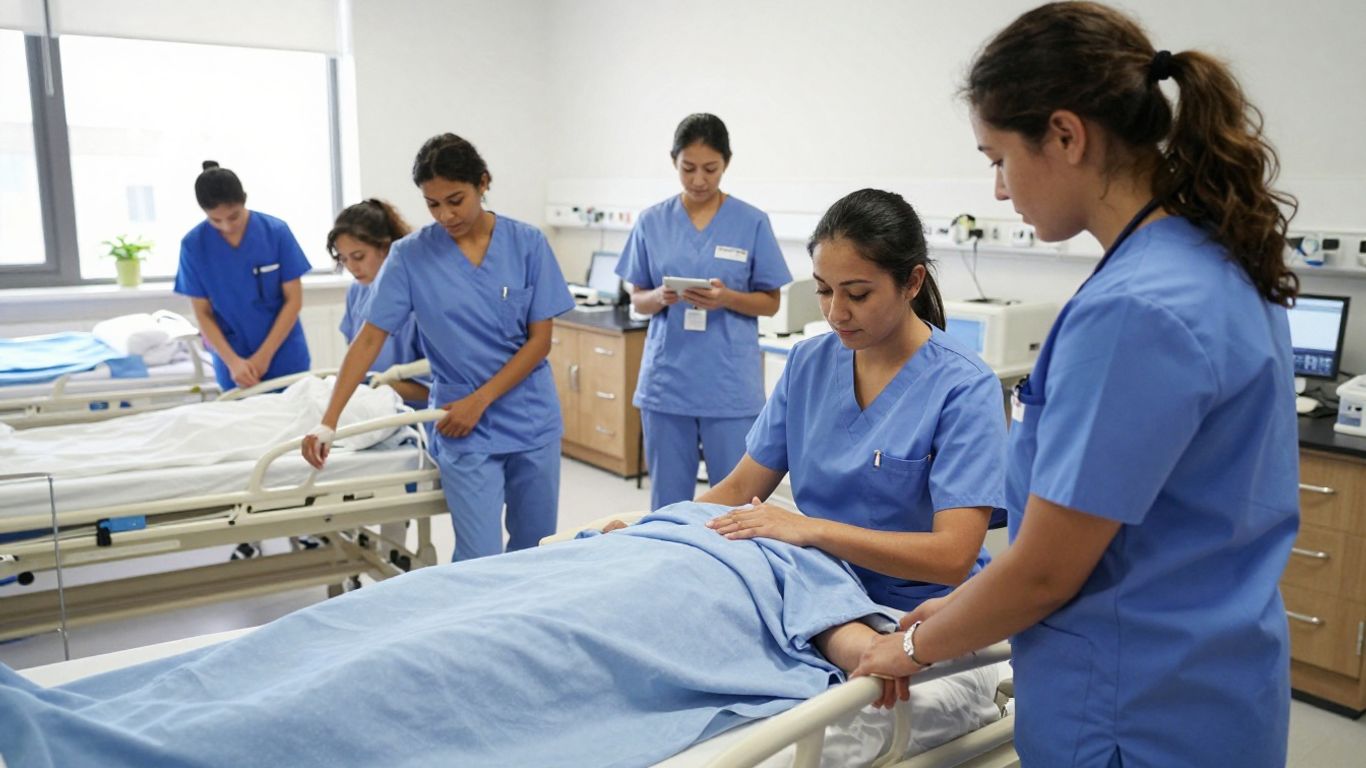
In-person programs can be a strong choice if you learn best through demonstrations and immediate feedback. They usually combine classroom lessons with lab practice and clinical rotations, giving students regular contact with instructors and classmates. Community colleges, career schools, and private training centers may all offer this format.
Ask whether the published schedule includes every lab and clinical date. A course that appears convenient on paper may still require several full days on campus or at a care facility.
Online and hybrid CNA training options
Online and hybrid programs can make theory coursework easier to fit around work or family responsibilities. They do not remove the need for in-person skills practice and clinical experience, however. Before enrolling, find out how often you must attend campus, whether attendance is mandatory, and how clinical placements are arranged.
One example of a documented blended option is this hybrid CNA program, which combines online theory, classroom skills training, and clinical rotations. Treat any program description as a starting point and confirm current dates, fees, and availability directly with the provider.
Employer-sponsored and workforce programs
Some employers help new hires complete training in exchange for an employment commitment. Workforce agencies may also assist eligible residents with tuition, testing, transportation, or related costs. These options can reduce the upfront expense, but they may include attendance rules, repayment clauses, or limits on where you work afterward.
Read the agreement before accepting funding. A free course is not necessarily cost-free if leaving early creates a repayment obligation.
How program approval affects your eligibility
Approval is one of the first things to verify when comparing schools. Completing an unapproved course may leave you unable to register for the state evaluation, even if the instruction seemed useful. The state’s approved-program listings and the school’s own documentation should agree.
The Colorado nurse aide education directory is a useful place to cross-check approval status. Also ask whether the school submits completion information or gives you documents to use during exam registration.
Choose the right CNA program for your goals
The best program is not automatically the cheapest or fastest. It is the one whose schedule, teaching style, clinical access, and support match your circumstances. Spend time comparing the fine print before choosing, because changing programs midway can cost both money and momentum.
Evaluating tuition, schedules, and program length
Start with the complete calendar. Write down class hours, lab dates, clinical shifts, exam-preparation sessions, and expected study time. Then compare the total price, including charges that may sit outside the advertised tuition.
A short program may be practical for someone who can study intensively, while evening or weekend classes may work better for an employed student. Look for a realistic fit rather than a promise of the fastest possible completion.
Checking clinical training and hands-on practice
Ask how much time students spend practicing skills before clinical placement. You should have opportunities to repeat procedures, receive corrections, and become comfortable explaining care to patients. Also ask whether the school guarantees a clinical placement or expects students to arrange one.
A careful program will explain supervision, transportation, dress requirements, and what happens if a clinical site changes. Those operational details can matter as much as the lesson plan.
Comparing instructor support and student resources
Instructor access is especially valuable when you are learning patient-care skills for the first time. Find out whether questions are answered during set office hours, through an online platform, or by appointment. Ask about tutoring, practice labs, make-up policies, and support for students who need accessibility accommodations.
CNA students also benefit from learning how to communicate with people experiencing stress, confusion, or emotional difficulty. Resources such as Focused Mental Edu address mental-health education, but they do not replace the clinical instruction required by a CNA program.
Reviewing graduation and exam preparation results
Schools may publish completion or exam results, but ask what the figures include and how recently they were measured. A high pass rate can be encouraging, yet it does not guarantee an individual outcome. Look for evidence that students receive structured review, practice testing, and feedback on missed skills.
You can also ask recent graduates how well the program prepared them for their first clinical or workplace experience. Their comments may reveal scheduling problems or support strengths that a brochure does not mention.
Plan for the cost of CNA training
The price of CNA education depends on the provider, location, format, and services included. Tuition is only one part of the calculation. Building a full budget before enrollment helps prevent unpleasant surprises when clinical requirements and testing deadlines arrive.

Typical tuition and additional school fees
Published tuition may or may not include registration, lab fees, background checks, insurance, clinical supplies, and exam charges. Ask for an itemized estimate in writing. A lower advertised price can become less attractive once required extras are added.
Program length also affects indirect costs. An intensive course may reduce the number of weeks you are in training but require time away from paid work, while a part-time course may spread expenses over a longer period.
Expenses for uniforms, textbooks, supplies, and testing
Plan for uniforms, closed-toe shoes, a watch with a second hand, textbooks, identification documents, transportation, and health screenings. Some schools supply equipment or include materials in tuition; others expect students to purchase everything before the first lab.
A simple budget table can make comparisons easier:
| Cost category | What to ask about | When it may be due |
|---|---|---|
| Tuition | What instruction and lab access are included? | Enrollment or installments |
| Clinical requirements | Are screenings, insurance, or uniforms included? | Before clinicals |
| Study materials | Are books, online tools, or practice kits separate? | Before or during class |
| Exam and registry | Who pays testing and application charges? | Near completion |
After totaling these categories, compare the final amount with your available savings and expected income. That number is more useful than a tuition figure alone.
Grants, scholarships, and workforce funding
Ask the school whether it works with workforce centers, adult-education grants, community scholarships, or employer tuition assistance. Eligibility may depend on income, residency, unemployment status, or a promise to work for a participating employer. Apply early because funding pools can close before a class reaches its start date.
Some employers also reimburse testing or training after hiring. Get the reimbursement terms in writing, including whether you must remain employed for a specified period.
Questions to ask about payment plans and refunds
Before signing an enrollment agreement, clarify the deposit, installment dates, late-payment rules, cancellation window, and refund formula. Ask what happens if you withdraw after class begins, fail a prerequisite, or cannot attend a clinical rotation. Keep the signed agreement and all email confirmations.
A payment plan may make tuition manageable, but it does not necessarily cover uniforms, transportation, or exam fees. Leave room in your budget for those smaller expenses.
Prepare for the Colorado nurse aide exam
Exam preparation should begin during training, not during the final few days. Review classroom concepts while practicing physical skills, and use your instructors’ feedback to identify habits that need correction. The state-approved program and testing provider should remain your sources for current exam instructions.
What to expect from the written or oral exam
The knowledge exam may cover infection control, safety, communication, basic nursing care, resident rights, and recognizing changes that should be reported. If an oral option is available to you, ask about the application process and any language-related accommodations before scheduling.
Practice reading questions carefully. Many errors come from overlooking words such as first, best, immediately, or except rather than from lacking basic knowledge.
Skills evaluated during the practical exam
The practical portion measures whether you can perform assigned skills safely and in the correct sequence. Examiners may look for hand hygiene, introductions, privacy, patient identification, safe movement, clean technique, and appropriate documentation or reporting. Practice with a partner who can observe without quietly rescuing you.
Say what you are doing as you work. Clear explanations help demonstrate patient-centered care and make it easier to remember each safety step.
Study strategies and practice resources
Use short, repeated study sessions instead of one long review night. Build a checklist from your course materials and practice the skills in the same order each time until the sequence feels natural.
A practical study routine might include:
- Reviewing one knowledge topic after each class.
- Practicing two or three skills aloud with a partner.
- Taking timed sample questions without checking answers immediately.
- Keeping a list of mistakes and reviewing it before the next practice session.
This approach makes study more measurable and helps separate knowledge gaps from performance anxiety. Ask your instructor to watch a full practice run before exam day.
What to do after an unsuccessful attempt
Failing one part of the evaluation does not erase the training you completed. Read the score report, identify the exact knowledge or skill weakness, and ask about the deadline and process for a retake. Some students benefit from a focused review session rather than repeating the entire course.
Schedule another attempt only after you can perform the required skills consistently. Also confirm whether an additional fee, new application, or updated eligibility document is required.
Complete the certification and registry process
Passing the exam is a major step, but certification is not complete until the required records and registry steps are finished. Keep your completion certificate, score information, identification, and application confirmations together. Small errors in names, dates, or addresses can slow processing.
Registering for the state competency evaluation
Your school or testing provider can explain how to submit an exam application, choose a testing date, and pay required charges. Confirm which documents the testing vendor receives from the school and which documents you must provide yourself.
Register early when possible. Testing appointments may be limited in some locations, and a delay can affect job applications that depend on proof of eligibility.
Applying for placement on the nurse aide registry
After meeting the education and competency requirements, follow the instructions for placement on Colorado’s nurse aide registry. Check that your name is recorded correctly and save evidence of your status. Employers may verify registry information before finalizing an offer.
If the registry record does not appear when expected, contact the appropriate office and your school. Provide copies of completion and testing records rather than relying on an informal explanation.
Understanding renewal and continuing requirements
Registry status may have renewal rules, employment documentation, or continuing obligations. Do not assume that certification remains current indefinitely simply because you passed the exam. Mark renewal dates on a calendar and review official instructions before the deadline.
Keep a personal record of qualifying employment, employer information, and any required education. Organized records make future renewal or verification much easier.
Handling reciprocity and out-of-state credentials
CNAs moving to Colorado should ask about reciprocity or endorsement before enrolling in a new course. The state may request verification from the other registry, proof of current status, employment history, and identity documents. Requirements can differ depending on whether the credential is active, expired, or based on another state’s rules.
Contact the Colorado office and the state where you were first certified. Do not assume that an out-of-state certificate automatically transfers.
Start a CNA career in Colorado
Once your registry status is active, begin preparing for the workplace as well as the application process. A CNA role requires patience, physical stamina, careful observation, and consistent communication. Your first position can also help you learn which care settings suit your long-term plans.
Common workplaces for newly certified CNAs
Newly certified CNAs may find roles in nursing homes, assisted-living communities, hospitals, rehabilitation settings, home care, and other patient-support environments. Duties and supervision vary by employer, so read job descriptions closely and ask how orientation is structured.
During interviews, ask about staffing, shift length, lifting equipment, training, and the process for reporting a change in a patient’s condition. Those questions show practical judgment and help you evaluate the workplace.
Colorado cities and regions with job opportunities
Opportunities can appear in the Denver metro area, Colorado Springs, Fort Collins, Aurora, Pueblo, Grand Junction, Loveland, and smaller communities. Availability changes with employer demand, season, and local population needs. Searching statewide can reveal options that are missed when you focus on one neighborhood.
For a local starting point, review CNA classes in Aurora and compare the location with transportation, class timing, and nearby employment options. Training location does not determine where you must work, but it can affect convenience during school.
Typical duties, schedules, and workplace expectations
A CNA may assist with bathing, dressing, toileting, meals, mobility, vital signs, comfort measures, and observation under the direction of licensed staff. The exact assignment depends on the setting and the employer’s policies. CNAs must also protect privacy, document or report relevant observations, and treat each patient respectfully.
Schedules may include days, evenings, nights, weekends, holidays, or rotating shifts. Ask about staffing ratios and mandatory overtime before accepting an offer, especially if you are balancing family responsibilities.
Career paths from CNA to advanced healthcare roles
CNA work can provide a practical introduction to healthcare. With experience, some workers pursue medication aide roles where permitted, practical nursing, registered nursing, medical assisting, therapy support, or other health-related education. The best next step depends on your interests, academic preparation, finances, and the scope of practice for the role.
Use your first job to notice what you enjoy: direct personal care, rehabilitation, acute care, dementia support, or coordination with families. That experience can make your next education decision more informed.
Conclusion
Choosing CNA classes in Colorado is easier when you treat the process as a sequence: verify approval, compare the full cost, complete meaningful clinical practice, prepare deliberately for both exams, and confirm your registry status before applying for work. A thoughtful program choice can make the transition into patient care more manageable and give you a stronger foundation for whatever healthcare role comes next.
Frequently Asked Questions
How long do CNA classes in Colorado take?
Many programs can be completed in several weeks, while part-time formats take longer. The calendar depends on the schedule, required training hours, lab availability, and clinical placement.
How many training hours are required in Colorado?
Colorado commonly requires at least 75 hours of approved nurse aide training. Confirm the current breakdown and any additional school requirements with an approved program.
Can I complete CNA training online?
Theory lessons may be available online or in a hybrid format, but students still need in-person skills practice and supervised clinical experience to prepare for certification.
What costs should I budget besides tuition?
Plan for registration, uniforms, shoes, textbooks, background checks, health screenings, transportation, exam fees, and registry-related charges unless the school confirms they are included.
Is the CNA exam written, practical, or both?
The competency evaluation generally includes a knowledge component and a practical skills component. Testing details, including oral options and scheduling, should be confirmed with the current testing provider.
What happens if I fail the CNA exam?
Review the score report, focus on the areas that need improvement, and follow the retake instructions. You may need to pay another fee or submit a new application for the unsuccessful portion.
Can an out-of-state CNA transfer to Colorado?
Possibly, depending on your registry status and the state’s reciprocity rules. You will usually need verification and supporting documents, so contact the Colorado registry before taking another course.